

AI CERTs
2 months ago
Creative Creator Backlash: AI Art Sparks Legal Turmoil
A new wave of art disputes is shaking global exhibition halls.
However, the latest uproar centres on an AI image crowned winner in a human photography contest.
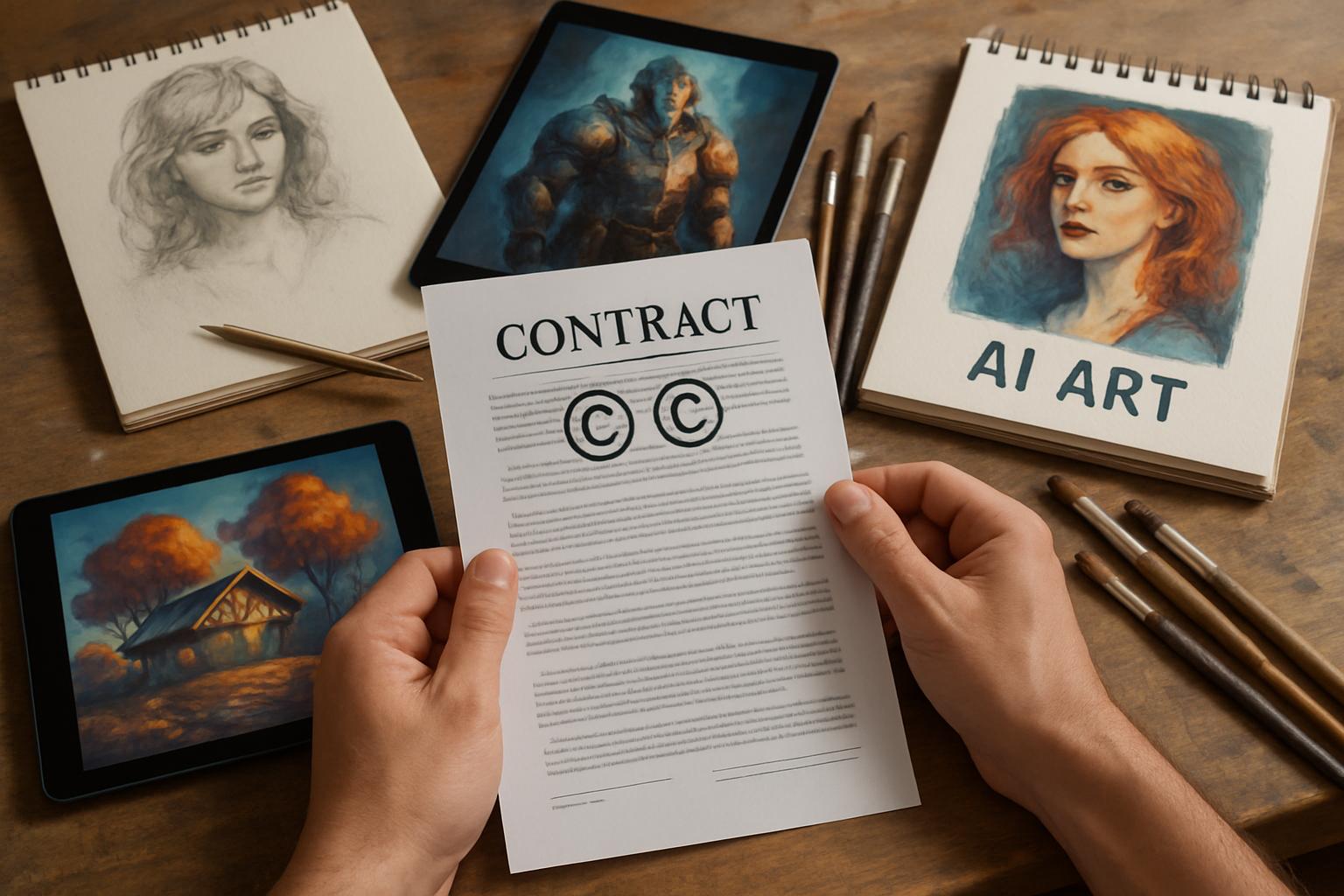
This episode fuels what observers now label the Creative Creator Backlash.
Consequently, lawyers, judges, and curators scramble to update policies before the next headline strikes.
Generative models such as Midjourney or DALL·E now reach millions, lowering the cost of image production.
Meanwhile, traditional competitors question whether clicking "generate" counts as authorship or infringement.
Therefore, the debate spans technology, Copyright law, Ethics, and business strategy.
This article maps the flashpoints, rule changes, and commercial stakes ahead for professional readers.
In contrast, it offers actionable guidance for anyone submitting work to future Contests.
We close with resources and a certification to strengthen compliance literacy.
AI Contest Flashpoint Cases
August 2022 ignited headlines when Jason Allen’s Midjourney piece won the Colorado State Fair.
Subsequently, Capcom, Pokémon, and a Japanese photography show repeated the pattern through 2025.
- 2024: Pokémon illustration finalists were removed after AI use surfaced.
- 2025: Capcom revoked a Street Fighter prize for undisclosed machine assistance.
- 2025: A Japanese contest rescinded first place when the winner admitted AI generation.
Each time an undisclosed AI image claimed top honours, public trust eroded.
OECD.ai now tracks these incidents as risks to institutional credibility.
Moreover, market data suggests incentives remain strong; generative imagery drives a projected USD 37.89 billion sector this year.
Nevertheless, every disqualification reinforces the mounting Creative Creator Backlash.
Judges admit difficulty spotting synthetic pixels, a weakness confirmed by a 2025 arXiv study.
Consequently, some events now open distinct AI categories, like HIPA’s 2026 “AI Dreams” award.
Others impose blanket bans, risking fewer submissions and press coverage.
These flashpoints reveal an accelerating cycle of experimentation and correction.
However, legal boundaries are tightening even faster, as the next section explains.
Legal Lines Hardening Fast
U.S. Copyright Office guidance now defines copyrightability by human control, not machine novelty.
Furthermore, the January 2025 Part 2 report states prompts alone lack sufficient creative input.
International offices echo that standard, although litigation continues.
Jason Allen’s suit challenges the refusal to register his 624-prompt masterpiece.
Meanwhile, judges will decide whether intensive prompt engineering equals authorship under existing Copyright doctrine.
In contrast, many analysts expect courts to side with the administrative precedent.
Consequently, contest organizers review entry terms to mirror statutory tests.
Professionals can deepen their understanding through the AI Legal Strategist™ certification.
Therefore, compliance literacy mitigates costly takedowns and negative headlines.
These developments clarify ownership but escalate the Creative Creator Backlash within creative industries.
Next, we examine how Artists articulate that pressure.
Artists Voice Mounting Concerns
Many Artists feel generative tools devalue years of craft.
However, some painters embrace algorithms as fresh brushes.
Guild spokespeople cite Ethics issues around data scraping and attribution.
Moreover, royalties remain uncertain when Copyright registration falters.
Surveyed creators warned that undisclosed AI wins distort Contests and collector markets.
Nevertheless, proponents argue that iterative prompting represents genuine labour worthy of prizes.
Allen’s 624 prompts illustrate that human intention still shapes outcomes, despite the Creative Creator Backlash.
Additionally, younger Artists report using AI to prototype compositions before manual refinement.
Consequently, the community remains split between full rejection and hybrid workflows.
These diverging positions place heightened expectations on competition administrators.
Therefore, we explore how organizers respond structurally.
Organizers Rewrite Rulebooks
Contest directors now draft clauses targeting disclosure, category segregation, or outright bans.
HIPA’s separate AI lane exemplifies an inclusion approach.
Meanwhile, Pokémon and Capcom opted for disqualification after rule breaches.
Furthermore, several county fairs introduced manual verification panels and AI-detection software.
Organizers fear reputational damage amplified by the Creative Creator Backlash and instant social media outrage.
Nevertheless, adding AI categories may expand sponsorship revenue and audience reach.
In contrast, blanket bans risk alienating innovators and suppressing ticket sales.
Therefore, many committees survey entrants annually before finalising rules.
Consequently, policies now change faster than entry deadlines, confusing hopeful Artists.
These administrative trends highlight the need for reliable detection technology.
However, technical tools still lag behind model progress, as the next section details.
Technology Outpaces Detection Tools
Model research cycles run months, while detection tools lag years.
Subsequently, organisers rely on manual scrutiny, which the arXiv study showed is fallible.
Moreover, watermarking schemes fail once images are cropped or compressed.
In contrast, generative vendors push updates that enhance photorealism weekly.
Therefore, forensic analysts face moving targets, intensifying the Creative Creator Backlash when mistakes slip through.
However, collaboration between platform engineers and contest juries may shorten this gap.
Consequently, several start-ups market synthetic image detectors trained on diffusion system fingerprints.
Ethics boards caution against overreliance on black-box algorithms that may discriminate.
Meanwhile, regulators explore disclosure labels embedded at model inference time.
These technological uncertainties steer participants toward cautious strategies.
Next, we outline practical steps for future entrants.
Navigating Future Contest Participation
Successful entrants plan submissions around evolving guidelines rather than static assumptions.
Firstly, always read rulebooks for AI disclosure clauses and Copyright eligibility tests.
Secondly, document every prompt and edit cycle to evidence human contribution during disputes.
Moreover, secure written confirmations when organising collaborative workflows involving multiple Artists.
In contrast, consider entering dedicated AI categories to sidestep conflicts.
Consequently, transparency mitigates accusations fueling the Creative Creator Backlash.
Additionally, consult legal counsel or complete specialised training before monetising generative works.
Professionals can enhance compliance mastery through the AI Legal Strategist™ program.
Therefore, proactive education preempts costly rescissions and social media storms.
These measures position creators for sustainable participation.
However, the broader industry narrative continues, as our final thoughts show.
Forward Strategy And Certification
Generative imaging is rewriting creative competition faster than any prior tool.
However, the Creative Creator Backlash shows that speed without transparency breeds mistrust.
Consequently, rulemakers, judges, Artists, and engineers must collaborate, guided by clear Ethics frameworks.
Copyright agencies will likely uphold the human authorship threshold, so documentation remains vital.
Meanwhile, organisers will iterate contest formats to protect integrity while courting innovation.
Professionals who anticipate these shifts turn disruption into opportunity, not confrontation.
Therefore, consider pairing artistic practice with structured education through the AI Legal Strategist™ pathway.
Embracing informed strategies neutralises the Creative Creator Backlash and enables responsible, rewarded participation.
Ultimately, balanced governance can transform the Creative Creator Backlash into a catalyst for inclusive progress.
Disclaimer: Some content may be AI-generated or assisted and is provided ‘as is’ for informational purposes only, without warranties of accuracy or completeness, and does not imply endorsement or affiliation.


