

AI CERTS
2 months ago
India’s Biometric Governance Systems Surge
Moreover, independent observers still question privacy, inclusion, and security outcomes. Therefore, executives, technologists, and policymakers need a clear view of numbers, drivers, risks, and next steps. This article maps the data surge while situating India within global Biometric Governance Systems debates.
Record Authentication Volume Spike
November 2025 delivered 231 crore online authentications, the highest monthly figure ever logged by the authority. Furthermore, fiscal year 2024–25 closed with 2,707 crore successful checks across fingerprint, iris, OTP, and face channels. Average traffic rose from eight crore to 9.6 crore, peaking at 13.2 crore during September 2025. These statistics underscore how Biometric Governance Systems scale when friction drops and ecosystem players align. Consequently, regulators worldwide track India as a living lab for identity engineering.
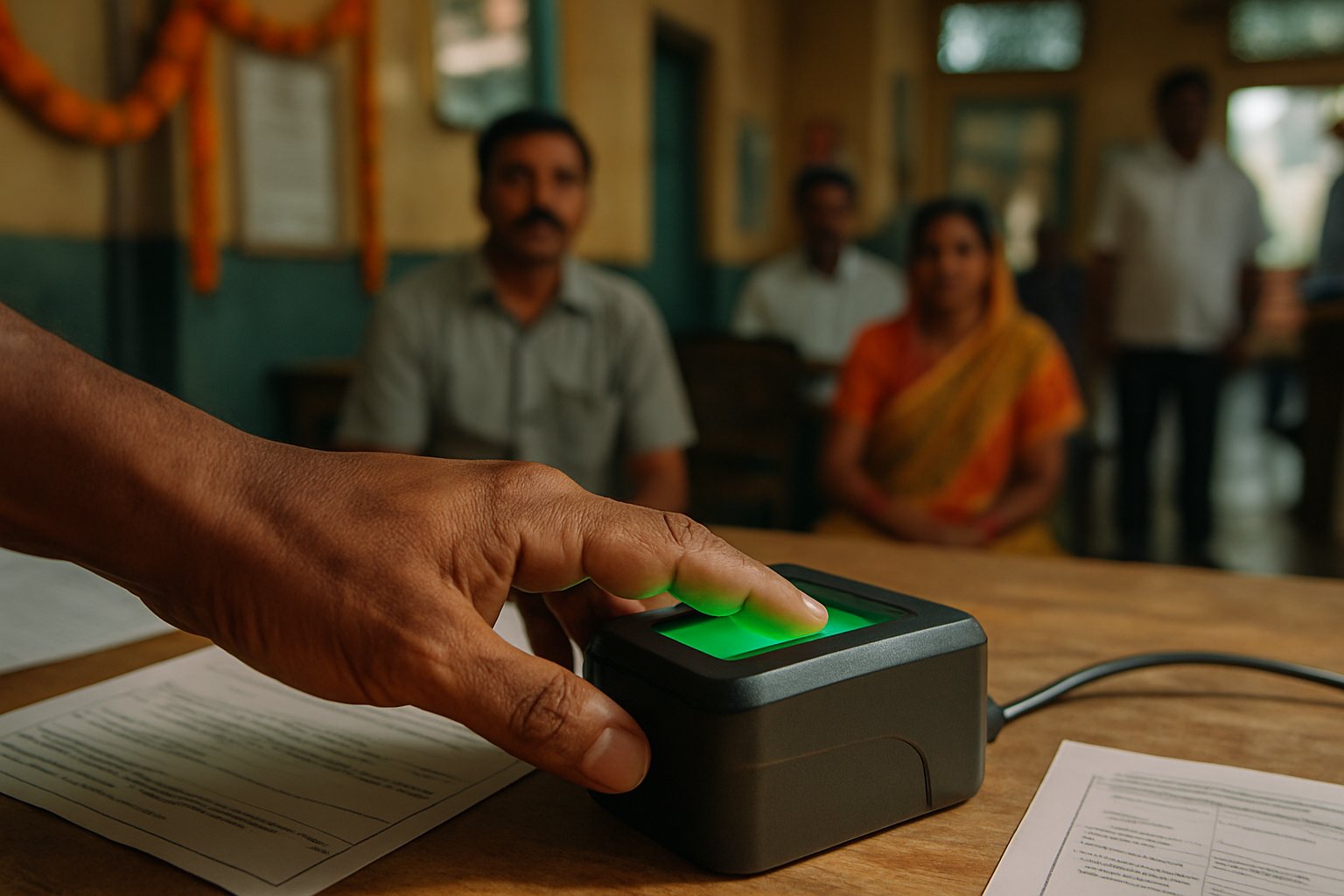
The numbers confirm unprecedented momentum. However, understanding what propels the curve is essential, which we examine next.
Drivers Behind Rapid Adoption
Several forces converged to push daily authentications higher. Firstly, face verification now runs on ordinary Android and iOS phones, avoiding dedicated scanners. Secondly, contactless design appeals during health conscious times, while speed reduces queue fatigue in branch offices. Additionally, more than 1,787 welfare and utility schemes accept live digital checks, widening mandatory touchpoints. Banks, fintechs, and telecoms integrated face APIs through the UIDAI sandbox, slashing onboarding costs.
Moreover, the authority resumed Level-1 device certification, nudging hardware vendors to ship secure readers at scale. Industry insiders say Biometric Governance Systems thrive when standards, software kits, and certification pipelines mature simultaneously.
Product innovation clearly underpins recent growth. Therefore, examining the revamped application offers concrete evidence.
Revamped Aadhaar Mobile App
Launched nationwide in February 2026, the new application introduces selective credential sharing and offline QR verification. In contrast, earlier Aadhaar tools required network calls for every transaction. Users may lock or unlock their biometrics, update contact numbers, and manage family profiles from one dashboard. Furthermore, the interface highlights consent prompts, reinforcing principles that anchor trustworthy Biometric Governance Systems. UIDAI reported one million mobile-number updates within ten days of release, signalling early traction.
Meanwhile, officials stress that verifiers should store encrypted tokens rather than raw biometric ID numbers. These design shifts promote data minimisation. Consequently, privacy safeguards move upstream, a theme that shapes industry opportunity.
The app converts abstract policy into daily practice. Subsequently, commercial entities sense fresh revenue potential.
Opportunities For Digital Industry
Financial institutions view real-time e-KYC as a route to shave minutes off customer onboarding. Moreover, payments firms link biometric ID checks with account fingerprinting to curb fraud in rural kiosks. Device manufacturers like NEXT Biometrics chase new contracts by obtaining Level-1 certification faster than rivals. Consequently, component orders surged after the November volume spike. Industry analysts forecast hardware sales crossing 134 crore rupees over the next fiscal, reflecting ecosystem confidence.
Additionally, developers can test integrations inside the official sandbox before production rollout, reducing compliance anxiety. Professionals can enhance expertise via the AI for Government™ certification. Such upskilling aligns with emerging Biometric Governance Systems deployment standards across public projects.
Key commercial gains include:
- Lower onboarding time by up to 80% according to ETBFSI surveys.
- Projected transaction fee revenue of 134 crore rupees from AEPS in 2026.
- Broader market entry for startups that leverage open APIs.
Wider rollout promises revenue alongside social dividends. Nevertheless, scrutiny around privacy keeps executives cautious, demanding balanced strategies.
Certification Pathways For Professionals
Career paths expand as governments worldwide adopt similar frameworks. Furthermore, the AI for Government program teaches risk assessment, audit design, and policy harmonisation for Biometric Governance Systems managers. Graduates often secure compliance or product roles inside major fintechs. Consequently, organisations benefit from staff who grasp both code and constitutional safeguards.
Professional skilling feeds directly into governance quality. In contrast, ignoring capacity building could magnify existing privacy debates.
Persisting Privacy Risk Debate
Civil-society researchers argue that leaks and exclusion persist despite technical upgrades. Moreover, fingerprint mismatch continues to affect manual labourers and the elderly in remote districts. The Centre for Internet & Society highlights cases where beneficiaries lost rations after repeated biometric ID failures. Nevertheless, UIDAI counters that overall failure rates remain below one percent nationally. Privacy advocates call for mandatory virtual IDs, stronger audits, and external algorithm reviews within Biometric Governance Systems. Meanwhile, the Supreme Court ruling of 2018 still restricts forced private-sector use, shaping business choices.
Clear oversight frameworks therefore remain essential. Subsequently, attention shifts to forthcoming legislation and watchdog capabilities.
Future Oversight And Regulation
Parliament is debating rules that align with the new Digital Personal Data Protection Act. Additionally, MeitY may mandate tokenisation by default when verifiers store Aadhaar identifiers. Global observers expect fresh guidelines on liveness detection, sandbox disclosures, and quarterly breach reporting. Draft policies also outlaw bulk biometric ID collection at unauthorized kiosks. Consequently, compliance budgets across banks and telcos are likely to rise. For policymakers, the challenge involves balancing innovation incentives against constitutional privacy guarantees.
Such calibration will determine public faith in large-scale Biometric Governance Systems for decades. Key next steps include independent audits of authentication failure rates and transparent publication of anonymised metrics. Therefore, media and academia should keep demanding granular data.
Robust oversight will safeguard inclusion and trust. Finally, stakeholders must act quickly before volumes grow even further.
India’s identity journey demonstrates the promise and pitfalls of modern Biometric Governance Systems. Record traffic, app innovation, and industry investment confirm momentum. However, privacy, exclusion, and fraud warnings remain present and urgent. Consequently, continuous oversight, robust standards, and skilled professionals will define sustainable success. Readers seeking leadership roles should consider structured learning avenues. To start, explore the AI for Government™ certification and join the next wave of secure digital transformation.
Disclaimer: Some content may be AI-generated or assisted and is provided ‘as is’ for informational purposes only, without warranties of accuracy or completeness, and does not imply endorsement or affiliation.


