

AI CERTS
2 months ago
POMA AI Delivers RAG Token Reduction Breakthrough
Moreover, that claim aligns with growing sustainability expectations in European AI circles. Patent US 12,517,941 describes hierarchical, lossless regurgitation that transforms raw documents into structured representations. Consequently, experts see potential synergy between advanced Document Intelligence workflows and the proposed approach.
Meanwhile, enterprises wonder how quickly the method can integrate with deployed RAG stacks. Subsequently, we examine the evidence, opportunities, and open questions surrounding this breakthrough. Therefore, understanding the mechanics behind the token savings becomes essential for architects designing scalable systems. This article dissects the patent, benchmark, and ecosystem impact in a concise, practitioner-oriented narrative. Additionally, readers will find actionable next steps and certification resources to sharpen competitive advantage.
Patent Signals New Momentum
Firstly, the January 2026 patent grants POMA legal validation of its hierarchical chunking concept. Nevertheless, patents alone seldom guarantee commercial traction in a fast-moving RAG market. The filing details a lossless traversal that maps every sentence into a positioned tree depth. Consequently, each retrieval unit preserves lineage and context, supporting reliable downstream generation. This design directly targets retrieval noise and excessive context windows that inflate bills.
Furthermore, the document references 10,000-token scenarios highlighting scalability under larger inputs. Experts in Document Intelligence note similarity with earlier XML path indexing research but applaud the patent's specificity. In contrast, fixed-size chunking ignores structural cues, increasing overlap and waste. These distinctions form the technical bedrock for the touted RAG Token Reduction. Therefore, the legal milestone signals readiness for enterprise pilots seeking defensible innovation.
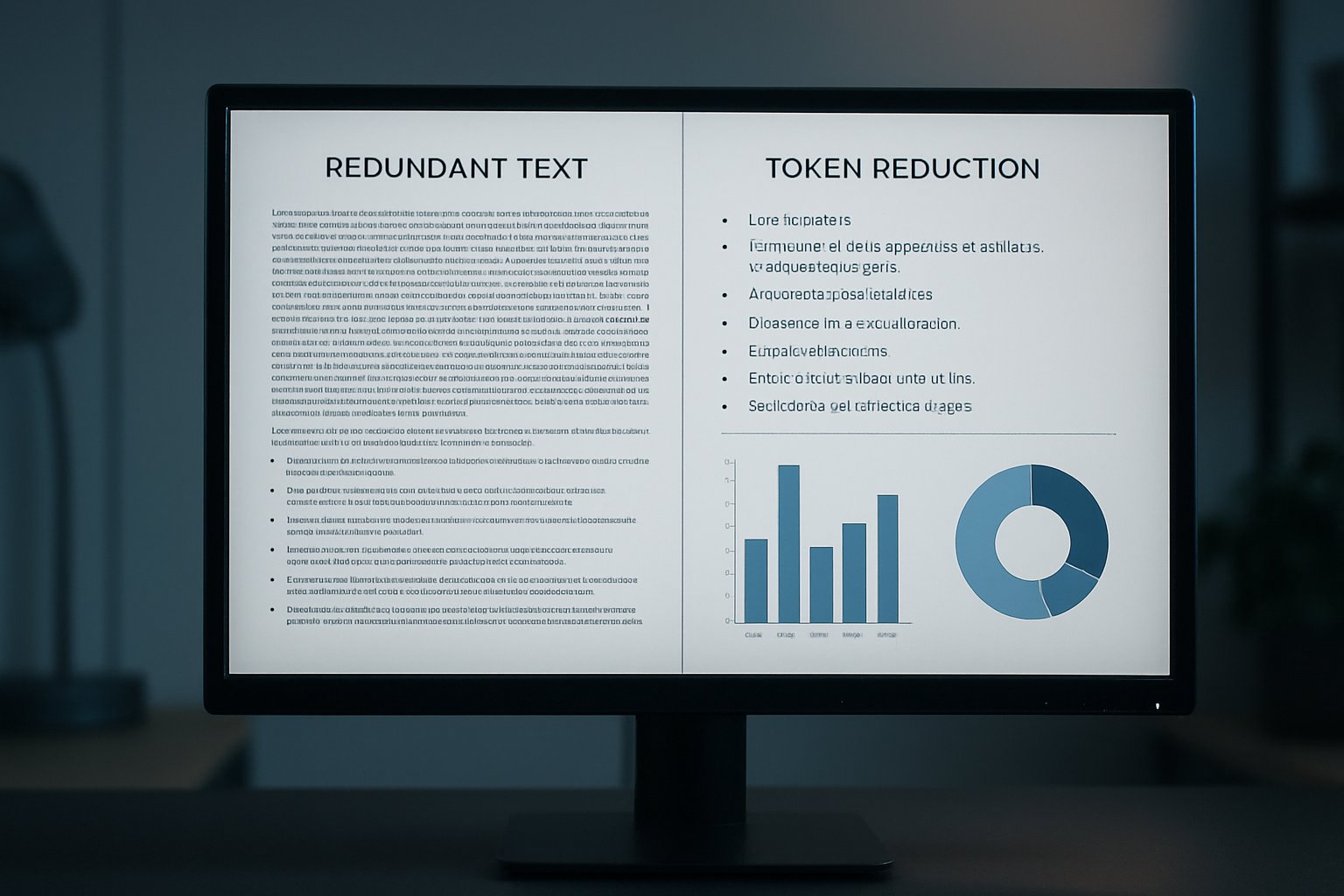
POMA now holds enforceable IP around hierarchical retrieval units. Consequently, attention shifts from paperwork toward real-world performance, explored next.
Inside The Chunkset Approach
Traditional RAG pipelines split text by characters or tokens, ignoring semantics. However, POMA begins with deterministic parsing that labels headings, paragraphs, and sentences. Each sentence receives a depth score reflecting its position within the document hierarchy. Subsequently, sentences merge into path-based chunksets that mirror root-to-leaf flows. This method avoids orphaned statements because parent context stays attached. Moreover, overlap disappears, trimming duplicate content from any later retrieval.
At query time, a lightweight search retrieves only the most pertinent chunksets. Then a cheatsheet builder assembles those bits into a deduplicated prompt block. Consequently, token counts fall sharply while semantic coverage remains intact. POMA calls the pipeline 'lossless hierarchical regurgitation' enabling reliable RAG Token Reduction for mixed document sets.
The architecture reframes Data Ingestion as structured decoding rather than blind segmentation. Therefore, understanding benchmark evidence becomes the logical next step.
Benchmark Numbers Explained Clearly
POMA published its headline metric on 10 June 2025 using a classic legal contract. Moreover, traditional retrieval consumed 1,542 tokens before generation began. The chunkset cheatsheet required only 337 tokens to answer the same question. Consequently, the delta represents almost 80% RAG Token Reduction savings. Cost calculators peg that difference at thousands of dollars monthly for heavy users.
However, the figure stems from an internal test lacking third-party replication. Independent engineers have not yet published corroborating numbers. Nevertheless, the dramatic ratio has sparked active social-media debate. Developers compare the sample against LangChain splitters and LlamaIndex hierarchical chunkers in private repos. Consequently, reproducible experiments are underway across finance and insurance sandboxes.
RAG Token Reduction Impact
- Baseline retrieval: 1,542 tokens, cost ≈ $0.31 per query with GPT-4-Turbo.
- Chunkset cheatsheet: 337 tokens, cost ≈ $0.07 per query, 78% lower.
- Projected global savings: $10B 2025, $30B 2027, $80B 2030, per POMA estimate.
These statistics illustrate potential Efficiency gains yet await independent auditing. Subsequently, energy and cost implications deserve closer inspection.
Cost And Energy Implications
Lower tokens translate directly into reduced compute cycles and carbon footprint. Therefore, CFOs and sustainability officers jointly evaluate POMA's projections. The company asserts cumulative savings reaching $80B globally by 2030 with broad adoption. However, macro numbers assume linear scaling, unchanged pricing, and consistent RAG Token Reduction rates.
Researchers from Berlin Technical University caution that energy intensity varies across clouds. Nevertheless, even conservative models show meaningful deltas when multiplied across millions of chats. Practitioners note that RAG Token Reduction also cuts latency because smaller prompts travel faster. Consequently, user experience improves alongside the financial upside.
- Smaller prompts, lower GPU time, immediate bill relief.
- Shorter sequences, decreased inference energy per query.
- Compact context, fewer hallucinations through tighter grounding.
These benefits strengthen the Efficiency narrative shaping procurement decisions. In contrast, integration complexity presents the next hurdle.
Integration And Tool Ecosystem
Enterprise architects rarely adopt standalone components without smooth interoperation. Consequently, POMA offers a REST API that aligns with existing Data Ingestion pipelines. Language libraries for Python wrap the endpoint and push chunksets into Pinecone or Qdrant. Furthermore, early plugins for LangChain and LlamaIndex reduce custom glue code. Local tests in Berlin offices showed sub-second preprocessing for medium manuals.
However, extremely large PDFs may still require batch indexing delays. Teams must profile preprocessing time against downstream RAG Token Reduction payback. Moreover, licensing terms tied to the new patent remain under negotiation.
Smooth integration will determine whether Document Intelligence teams embrace the technology widely. Subsequently, attention turns toward unverified risks.
Key Risks And Unknowns
Benchmark independence tops the list of concerns among cautious buyers. Additionally, expanding LLM context windows may erode the urgency of aggressive chunking. Google Gemini and Anthropic models already ingest 200,000 tokens in controlled labs. Nevertheless, RAG Token Reduction stays attractive because token costs still rise linearly. Integration overhead also matters, especially during frequent document updates.
In contrast, static repositories feel less pain from extra preprocessing. Legal teams will scrutinize patent claims to avoid infringement surprises. Consequently, open-source alternatives like SmartChunk and TeaRAG continue to attract experimentation.
These uncertainties warrant pilot projects before enterprise rollout. Therefore, strategic guidance becomes indispensable.
Conclusion And Next Steps
POMA AI's hierarchical pipeline delivers a compelling demonstration of RAG Token Reduction. Moreover, early numbers suggest significant Efficiency and sustainability upside. Data Ingestion complexity appears manageable for most Python-centric stacks. Nevertheless, independent replication must confirm the 80% headline claim. Organizations should launch controlled proofs-of-concept measuring cost, latency, and accuracy.
Consequently, stakeholders can judge trade-offs against emerging long-context models. Professionals can deepen expertise through the AI Data Robotics™ certification. Furthermore, tracking Berlin meetups offers firsthand insights from POMA engineers. Act now, pilot the approach, and capture early savings before competitors react.
Disclaimer: Some content may be AI-generated or assisted and is provided ‘as is’ for informational purposes only, without warranties of accuracy or completeness, and does not imply endorsement or affiliation.


