

AI CERTS
2 months ago
D-Robotics Raises $120M to Advance Embodied AI Robotics Chips
Investors are watching how quickly the remaining capital lands in company accounts. Consequently, analysts believe D-Robotics could extend runway well into 2027. Meanwhile, prior Series A financing of roughly US$100 million had already validated market interest. This article dissects the new raise, strategic positioning, and remaining uncertainties. Readers will get clear insights into funding mechanics, product roadmap, and competitive dynamics.
Moreover, the piece maps certification routes for practitioners seeking deeper domain credibility. Each section uses tight sentences for easy scanning by busy professionals. Global macro pressures have not slowed deep-tech financing.
Key Funding Round Details
HKEX filings show D-Robotics issued 249,736,023 Series B preferred shares in June–July 2025. Consequently, the aggregated consideration reached US$119.1 million, just shy of the headline US$120 million. Cash actually received stood at US$83.1 million when Horizon submitted the interim report. Moreover, the parent will retain control, because voting rights stay with Horizon until conversion. Such control terms are common in Startup Funding rounds led by strategic parents. Industry lawyers note that the agreements include customary anti-dilution provisions.
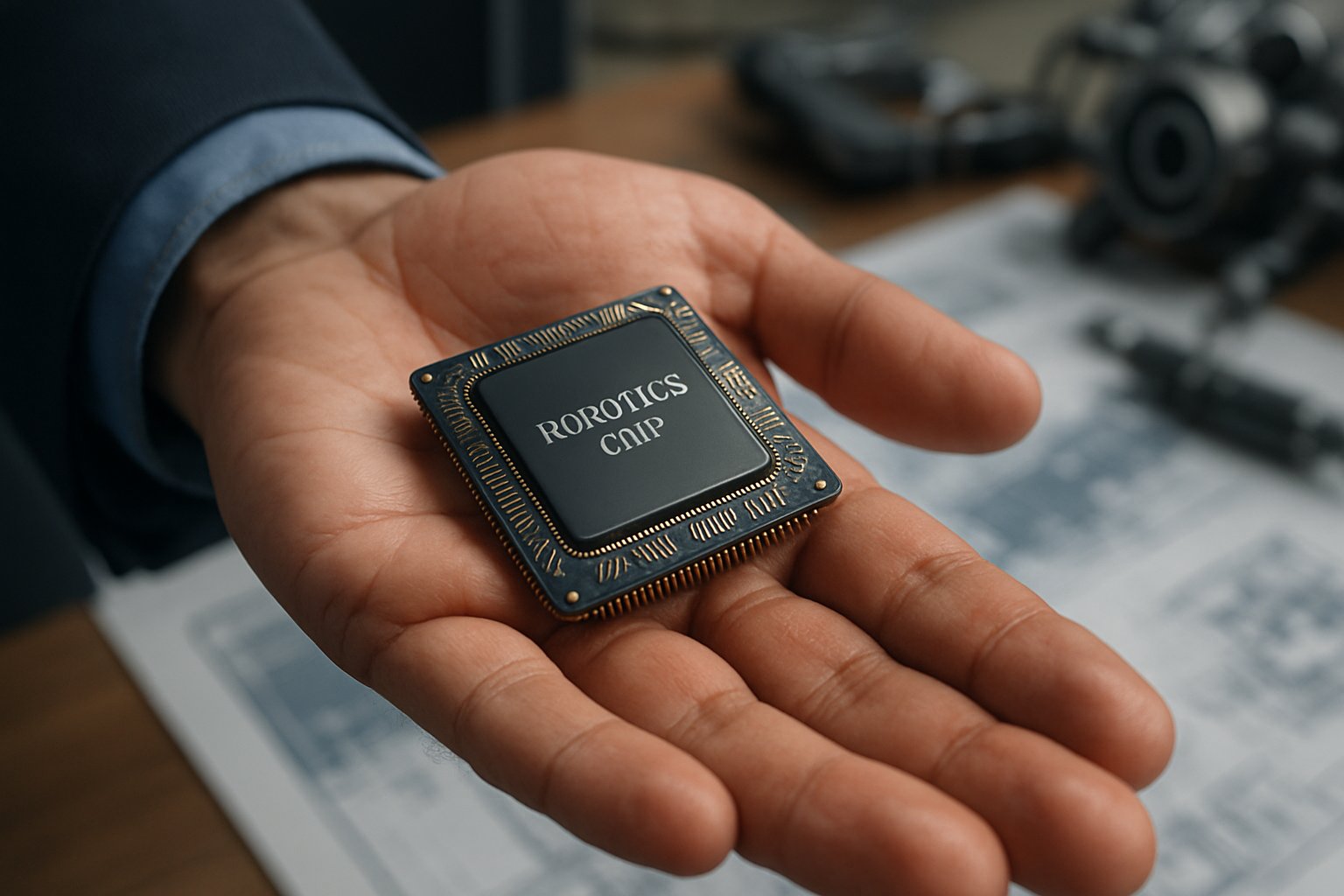
Preferred shares carry liquidation preference and conversion rights, ensuring downside protection for new investors. However, those instruments also affect eventual valuation during an IPO or trade sale. Consequently, observers await disclosure of post-money numbers once all tranches close. Venture Capital experts emphasise that clarity around cash schedules matters more than headline totals. Therefore, precise timing may influence hiring plans and silicon tape-out cadence. Observers estimate an implied pre-money valuation near US$450 million, based on share counts.
The filing confirms significant capital but leaves timing gaps. Nevertheless, these gaps set the stage for investor analysis in the next section.
Investor Landscape Shifts Ahead
Press reports named GL Ventures, 5Y Capital, and Vertex Growth in earlier rounds. However, the Series B investor roster remains undisclosed in public filings. Market sources suggest several cross-border Venture Capital funds participated, given D-Robotics’ export ambitions. Furthermore, strategic industrial players may have taken smaller tickets to secure supply priorities. Such mixed syndicates often balance deep pockets with Embodied AI Robotics domain reach. Confidential term sheets reportedly valued the company at a premium to regional peers.
Investor theses converge on one point: custom silicon integrated with software remains hard to replicate. In contrast, purely software robotics stacks face acute margin pressure. D-Robotics bundles compute, drivers, and toolchains, positioning itself as a full-stack Hardware platform. Consequently, competitive moats deepen as developer ecosystems lock in. Startup Funding at this scale indicates rising confidence in the vertically integrated model. Syndicate partners often require board information rights for operational oversight.
Investor composition will clarify once the cap table surfaces. Meanwhile, strategic diversity could shape product partnerships discussed next.
Product Roadmap Advances Rapidly
During iREX and DDC expos, D-Robotics launched its RDK S600 compute module. The platform links cloud training loops with on-device inference at the Edge. Furthermore, company executives highlighted a standardized pipeline for data collection and simulation. Embodied AI Robotics capabilities were showcased through vacuum, drone, and quadruped demos. Consequently, developers can prototype across multiple form factors without rewriting code. Developers welcomed expanded documentation and sample code released on GitHub.
Early customers reportedly drove 180% shipment growth year over year. Moreover, customer count jumped 200%, according to KR-Asia coverage. Such traction supports bullish Venture Capital narratives around robotic platform scalability. However, independent audits have not yet verified those figures. Therefore, analysts urge caution until audited numbers appear. Customer references now span logistics, cleaning, and inspection sectors.
- RDK S600 integrates eight-core CPU and dedicated AI accelerator.
- End-to-end latency reportedly under 15 ms on common vision tasks.
- SDK supports Python, C++, and ROS2 bindings.
- Edge deployment templates accelerate Embodied AI Robotics integration by 40%, per company tests.
Product acceleration underpins revenue narratives and valuation arguments. Nevertheless, technology advantages face industry risks explored next.
Market Risks Contextualized Clearly
Competition from NVIDIA and Qualcomm remains fierce in robotics compute. In contrast, domestic Chinese chip startups push aggressive pricing. Moreover, supply chain volatility after export controls could delay wafer deliveries. Edge customers require firm delivery timelines, amplifying pressure on D-Robotics operations. Consequently, any slip may erode trust among OEM partners. Embodied AI Robotics workloads require stable chip allocations to maintain real-time guarantees. Policy shifts could further complicate export license approvals for advanced accelerators.
Accounting complexity adds another layer of uncertainty. Preferred shares sit as liabilities until conversion, potentially masking leverage ratios. However, auditors will reassess once milestones for automatic conversion trigger. Venture Capital circles monitor covenant thresholds tied to future rounds. Startup Funding documents increasingly include protective clauses that can restrict operational freedom. Financial experts caution that liquidation preferences may hinder exit negotiations with strategic acquirers.
Operational and financial risks temper the bullish story. Consequently, strategic planning becomes critical, as outlined in the following outlook.
Strategic Outlook Moving Forward
Management plans to allocate new funds across silicon tape-outs, RDK software, and global channel build-out. Furthermore, the roadmap prioritizes energy-efficient Hardware optimised for mobile power budgets. Embodied AI Robotics remains the core narrative guiding both engineering and marketing agendas. Meanwhile, Horizon Robotics continues consolidating back-end manufacturing leverage for cost control. Therefore, synergy between parent and subsidiary could accelerate scale economies. Additionally, management aims to open a European research center in 2026.
Investors anticipate another raise before 2027, possibly labeled Series C. Such foresight helps venture partners model dilution and governance scenarios. Moreover, aggressive competition might force faster fundraising if market share lags. Edge deployment metrics will likely serve as key performance indicators for board decisions. Consequently, real-time analytics dashboards are reportedly under development for customer cohorts. Public listing options include STAR Market or dual-listing in Hong Kong.
The plan hinges on execution across silicon, software, and distribution. Nevertheless, professionals seeking career upside can prepare through targeted certifications.
Certification Pathways For Professionals
Skills gaps in robotics data pipelines continue to widen. Consequently, engineers and product leads pursue accredited training for competitive differentiation. Professionals can enhance their expertise with the AI-Robotics™ certification. Furthermore, course modules delve into Embodied AI Robotics deployment on constrained Hardware at the Edge. Startup Funding knowledge sections explain capitalization impacts on technical roadmaps. Online cohorts run every quarter, allowing flexible scheduling for working professionals.
Venture Capital mentors contribute guest lectures on term-sheet negotiation and board dynamics. Moreover, capstone projects require optimizing perception models using RDK S600 benchmarks. Consequently, graduates exit with both governance fluency and hands-on performance tuning skills. Embodied AI Robotics expertise, validated by certification, signals readiness for leadership roles. In contrast, generic AI courses seldom cover real-time control constraints. Scholarship programs support under-represented groups entering robotics engineering.
Targeted learning reduces onboarding cycles for rapidly scaling teams. Therefore, qualified talent will remain integral to the growth narrative summarized next.
Conclusion And Next Steps
D-Robotics’ Series B preferred share issuance confirms robust investor appetite despite market headwinds. Moreover, product momentum and ecosystem partnerships strengthen the thesis for Embodied AI Robotics platforms. However, supply, accounting, and disclosure risks require sustained vigilance from stakeholders. Consequently, continuous execution will determine whether the company can outpace entrenched incumbents. Meanwhile, professionals can future-proof careers by earning specialized certifications and monitoring subsequent filings. Stakeholders should monitor HKEX disclosures for definitive investor rosters.
Leverage the insights shared today to assess emerging opportunities across Hardware, Edge, and capital markets. Visit the linked certification to deepen technical mastery and strategic understanding. Act now to drive the next wave of Embodied AI Robotics innovation. Your expertise could shape safer, smarter machines for global industries. Stay informed and remain adaptive in this dynamic landscape.
Disclaimer: Some content may be AI-generated or assisted and is provided ‘as is’ for informational purposes only, without warranties of accuracy or completeness, and does not imply endorsement or affiliation.


