

AI CERTS
2 months ago
Consumer Robotics: Sunday Eyes $165M Series B Unicorn
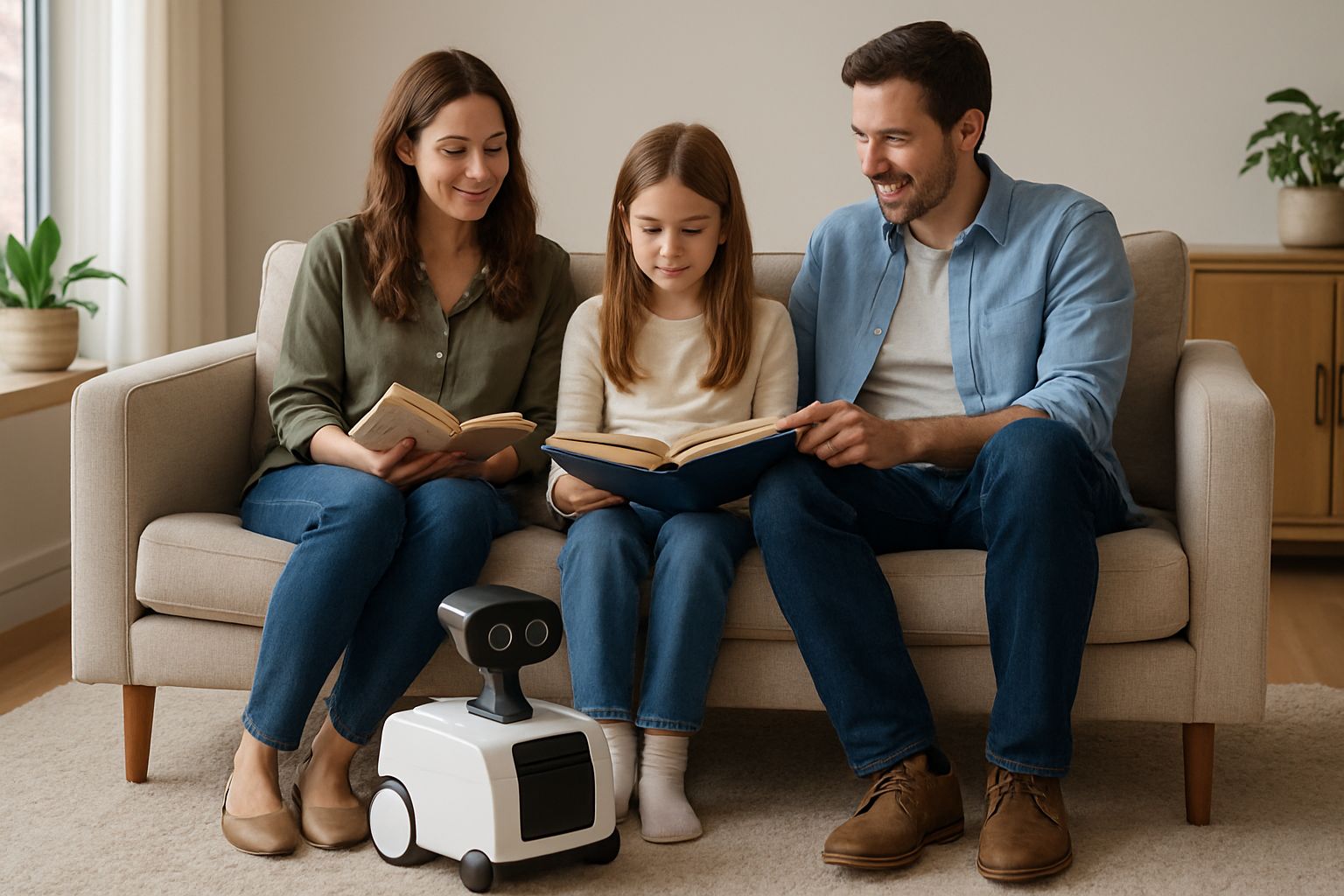
Major business outlets have not confirmed the raise, leaving analysts balancing excitement with journalistic caution.
This article unpacks the reported funding, underlying technology, market context, and next steps shaping Consumer Robotics progress.
Memo Robot Funding Status
Sunday publicly exited stealth in November 2025, disclosing $35 million in seed backing from Benchmark and Conviction.
Subsequently, online posts claimed an additional $165 million Series B funding led by Coatue at a $1.15 billion valuation.
However, no press release or SEC filing appeared, and Bloomberg, Reuters, or TechCrunch remain silent on the matter.
Industry veterans therefore classify the Coatue round as unverified until primary sources emerge.
Key possible uses for any fresh funding include scaling manufacturing, expanding data collection, and subsidizing the 50-family beta deployment.
These details illuminate Memo’s capital picture. Nevertheless, verification remains essential before investors adjust risk models.
Confirmed figures drive responsible analysis. Consequently, the next section explores why many investors still show interest.
Data Driven Robotics Edge
Memo’s learning pipeline distinguishes the startup within Consumer Robotics, relying on real household routines rather than simulated data.
Furthermore, Sunday collected roughly 10 million episodes using its Skill Capture Glove, priced between $200 and $400.
Each glove mirrors the robot’s joint geometry, consequently translating human motions into machine-readable trajectories.
Ken Goldberg, UC Berkeley professor, praised the approach as “a smarter kind of data capture,” while cautioning against hype.
- 10 million household episodes recorded
- 500+ diverse homes represented
- ACT-1 foundation model powering multi-step tasks
Such scale is rare in Consumer Robotics, offering Memo a proprietary moat.
Sunday’s dataset may unlock reliable performance. However, hardware decisions also influence reliability, as the following section discusses.
Key Hardware Design Choices
In contrast to biped rivals, Memo uses a wheeled base with a telescoping spine reaching roughly 2.1 meters.
This architecture lowers mechanical complexity, reduces energy demands, and improves safety inside cluttered home spaces.
Additionally, silicone-clad arms soften accidental contact, addressing liability concerns that shadow every autonomous household project.
Meanwhile, the platform integrates depth cameras and force sensors enabling delicate table-to-dishwasher transfers.
Such pragmatic choices delight some investors, yet critics note wheels limit access to stairs and multi-level homes. Consequently, design trade-offs typify Consumer Robotics engineering.
Hardware pragmatism offers clear benefits. Nevertheless, competitive pressure demands more than clever mechanics, as market forces reveal next.
Market And Competition Landscape
Consumer Robotics demand continues expanding, driven by aging populations and labor shortages in developed economies.
Consequently, startups like Figure, 1X, and The Bot Company pursue autonomous manipulation alongside giants including iRobot.
The startup attempts differentiation through data scale rather than humanoid form, an angle investors deem capital efficient.
- Figure: reportedly raised $900 million
- 1X: secured $100 million strategic backing
- iRobot: acquired by Amazon for $1.7 billion, pending regulators
Moreover, established appliance makers monitor the space, eyeing integrated robot-ready kitchens.
The competitive map shows money chasing execution. Therefore, understanding remaining challenges becomes critical.
Challenges Facing Deployment Today
Real homes differ wildly; dishwashers vary, pets roam, and fragile glassware breaks easily.
Therefore, even advanced autonomous control must handle chaos without harming people or property.
Additionally, battery life, connectivity outages, and unexpected children’s toys require robust fallback behaviors.
Safety regulations are still evolving, leaving manufacturers to self-certify many aspects.
Cost also looms; manufacturing two-armed robots affordably demands supply-chain discipline and substantial funding.
These hurdles temper exuberance. Subsequently, professionals may seek specialized skills to navigate them, as the next section outlines.
Skills And Certification Paths
Engineers entering Consumer Robotics need expertise across perception, control, human-robot interaction, and compliance.
Fortunately, independent credential programs exist.
Professionals can enhance their expertise with the AI Robotics Specialist™ certification.
Moreover, Sunday’s open glove dataset offers researchers practical source material for coursework and prototypes.
Building talent pipelines supports investors’ funding expectations by accelerating real-world deployments.
Upskilled teams shorten development cycles. Consequently, attention returns to what Sunday must accomplish next.
Next Steps And Outlook
Sunday plans a 50-home beta late in 2026, collecting performance logs and failure cases for iterative learning.
Furthermore, confirmation of the Coatue funding would extend runway toward that milestone and eventual retail launch.
Meanwhile, the wider Consumer Robotics sector watches, gauging public trust and willingness to invite robots indoors.
Successful trials could validate Sunday’s data-first thesis, consequently influencing design choices industry-wide.
Nevertheless, missed timelines would reinforce skepticism rooted in past household robot disappointments.
The coming 24 months decide Memo’s fate. Therefore, staying informed remains vital for investors and technologists alike.
Memo captures the promise and peril of Consumer Robotics at its most ambitious. For Consumer Robotics to mature, evidence must replace rumor. The startup boasts rare data volume, pragmatic wheels, and potential new funding, yet confirmation gaps persist. Moreover, market rivals, safety hurdles, and cost pressures demand disciplined execution and transparent communication. Consequently, now is the moment to deepen technical skills. Explore the linked certification to gain practical robotics expertise and shape the next household revolution.
Disclaimer: Some content may be AI-generated or assisted and is provided ‘as is’ for informational purposes only, without warranties of accuracy or completeness, and does not imply endorsement or affiliation.


