

AI CERTS
2 months ago
Revenue Sharing Stakes in NVIDIA’s China Chip Export Turmoil
This article unpacks the numbers, licenses, and competitive fallout now reshaping NVIDIA's regional outlook. Moreover, it offers pragmatic guidance for executives steering supply chains through unpredictable sanctions. Readers will learn why limited licenses, possible government Revenue Sharing demands, and fierce local rivals matter. Meanwhile, strategic options remain for leaders who plan early and diversify partners.
Professionals can validate that planning through the AI Supply Chain™ certification. Prepare for concise data, balanced perspectives, and actionable insights in the sections that follow.
Policy Shock Timeline Details
October 2025 marked the nadir of NVIDIA’s presence in China’s data-center accelerator market. In contrast, fiscal 2025 had seen China contribute $17.108 billion, or 13.1 percent of company sales. Subsequently, April 9, 2025 restrictions required licenses for any H20 chips exceeding specific bandwidth thresholds. Therefore, first-quarter fiscal 2026 could not ship $2.5 billion of booked orders. Moreover, management absorbed a $4.5 billion inventory charge, signalling the immediate balance-sheet pain. The timeline below highlights key milestones shaping the policy shock.
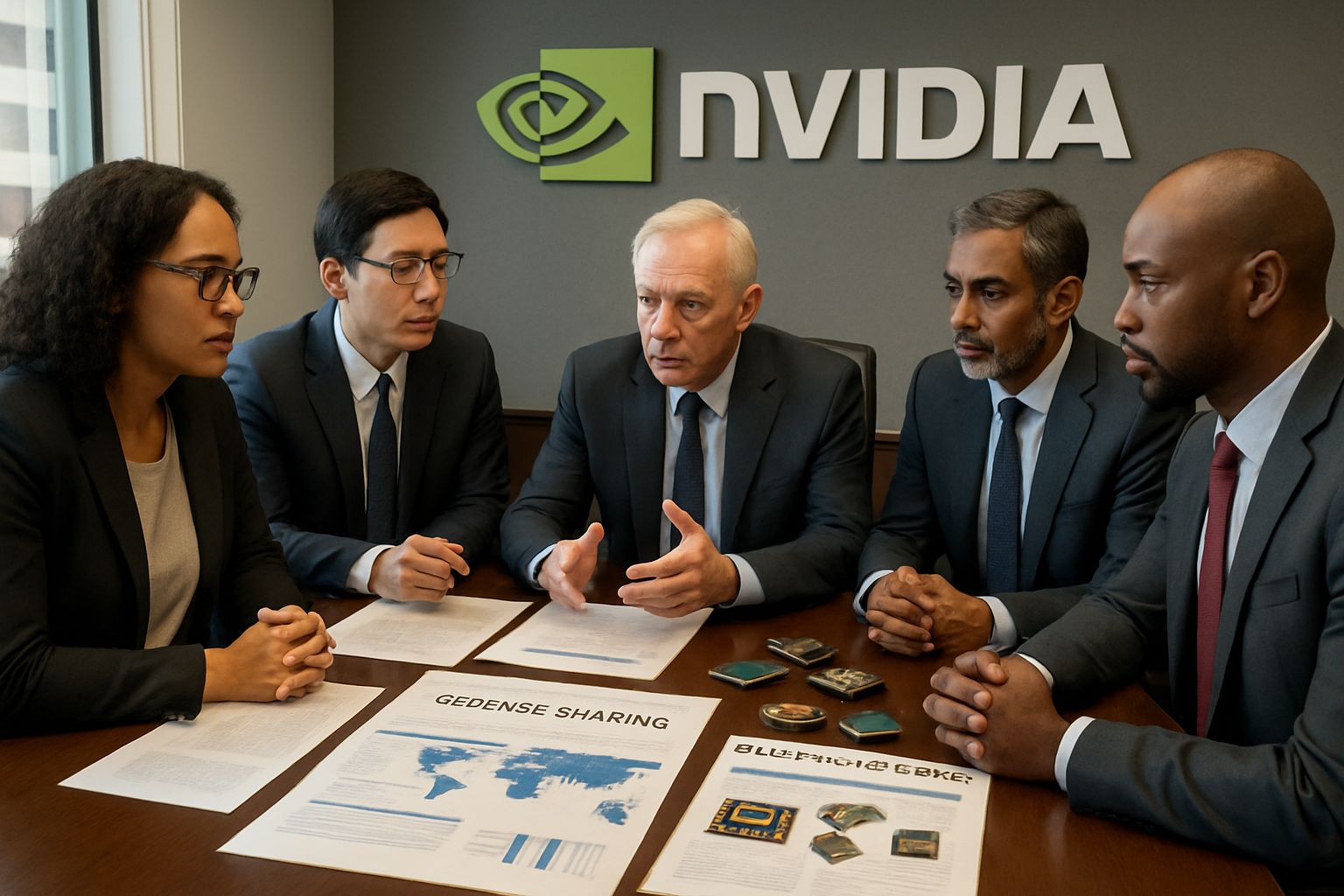
- April 9 2025: License mandate issued, halting new H20 departures toward China.
- May 28 2025: Q1 press release revealed $4.6 billion H20 sales booked before notice.
- May 28 2025: Same release forecast roughly $8 billion lost second-quarter opportunities.
- Aug 27 2025: Q2 results showed zero H20 shipments into China, despite global demand.
- Feb 2026: Limited license approved, permitting $60 million H20 sales under strict oversight.
The sequence reveals a rapid contraction from double-digit geographic contribution to near elimination. Nevertheless, subsequent licenses hint at a partial, costly reopening. That financial whiplash becomes clearer once we examine the headline numbers.
Financial Impact Snapshot Overview
First-quarter fiscal 2026 illustrated the math brutally. Total company revenue reached $44.1 billion, yet licensed geography contributed only 9.1 percent. Consequently, management warned that the next quarter might surrender another $8 billion of high-margin sales. Moreover, the $4.5 billion inventory write-down slashed gross margin by nearly twelve points.
In contrast, fiscal 2025 revenue still benefited from robust H20 momentum inside regional cloud customers. Those earlier numbers explain why leadership framed the controls as materially adverse. CEO Jensen Huang even declared the firm had fallen from ninety-five percent share to zero across advanced accelerators.
Analysts at Bernstein estimate that licensed export recovery could eventually restore $10-15 billion in annual takings. However, any rebound faces margin drag from possible Revenue Sharing obligations embedded in license agreements. Management disclosed government expectations of such Revenue Sharing in its January 2026 filing.
Taken together, headline revenue swings underscore extreme sensitivity to regulatory surprises. Consequently, understanding the license mechanics becomes critical, as the next section illustrates.
Licensing And Market Access
Licenses arrive slowly and carry burdensome conditions. Subsequently, Commerce requires end-use checks, on-site inspections, and potential technology transfers. In addition, the February 2026 approval for limited H200 quantities demanded quarterly performance reporting. Therefore, fulfillment cycles elongate, and customer procurement teams hedge with domestic alternatives.
Each shipment may also trigger a negotiated Revenue Sharing clause, reducing operating margin relative to unrestricted volumes. Nevertheless, licensed pathways still matter because they maintain technical engagement with strategic hyperscalers.
- Margin haircut of five to ten points due to Revenue Sharing and compliance overhead.
- Visibility gaps, since license renewals remain discretionary and time limited.
- Competitive data leakage during mandatory third-party inspections.
These constraints compress profitability just as local suppliers scale. Consequently, competitive dynamics intensify, as we explore next.
Competitive Landscape Rapid Changes
Huawei and Cambricon swiftly launched accelerator lines targeting workloads once dominated by NVIDIA. Meanwhile, provincial governments offered subsidies to speed local fabrication, software, and system integration. In contrast, multinational cloud firms diversified supply, purchasing from both regional champions and resellers with license allocations.
Bernstein predicts domestic vendors could capture one-third of displaced demand within two years. However, software ecosystem depth, particularly CUDA compatibility, remains a formidable moat. Consequently, partial licensed deliveries, even under Revenue Sharing, help NVIDIA preserve developer loyalty.
Executives should therefore weigh participation despite slimmer margins. The alternative risks ceding entire account relationships to rivals that bundle hardware, cloud credits, and services.
Competitive momentum now hinges on timely licenses and sustained software stickiness. Subsequently, strategic risk management becomes paramount, as our next section outlines.
Strategic Outlook And Risks
Boards must assess scenario ranges across policy, technology, and cash flow. Moreover, finance teams should model three distinct paths: continued license approvals, full export ban, or negotiated détente. Each path alters Revenue Sharing probabilities and gross margin assumptions.
- License volume cap per quarter.
- Effective Revenue Sharing percentage imposed by authorities.
- Domestic chips performance parity timeline.
- Unit pricing erosion amid rising local supply.
Additionally, currency shifts, logistical insurance, and tariff escalations deserve attention. Nevertheless, governance structures often overlook geopolitical metrics until shocks materialize.
Risk models clarify capital allocation choices during uncertain licensing cycles. Consequently, leaders need practical next steps, discussed in the closing section.
Actionable Insights For Leaders
Firstly, maintain a rolling inventory of substitute chips to shield critical projects. Secondly, diversify invoice locations to dampen headline revenue volatility in public disclosures. Thirdly, negotiate clause language that caps Revenue Sharing at predetermined thresholds tied to performance metrics. Furthermore, embed automatic renegotiation triggers if export rules shift again.
Talent development supports these actions. Professionals can deepen supply-chain analytics expertise through the earlier mentioned AI Supply Chain™ credential. That coursework covers resilience modeling, license compliance, and geopolitical scenario planning.
Concrete steps accelerate readiness amid volatile policy landscapes. Therefore, informed execution will separate winners from laggards as market conditions evolve.
NVIDIA's journey illustrates how swiftly regulation can redirect market gravity. However, disciplined scenario planning cushions financial blows and safeguards developer ecosystems. Limited license channels, although margin thin, preserve customer intimacy and vital data feedback loops. Revenue forecasts remain fluid, yet proactive governance minimizes surprise. Consequently, executives who secure talent, diversify hardware, and negotiate sharing clauses wisely will outpace peers. Embark on that preparation today by enrolling in AI Supply Chain™ and fortify competitive resilience.
Disclaimer: Some content may be AI-generated or assisted and is provided ‘as is’ for informational purposes only, without warranties of accuracy or completeness, and does not imply endorsement or affiliation.


