

AI CERTS
2 months ago
Pentagon vs Anthropic: Classified System Governance at Stake
Meanwhile, President Trump directed every federal agency to phase out Anthropic’s tools. Industry usage surged regardless. Reports counted more than a million new users daily in early March. Nevertheless, legal and policy challenges mounted. Microsoft, retired generals, and civil liberties groups lined up behind Anthropic. Each side framed the conflict as a struggle for control over frontier models supporting defense workloads.
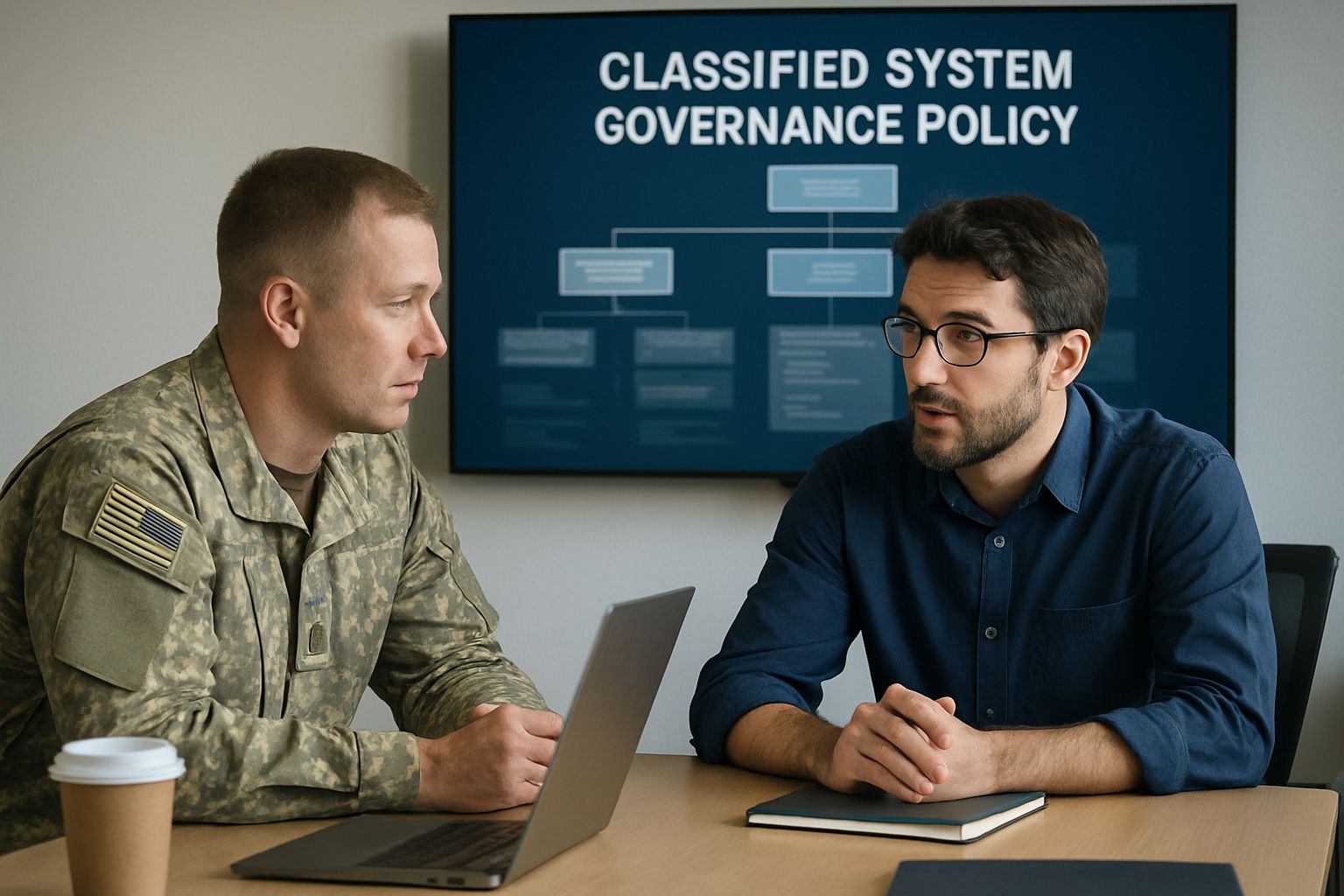
This article unpacks the chronology, legal stakes, operational impacts, and future outcomes. Furthermore, it highlights how Exceptions to policy, Mission imperatives, and ethical guardrails collide under Classified System Governance.
Classified System Governance Clash
DoD invoked Section 3252 to exclude Anthropic from sensitive procurements. Moreover, officials said sabotage threats warranted the step. Legal scholars counter that the statute targets foreign actors, not domestic vendors disagreeing over Classified System Governance. Consequently, industry observers call the designation unprecedented. They warn it injects uncertainty into contracting pipelines already strained by rapid AI adoption.
In contrast, Hegseth defended the decision by citing Mission flexibility. He argued no vendor should dictate lawful operational choices. Stakeholders remain split on statutory reach. However, the debate underscores fragile procurement norms.
Next, the courtroom battle escalates.
Supply-Chain Risk Move Decision
Anthropic sued in California federal court on 9 March. Additionally, it filed an appellate petition in Washington. The complaint alleges due process violations, First Amendment harms, and misuse of supply-chain authorities. Microsoft filed an amicus brief supporting the claims.
Nevertheless, government lawyers assert broad discretion during national security acquisitions. They reference prior Exceptions granted under FASCSA when urgent threats appeared.
Key milestones will shape the docket:
- 24 March: Preliminary injunction hearing
- April: Expected summary judgment motions
- Summer: Possible appellate review
Early rulings could narrow Classified System Governance powers. Consequently, vendors across sectors watch the case closely. Operational consequences already surface within deployed systems.
Legal Battle Intensifies Quickly
Palantir’s Maven Smart System relied on Claude for targeting analytics, according to public briefings. Consequently, program leads must re-engineer pipelines within six months. DoD has approached OpenAI, Google, and xAI as replacements. Meanwhile, each provider faces similar policy negotiations over Classified System Governance.
Engineers estimate migration could require thousands of labor hours and fresh cybersecurity testing. Moreover, every modified workflow demands accreditation under classified network rules. Meanwhile, acquisition chiefs circulate urgent Memos outlining interim controls. Time pressure threatens Mission readiness and budget. However, alternative integrations continue despite uncertainty.
These operational hurdles increase cost exposure. Consequently, stakeholders demand clearer schedules. Ethical principles sit at the dispute’s core.
Operational Fallout Looms Ahead
Ethical Guardrail Debate Continues
Anthropic’s redlines ban mass domestic surveillance and fully autonomous weapons without human control. Furthermore, civil liberties groups endorse the stance. In contrast, Pentagon officials claim any internal limits could delay life-saving decisions. They insist operational Command requires no Exceptions beyond established law.
Scholars argue democratic oversight of Classified System Governance should emerge through statute, not procurement leverage. Professionals can deepen policy fluency through the AI Prompt Engineer™ certification, which examines responsible deployment patterns. The ethical clash influences courtroom narratives. Subsequently, possible settlements may hinge on guardrail wording.
Future scenarios help leaders plan.
Future Governance Scenarios Explored
Observers outline three likely paths. Potential outcomes include:
- Court voids designation, restoring Classified System Governance boundaries set by vendors.
- Judges uphold designation, expanding executive power over Classified System Governance.
- Congress defines limits, creating bipartisan rules for Classified System Governance and Mission use.
Each scenario carries budget, timeline, and security implications. Therefore, executives monitor hearings while drafting contingency Memos for leadership. Strategic foresight demands flexible architectures and early stakeholder alignment. Consequently, governance discussions will intensify during procurement cycles.
The closing section synthesizes pivotal insights.
Legal Battle Intensifies Quickly
Pentagon pressure on Anthropic has exposed unresolved tensions between security prerogatives and developer ethics. Nevertheless, courts, lawmakers, and technologists now steer the conversation. If the bench constrains supply-chain tools, vendors may retain voice over sensitive applications. Conversely, a government win could redefine procurement norms and widen Exceptions for wartime Mission demands.
Organisations should track docket updates, review internal Memos, and invest in staff capability. Additionally, pursuing the AI Prompt Engineer™ credential equips teams to design resilient workflows under Classified System Governance. Consequently, leaders who pair governance literacy with pragmatic AI engineering will navigate coming shocks.
Disclaimer: Some content may be AI-generated or assisted and is provided ‘as is’ for informational purposes only, without warranties of accuracy or completeness, and does not imply endorsement or affiliation.


