

AI CERTS
2 months ago
System-Level Silicon Verification Drives Next-Gen Chip Scale
Rising Complexity Spurs Demand
Design sizes continue exploding. Meanwhile, software content keeps climbing. Engineers therefore confront a brutal verification bottleneck. Market researchers estimate HAV spending will exceed USD 1 billion by 2030, growing roughly 15 percent annually. Synopsys calls this surge inevitable because AI workloads thrive only when early software bring-up succeeds.
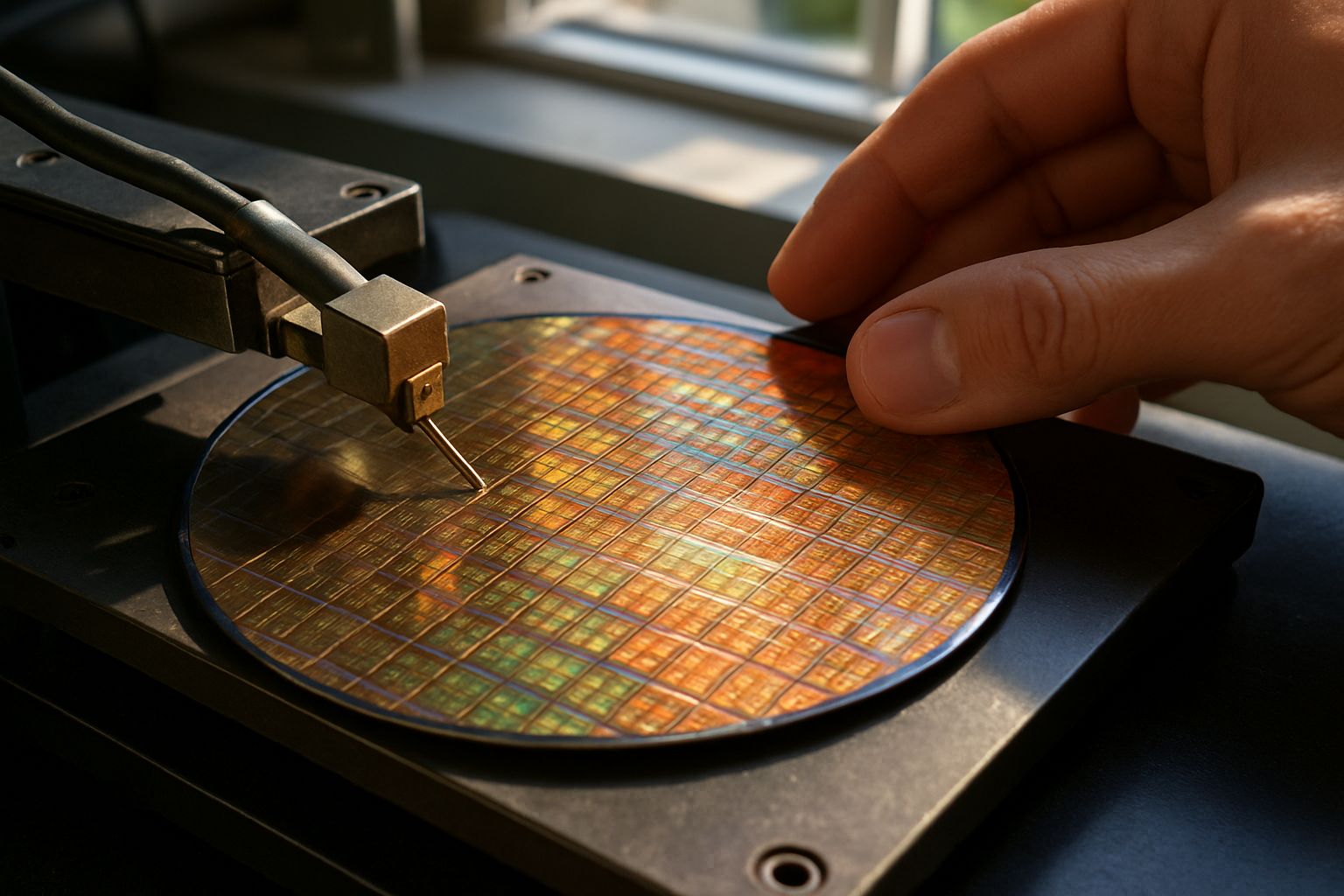
Rebellions’ Rebel-Quad case study illustrates the payoff. The startup reached demo readiness five weeks after first silicon, citing 95–98 percent correlation between emulation results and measured power. These numbers highlight the promise of System-Level Silicon Verification for time-critical AI launches.
Such success stories accelerate adoption. However, soaring gate counts demand fresh capacity. Designers moving from 240 million to 23 billion gates now need scale-out approaches, not incremental tweaks.
These forces confirm a simple truth. Effective verification now hinges on hardware support. Nevertheless, methodology choices still influence ROI. The next section explores those choices.
Hardware Assisted Methods Advance
Hardware-Assisted Verification, or HAV, blends FPGA prototypes and cycle-accurate emulators. Consequently, teams execute long software workloads days faster than simulation alone. Synopsys’ latest ZeBu-200 hardware claims double previous performance and scales from 240 million to 23 billion mapped gates. Independent labs, in contrast, report 15.4 billion for certain configurations. Capacity differences usually reflect mapping rules, yet both sets dwarf pure simulation limits.
Additionally, modular ZeBu Server 5 partitions work across racks, breaking the 60 billion-gate barrier for mega multi-die projects. Consequently, engineers can test cache coherency and inter-die protocols under real traffic without waiting for silicon.
Key HAV advantages include:
- Cycle fidelity that uncovers system deadlocks before tape-out
- High throughput enabling full OS boots overnight
- Unified debug views through Verdi and shared compilation flows
These benefits reduce costly respins. However, power footprints and capital costs remain steep, reaching kilowatt levels for large chassis.
Hardware acceleration clearly matters. Yet, software layers now decide day-to-day productivity. Therefore, we next examine Synopsys’ “software-defined” pivot.
Software Defined Approach Emerges
Synopsys frames its March 2026 release as “software-defined HAV.” Firmware updates now deliver real-number modeling, fault injection, and automated regression orchestration. Furthermore, continuous toolchain refreshes unlock debug bandwidth for existing hardware, protecting investment.
HAPS-200 exemplifies this trend. A single 1-FPGA desktop variant shares compile flows with the 12-FPGA rack model. Consequently, developers move early subsystem code on their desks and later migrate images unchanged to data-center emulation. This flexibility supports agile methods while sustaining System-Level Silicon Verification consistency.
Moreover, EP-Ready hardware lets engineers flip between emulation and prototyping modes. Utilization therefore rises, easing budget approval. Salil Raje from AMD notes the synergy: “FPGA-based emulation and prototyping play a central role.”
Software innovation thus amplifies HAV hardware. These upgrades narrow the gap between prototype speed and emulator visibility. Yet, emulation alone cannot cover every requirement. Next, we explore how blended flows enhance scalability.
Emulation And Prototyping Synergy
Many teams now orchestrate both engines inside one continuum. Synopsys’ Verification Continuum links Virtualizer, VCS simulation, ZeBu emulation, HAPS prototyping, and Verdi debug. Consequently, single-step compilation enables quick engine swap-outs. Engineers verify power events in ZeBu, then validate driver timing on HAPS at near-silicon speed.
Furthermore, AMD Versal VP1902 FPGAs embedded in HAPS-200 deliver 2–4× debug throughput over older devices. Developers therefore watch real traffic while maintaining low probe latency.
Scalability also improves. HAPS-200 configurations reportedly reach 10.8 billion gates, although official specs vary. Regardless, shared transactors and virtual models preserve stimulus compatibility across capacities. These smooth handovers embody System-Level Silicon Verification principles.
Integrated flows shorten schedules. However, rivals target similar outcomes. Consequently, understanding the landscape remains critical.
Competitive Landscape Analysis Insights
Cadence’s Palladium Z2 and Protium X2 platforms battle ZeBu and HAPS on capacity and compile speed. Siemens EDA counters with Veloce systems emphasizing mixed-signal coverage. Analysts nevertheless rate Synopsys ahead on modular scale and EP-Ready flexibility.
Market differentiation now centers on three metrics:
- Effective wall-clock throughput per rack
- Unified debug depth across engines
- Deployment Scalability into cloud resources
Synopsys invests in cloud compile acceleration using EPYC servers. Meanwhile, competitors strengthen SaaS options to catch up. Consequently, buyers should benchmark compile turnarounds on representative multi-die designs.
Choice also affects toolchain lock-in. Therefore, procurement teams must weigh short-term wins against ten-year roadmap alignment. These considerations shape future strategy, discussed next.
Future Scaling Challenges Ahead
Chiplet architectures push gate counts beyond 60 billion, stressing even modular emulators. Moreover, thermal limits cap rack density, constraining on-prem footprints. Consequently, hybrid on-prem plus cloud models gain favor. Synopsys already pilots elastic ZeBu capacity bursts through managed datacenters.
Model fidelity also remains a concern. Real-number abstractions ease mixed-signal load, yet analog precision can drop. Nevertheless, automated correlation loops and fault injection improve confidence over time.
Looking forward, software bring-up teams will demand real-time co-simulation with functional safety frameworks. Therefore, vendors must integrate ISO 26262 and IEC 61508 coverage into HAV dashboards.
Professionals eager to lead this evolution can validate skills with the AI Educator™ certification. Such credentials demonstrate readiness to architect next-generation System-Level Silicon Verification workflows.
Upcoming requirements remain daunting. However, disciplined planning can convert challenges into market leadership.
Conclusion
System-Level Silicon Verification now defines competitive cadence for AI and HPC SoCs. HAV platforms, software-defined upgrades, and EP-Ready flexibility collectively shrink bring-up cycles. Furthermore, unified flows bridge emulation and prototyping, preserving debug context across capacities. Market rivals race to match Synopsys’ modular scale, yet buyers must scrutinize throughput, cloud elasticity, and roadmap fit.
Consequently, engineering managers should pilot blended ZeBu-HAPS deployments, measure compile savings, and align budgets with long-term scalability goals. Interested readers can deepen expertise through the linked certification and by following upcoming product releases. Act now to ensure your next multi-die project reaches tape-out on schedule.
Disclaimer: Some content may be AI-generated or assisted and is provided ‘as is’ for informational purposes only, without warranties of accuracy or completeness, and does not imply endorsement or affiliation.


