

AI CERTS
4 months ago
NeuPro-Nano Awards Signal Edge Intelligence Scaling Momentum
Consequently, many engineers evaluate NeuPro-Nano through the lens of Edge Intelligence Scaling. The discipline pushes optimized inference closer to data sources. Moreover, market projections predict double-digit CAGR for edge AI and intensify scrutiny. This article unpacks the awards, technology, ecosystem, and risks for technical leaders.
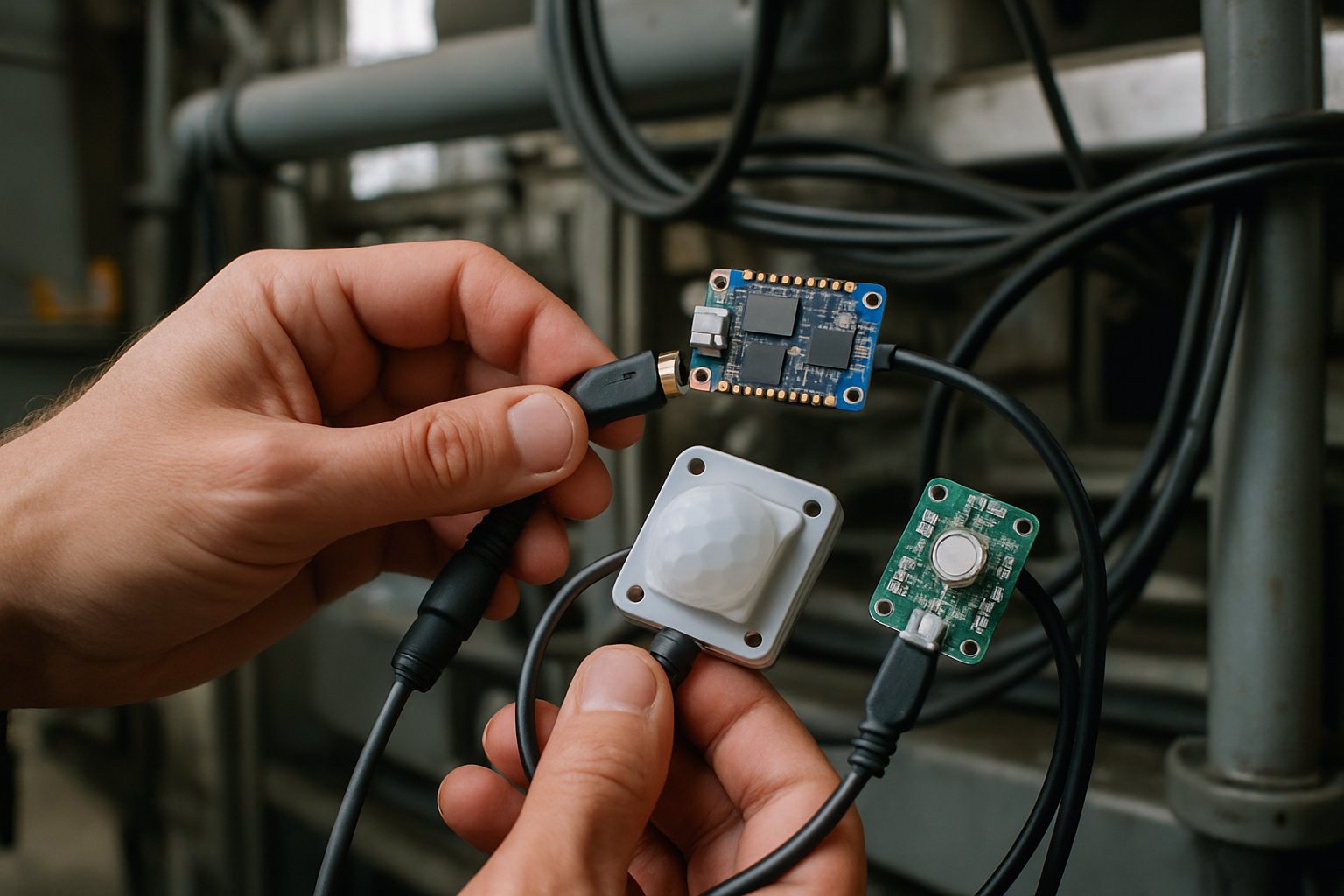
Awards Fuel Edge Momentum
NeuPro-Nano secured three major accolades between 2024 and 2026. Firstly, the 2025 IoT Edge Computing Excellence Award recognized its role in smart-edge deployments. Subsequently, embedded-world listed the core among its 2026 Embedded Award winners. Previously, EE Awards Asia named it Best IP Processor in late 2024. Ceva executives argue that repeated honors validate the design’s low-power vision. Nevertheless, investors remained cautious, as Ceva shares fell 14% after the 2025 announcement.
Therefore, awards supply publicity yet do not guarantee revenue. Analysts demand concrete design wins before revising shipment forecasts. These insights underscore the difference between marketing impact and real silicon traction.
Industry praise brightens NeuPro-Nano’s profile. However, hard adoption metrics will determine its long-term standing. Consequently, technical differentiation deserves closer inspection.
NPU Technical Differentiators Explained
NeuPro-Nano targets 10–200 GOPS across NPN32 and NPN64 configurations. Moreover, its standalone architecture executes inference, DSP tasks, and control code within one core. Consequently, some designs omit a companion MCU and save die area by up to 45%. NetSqueeze processes compressed weights directly and cuts model memory by as much as 80%. Such compression improves on-chip Efficiency and reduces off-chip access energy.
Edge Intelligence Scaling benefits from lightweight transformers, and NeuPro-Nano now supports those networks. However, performance still trails larger NPU blocks targeting complex vision. Independent benchmarks remain scarce, so designers should request workload-specific power figures.
NeuPro-Nano excels at memory conscious TinyML inference. Nevertheless, engineers must align workloads with its GOPS envelope. Meanwhile, ecosystem support seeks to smooth that evaluation phase.
Ecosystem Partnerships Accelerate Adoption
Edge Impulse integration offers drag-and-drop model conversion and NVIDIA TAO training pipelines. Furthermore, Sensory’s TrulyHandsfree wakeword engine enables always-on voice with sub-milliwatt budgets. Elia Shenberger emphasizes that developers can prototype audio use cases in days instead of weeks.
Chad Lucien adds that turnkey tools reduce porting friction, a common hurdle for standalone cores. In contrast, competing IP vendors often rely on external microcontrollers, complicating software flows. Consequently, Ceva hopes the streamlined stack shortens customer time-to-market.
- Faster computer vision deployment through Edge Impulse templates.
- Voice activation with Sensory libraries at micro-watt Efficiency.
- Cross-platform model zoo covering common IoT sensors.
Tooling breadth widens NeuPro-Nano appeal. However, ecosystem promises require sustained partner investment. Next, market forecasts place these efforts within a sizable revenue opportunity.
Market Growth Projections Overview
Grand View Research estimates edge AI revenue will grow at up to 20% CAGR through 2033. In contrast, BCC Research predicts a jump from $11.8 billion in 2025 to $56.8 billion by 2030, a 36.9% CAGR. Therefore, suppliers like Ceva position IP portfolios to capture expanding application budgets. Nevertheless, forecast ranges differ widely, reinforcing caution for strategic planning.
Analysts agree demand momentum is real. Consequently, differentiation remains necessary amid crowded NPU portfolios. Pros and pitfalls now warrant balanced review.
Pros And Possible Challenges
NeuPro-Nano shines when memory and power dominate the bill of materials. Moreover, the standalone core simplifies always-on IoT sensing platforms. Developers can benefit from Edge Intelligence Scaling without adding extra MCUs. Meanwhile, NetSqueeze shrinks weight storage and lowers bandwidth stress.
In contrast, limited 10–200 GOPS ceilings prevent heavy image classification workloads. Additionally, software porting may deter teams entrenched in Arm ecosystems. Independent benchmarks are still pending, leaving vendor claims unverified. Consequently, procurement must weigh risks against die area savings.
- Up to 80% memory reduction via NetSqueeze
- Standalone NPU eliminates external MCU cost
- Competitive tools ease model conversion
- Performance ceiling restricts advanced vision
- Potential ecosystem lock-in for firmware
Advantages suit TinyML devices well. However, technical gaps could steer some buyers toward rival NPUs. Certifications can help engineers navigate these nuanced trade-offs.
Certification Pathways For Professionals
Teams upgrading skill sets often struggle to map UX principles onto embedded inference. Therefore, professionals can enhance their expertise with the AI+ UX Designer™ certification. Moreover, coursework emphasizes human-centric Edge experiences, aligning with Edge Intelligence Scaling practices.
Consequently, certified staff can prototype voice, vision, and sensor flows faster. Subsequently, organizations reduce costly iteration cycles during IoT product development.
Targeted education accelerates internal adoption. Consequently, teams gain confidence evaluating novel neural architectures. Competitive dynamics close our analysis.
Competitive Landscape And Outlook
Arm’s Ethos U55, Cadence Neo, and Synopsys NPX populate the same TinyML arena. Nevertheless, NeuPro-Nano distinguishes itself through standalone execution and deep compression. In contrast, many rivals still depend on host MCUs to manage control loops.
Furthermore, Ceva’s royalty model appeals to smaller IoT ASIC vendors seeking flexible licensing. However, buyers demand ecosystem breadth matching Arm’s maturity. Edge Intelligence Scaling will reward vendors who ship proven reference designs and shipping silicon.
Consequently, Ceva must convert award buzz into silicon wins during 2026 design cycles. Meanwhile, analysts expect at least two NeuPro-Nano wearables to sample this year. Successful tape-outs would validate Efficiency claims and fortify Ceva’s share.
Competitive pressure remains intense. Nevertheless, NeuPro-Nano holds a credible position in constrained Edge inference. The final section synthesizes key insights.
Ultimately, Edge Intelligence Scaling hinges on balanced silicon, software, and skills. NeuPro-Nano’s awards showcase promise, yet Edge Intelligence Scaling success will depend on real customer tape-outs and benchmarks. Moreover, ecosystems such as Edge Impulse shorten deployment paths and reinforce Edge Intelligence Scaling momentum. Consequently, professionals who master user-centric design and Edge Intelligence Scaling will guide next-generation IoT experiences. Explore certifications, evaluate workloads carefully, and commit to data-driven comparisons to capitalize on this accelerating frontier. Start today by enrolling in the AI+ UX Designer™ program and benchmarking NeuPro-Nano against your toughest constraints.
Disclaimer: Some content may be AI-generated or assisted and is provided ‘as is’ for informational purposes only, without warranties of accuracy or completeness, and does not imply endorsement or affiliation.


