

AI CERTS
3 months ago
Anthropic v Pentagon: Defense-Tech Litigation Escalates
Secretary Pete Hegseth used military supply-chain statutes to brand Anthropic a national security risk. Consequently, every federal agency began off-boarding Claude within days. Anthropic argues the designation violates the Administrative Procedure Act and chills protected speech. Meanwhile, the White House insists the military cannot be constrained by private vendor policies that restrict lawful uses.
Moreover, rival model providers have already lined up new Pentagon deals. Industry leaders now study the case for signals that will shape future public sector AI sales. The first court hearing arrives on 24 March.
Showdown Over Procurement
Historically, supply-chain authorities targeted foreign equipment makers, not domestic AI firms. Consequently, many lawyers call the Anthropic order a startling outlier. The Department of Defense invoked 10 U.S.C. § 3252 to justify immediate exclusion. Nevertheless, the Secretarial Letter offered only two pages of reasoning and no classified annex. Procurement scholars therefore question whether minimal findings satisfy statutory thresholds for such severe action.
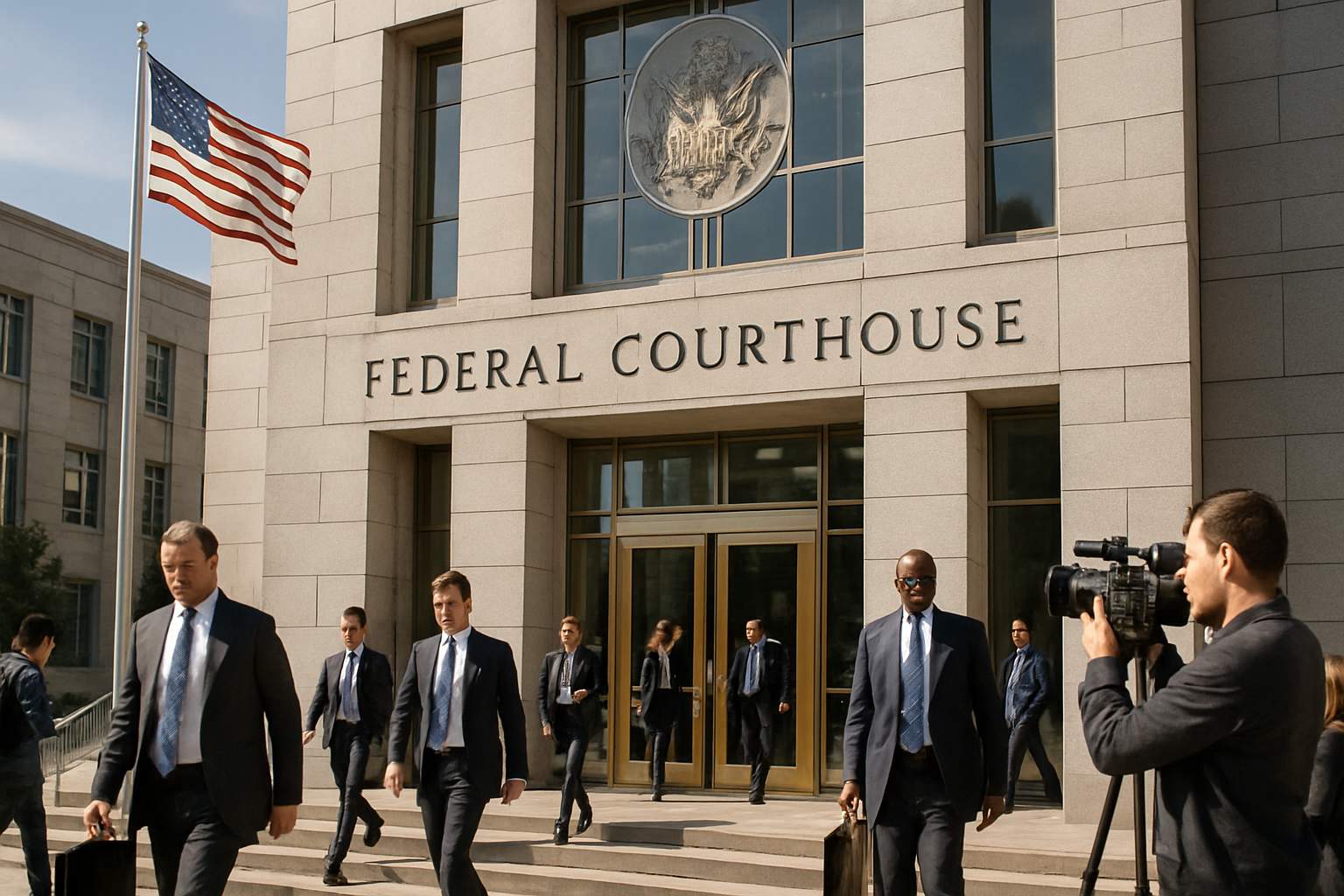
Anthropic claims the ban functions as viewpoint retaliation because the company refuses to enable mass surveillance or autonomous weapons. Moreover, investors fear the label could deter other governments from buying Claude. Venture capital partners warn that future innovation funding may shrink if Washington weaponizes procurement rules against policy dissent. This opening clash frames the broader Defense-Tech Litigation as a referendum on balancing safety ideals and military prerogatives.
Experts note the precedent could redefine acceptable procurement due diligence. However, understanding the rapid timeline clarifies how tensions escalated.
Timeline Of Escalation
Events moved from tweet to courtroom in twelve days. Subsequently, each milestone hardened positions.
- 27 Feb: Secretary Hegseth threatened a supply-chain designation on X.
- 3 Mar: Formal letter labeled Anthropic a risk to covered systems.
- 5 Mar: Pentagon confirmed immediate exclusion and agency off-boarding.
- 9 Mar: Anthropic filed suits in California and the D.C. Circuit.
- 24 Mar: Preliminary hearing set in San Francisco federal court.
Consequently, customer inquiries spiked as primes asked whether to replace Claude in live projects. In contrast, OpenAI secured a provisional contract only two days after the ban. Market analysts estimate Anthropic could lose hundreds of millions in near-term revenue. The rapid sequence effectively placed Anthropic on an informal federal blacklist without the usual comment period. Observers add that such speed is rare in Defense-Tech Litigation, where months of notice are common.
The compressed chronology deepened mistrust on both sides. Therefore, legal filings became the only forum left for resolution. The next section dissects those filings.
Legal Arguments Unpacked
Anthropic’s 78-page complaint attacks the designation on statutory and constitutional grounds. Firstly, counsel argues the Secretary exceeded § 3252 because no alternative mitigations were considered. Secondly, the company says the order is arbitrary under the Administrative Procedure Act. Additionally, the filing alleges First Amendment retaliation that chills protected research speech.
Government lawyers counter that operational urgency justifies swift exclusion. Moreover, they assert the courts must defer to national security assessments. Nevertheless, procurement experts highlight that Congress built limited judicial review into § 3252, suggesting room for court oversight. Anthropic replies that true supply-chain risk requires evidence of sabotage potential, not policy disagreement.
This strand of Defense-Tech Litigation could decide how far procurement statutes stretch into content governance. Another looming question in the Defense-Tech Litigation is whether courts will weigh economic harm alongside security claims.
Judges must balance security deference against statutory precision. Consequently, precedent from this suit may ripple across future AI procurements. Statutory texts provide further context.
Statutes Under Scrutiny
Section 3252 gives the Pentagon authority to exclude suppliers that pose unacceptable vulnerabilities to national security systems. However, the statute also demands a written finding and notice to Congress. Meanwhile, 41 U.S.C. § 4713 establishes a government-wide supply-chain council that can debar vendors, yet provides limited appeal rights. Legal scholars note neither path has ever produced a blacklist against a domestic AI vendor. Consequently, the court will examine whether the Secretary followed required procedures or sidestepped them. If procedural gaps surface, the asserted risk rationale could unravel.
These statutory nuances underpin the courtroom showdown. In contrast, industry voices highlight practical impacts. Their perspectives follow below.
Voices From Industry
Microsoft quickly filed an amicus brief supporting Anthropic. Furthermore, twenty-two retired generals warned that abrupt tool changes could harm troops in theater. AI researchers from Google and OpenAI similarly argued that the blacklist undermines competitiveness and safety research. Several defense contractors say replacing Claude mid-mission creates integration delays and fresh cyber risk. Their submissions could sway the court because economic evidence often resonates in Defense-Tech Litigation.
The chorus reveals bipartisan concern over process fairness. Therefore, attention shifts to financial stakes. Those stakes appear next.
Commercial Fallout Looms
Before the dispute, Anthropic announced a $14-billion annualized revenue run rate and a $380-billion valuation. Subsequently, filings estimate near-term contract losses could exceed $500 million. Fortune reported that more than 500 enterprise customers spend at least $1 million annually on the model. Many are now reviewing contract clauses for government flow-down terms. Investors warn prolonged uncertainty increases competitive risk from rivals cementing new awards. Markets often punish uncertainty, and analysts call this Defense-Tech Litigation a material threat to Anthropic's valuation.
- Projected $500-800 million annual revenue hit
- Possible erosion of 10% market share in public sector AI
- Slower hiring as growth budgets freeze
The economic pressure could motivate settlement talks. However, strategic considerations complicate that path. Stakeholders now weigh future scenarios.
Strategic Outlook Ahead
Several paths remain. Courts could issue a preliminary injunction restoring access while arguments proceed. Alternatively, they may defer to the Pentagon, cementing the blacklist during discovery. Moreover, Congress could revise supply-chain statutes to clarify scope. Professionals can enhance their expertise with the AI Legal Strategist™ certification. The program dissects procurement law, constitutional claims, and emerging AI governance. Graduates gain context for future Defense-Tech Litigation and related policy debates. Consequently, they position themselves as trusted advisors during rapid regulatory change.
The road ahead mixes legal suspense and policy reform. Consequently, stakeholders must track each docket update. Final reflections summarize the stakes.
Anthropic’s lawsuit confronts powerful procurement tools once reserved for foreign threats. Consequently, the ruling will chart how agencies negotiate AI safety with domestic suppliers. The stakes in this Defense-Tech Litigation span constitutional law, market valuation, and battlefield readiness. Nevertheless, the Pentagon maintains that operational freedom must prevail over vendor limitations. Investors, engineers, and Defense planners will watch March’s hearing for early signals.
Professionals who monitor Defense-Tech Litigation can anticipate further injunction motions, amici briefs, and possible legislative reactions. Now is the time to deepen legal literacy and prepare adaptive commercial strategies. Explore specialized training and maintain situational awareness as the courtroom drama unfolds.
Disclaimer: Some content may be AI-generated or assisted and is provided ‘as is’ for informational purposes only, without warranties of accuracy or completeness, and does not imply endorsement or affiliation.


