

AI CERTS
2 months ago
Microsoft’s Tech Corporate Restructuring: Quiet Cuts Unpacked
This article traces the timeline, examines hidden signals, and offers actionable insights for leaders navigating similar turbulence. Furthermore, it balances management rationales with worker perspectives gathered from Bloomberg, AP, and community forums like Blind. Readers will also discover how professional upskilling, including the AI+ Human Resources™ certification, mitigates future risk. Ultimately, understanding Microsoft’s quiet cuts reveals broader patterns shaping modern corporate-restructuring across the sector.
Microsoft Layoff Timeline Overview
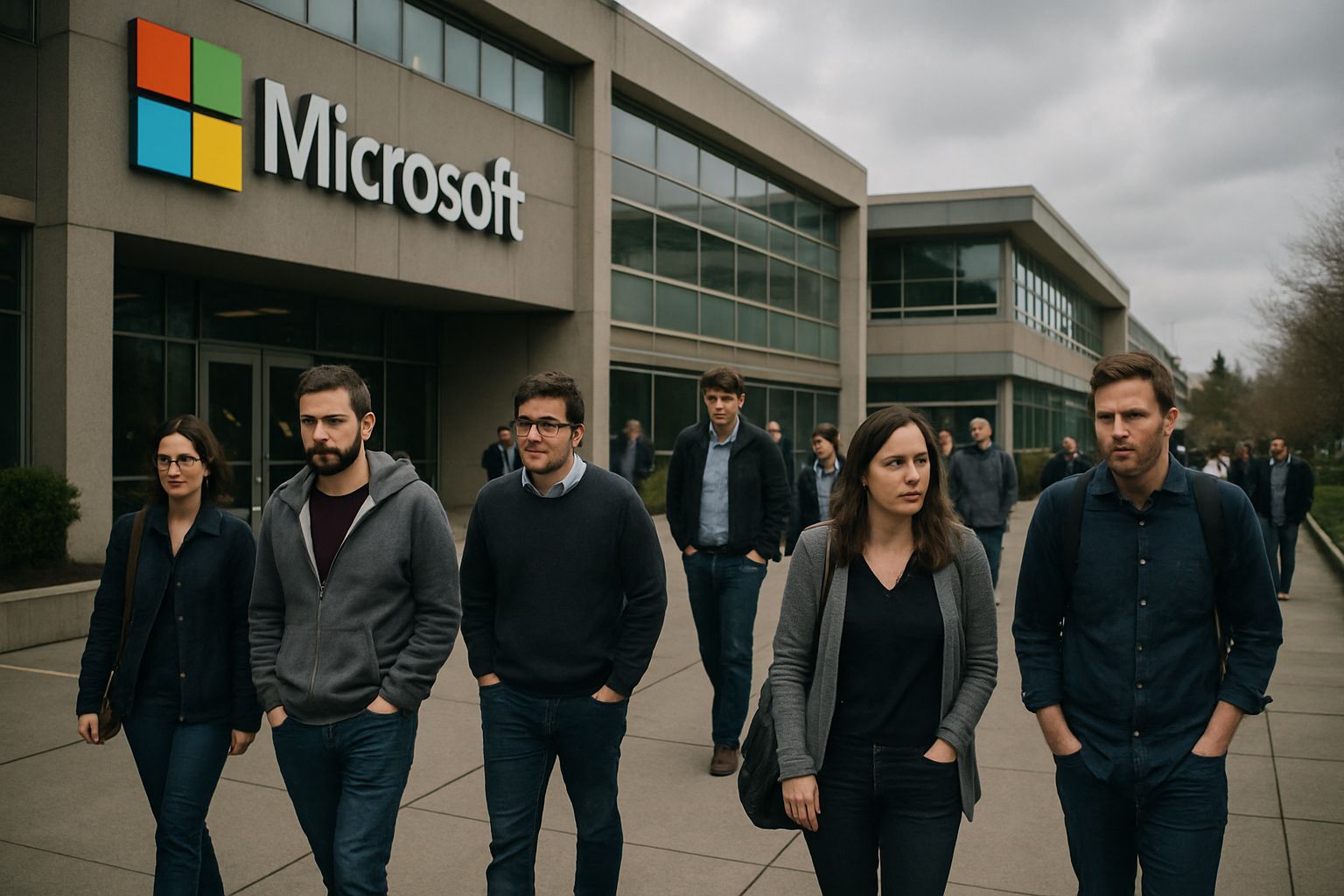
AP News confirmed on 13 May 2025 that Microsoft eliminated roughly 6,000 roles, about three percent of staff. Bloomberg later revealed hundreds more departures through June state WARN notices. Subsequently, a July announcement added 9,000 cuts, pushing the 2025 total near 15,000. Rumors of a massive January 2026 cull surfaced but were publicly denied by Microsoft’s communications chief. Each announcement translated to abrupt job loss for engineers, marketers, and gamers’ favorite studios.
- 13 May 2025: 6,000 roles cut, focus on management and engineering.
- 2 June 2025: Additional hundreds trimmed via local filings.
- 2 July 2025: 9,000 jobs removed, heavy Xbox impact.
- 8 Jan 2026: Company rejects online rumor of 22,000 further cuts.
Ultimately, the phased Tech Corporate Restructuring spared press backlash but extended anxiety. Collectively, these milestones illustrate a paced approach rather than a single shock event. However, the story extends beyond published numbers, leading us to the strategic drivers.
Drivers Behind Workforce Shifts
Analysts link the downsizing to soaring AI capital expenditure, estimated between 80 and 88 billion dollars for fiscal 2025. Therefore, leadership argues cost discipline safeguards margins while funding next-generation cloud capacity. Satya Nadella described the transition as messy yet essential for long-term competitiveness. In contrast, critics cite morale damage and involuntary job loss that outweigh projected savings. Microsoft insists resources are being reallocated, not merely reduced, toward AI product priorities. Analysts argue such corporate-restructuring becomes inevitable when capital intensity exceeds historical norms. Such framing typifies Tech Corporate Restructuring narratives across Silicon Valley.
Escalating AI Spending Pressure
Gil Luria from D.A. Davidson warned that depreciation linked to colossal data centers could squeeze operating margins for years. Consequently, workforce efficiencies become a convenient lever for balancing financial statements. However, repeated cycles of quiet cuts risk hampering innovation if top talent departs. Many observers view this pressure as emblematic of broader corporate-restructuring trends sparked by AI arms races. Tech Corporate Restructuring increasingly balances server racks against human capital. Financial imperatives explain the layoffs, yet internal tactics reveal another layer. Next, we examine how employees detect those subtle moves early.
Quiet Layoff Signals Explained
Forbes defines quiet cuts as tactics that encourage attrition without headline announcements. Microsoft offered textbook examples during late 2025. Meanwhile, campus library closures and subscription cancelations surprised teams reliant on premium research. Return-to-office mandates also nudged remote staff toward voluntary exits, effectively producing job loss through policy. Employees watching resource withdrawals, prolonged hiring freezes, or sudden performance plans often spot corporate-restructuring months ahead.
Blind threads from Redmond engineers documented such signals weeks before official filings. Nevertheless, outsiders may miss these breadcrumbs until formal WARN notices surface. These indicators offer an early-warning system for professionals. However, understanding employee sentiment deepens that picture. Each quiet signal supports the thesis that Tech Corporate Restructuring now favors subtlety over spectacle.
Employee Sentiment And Platforms
Scott Hanselman posted that the May announcement created "a day with a lot of tears". Furthermore, Xbox creatives lamented canceled projects across Blind, LinkedIn, and X. Aggregated Glassdoor reviews also flagged confidence dips and fears of additional quiet cuts. Researchers note that transparent communication mitigates talent flight more effectively than motivational slogans. Nevertheless, staggered disclosures stretched uncertainty over eight months, intensifying anxiety. Tech Corporate Restructuring done piecemeal can erode trust even during profitable quarters. Sentiment metrics therefore serve as leading indicators of productivity slippage. Consequently, talent market impact deserves focused attention.
Implications For Talent Market
Recruiters already report heightened competition for experienced cloud engineers leaving Microsoft. Moreover, smaller firms seize this moment to snap up specialists displaced by job loss. Data suggests that severance packages average 12 weeks pay, accelerating willingness to gamble on startups. For remaining employees, expanded responsibilities without parallel compensation feel like stealth wage cuts. Such perceptions feed additional quiet cuts as voluntary resignations rise.
Consequently, the industry could observe a brain drain similar to the post-2001 corporate-restructuring wave. Professionals seeking resilience should double down on skills relevant to AI product lifecycles. They can enhance HR strategy capabilities. Professionals can pursue the AI+ Human Resources™ certification for structured AI workforce mastery. Tech Corporate Restructuring often rewards staff who align skills with emergent business models. Market dynamics therefore favor agile upskilling over passive tenure. Next, we translate these findings into practical guidance for executives. Investors monitoring Tech Corporate Restructuring trends will watch Microsoft as a bellwether for 2026.
Strategic Outlook And Advice
Executives navigating similar turbulence should first map existing capabilities against future product bets. In contrast, blanket headcount targets risk losing irreplaceable domain knowledge. Therefore, leaders might adopt a three-step framework:
- Audit cost centers against strategic relevance quarterly.
- Rebalance through transparent reskilling before announcing cuts.
- Communicate timelines clearly across Slack, email, and Blind.
Additionally, integrate early warning sentiment dashboards pulling data from Blind and internal pulse surveys. Such vigilance reduces reliance on disruptive quiet cuts. Tech Corporate Restructuring executed with transparency can preserve culture while satisfying investor scrutiny. Nevertheless, leaders must couple transparency with credible career pathways for retained staff. Consequently, investments in continuous learning platforms complement leaner org charts. Microsoft’s internal Skilling Hub illustrates how digital academies offset library closures.
However, external certifications add recognized rigor beyond proprietary systems. Executives should budget for at least one endorsed program per employee yearly. Strategic foresight, proactive communication, and equitable skilling differentiate responsible restructures from value destructive ones. Finally, these principles close the loop on our analysis.
Microsoft’s saga underscores how Tech Corporate Restructuring now intertwines cost discipline with AI ambition. The timeline revealed formal layoffs, ongoing quiet cuts, and policies that triggered voluntary job loss. Drivers included staggering AI budgets and shareholder demands for sustained margins. Meanwhile, employee sentiment captured on Blind signaled rising distrust during extended uncertainty. However, affected professionals can reposition by earning targeted credentials and adapting to evolving product roadmaps. Leaders should prioritize transparent planning, talent redeployment, and continuous learning to avoid culture damage. Therefore, explore certifications such as AI+ Human Resources™ to stay ahead of the next restructuring wave.
Disclaimer: Some content may be AI-generated or assisted and is provided ‘as is’ for informational purposes only, without warranties of accuracy or completeness, and does not imply endorsement or affiliation.


