

AI CERTS
4 months ago
Spot AI’s Security Camera AI Builder Reshapes Video Analytics
The launch spotlights a surging market where analytics spending already tops USD 12.7 billion. Grand View Research forecasts nearly USD 38 billion by 2030, underscoring relentless growth. Meanwhile, enterprises seek faster returns on existing security cameras rather than expensive hardware swaps. Therefore, Iris positions itself as a universal builder that unlocks latent value across sprawling camera fleets.
This article examines Iris, the competitive field, and the governance questions every technology leader must address. Nevertheless, understanding how Security Camera AI tools reshape operations demands critical analysis beyond marketing claims.
Rising Video Analytics Demand
Video analytics once belonged to specialized research teams with GPU clusters and dense code. However, cloud infrastructure and foundation models now shrink barriers for mainstream deployment. Grand View Research cites a 19.5 percent CAGR through 2030, signaling sustained investment momentum. Furthermore, workplace safety, retail shrink, and manufacturing uptime all drive board-level urgency.
Consequently, vendors that simplify customization enjoy a strategic advantage. Many firms also want immediate payback from existing cameras rather than forklift upgrades. These numbers confirm a large, fast-growing addressable base. In contrast, complexity still blocks smaller teams, which is where Iris enters.
Spot AI Launches Iris
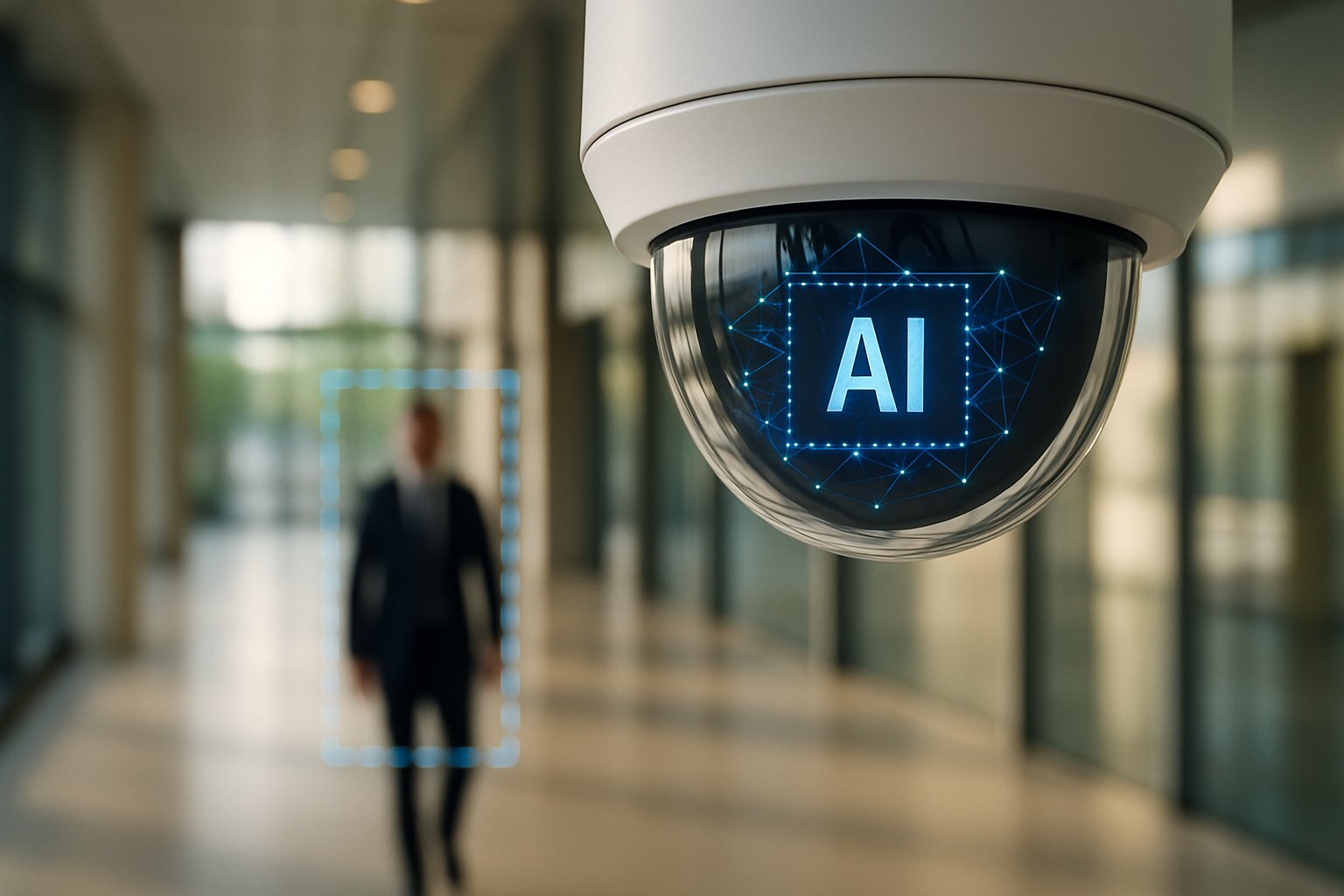
Spot AI unveiled Iris on 9 April 2025, showcasing it during the Google Cloud Next keynote. Moreover, the company labeled Iris the first universal builder for enterprise security cameras. Gupta stated that Iris brings conversational simplicity to video similar to ChatGPT’s text revolution. Users type natural instructions, upload about twenty labeled images, and receive a running agent within minutes. Therefore, the platform compresses traditional eight-week cycles into a lunchtime exercise.
Inside demonstrations, Security Camera AI detected forklifts in aisles after only brief annotation. In addition, Iris connects detections to alerts, locks, or machine stops through simple webhooks. Its backend leverages Google Vertex AI and Gemini models for scaling across thousands of feeds. Spot AI’s pitch centers on speed, simplicity, and breadth of supported cameras. Subsequently, understanding how the agents function clarifies these claims.
How Iris Agents Work
Iris follows a conversational wizard that asks what event matters, then requests positive and negative frames. Furthermore, each response refines an evolving few-shot model running in Spot AI’s cloud. Edge devices handle initial compression, while the cloud executes heavier inference for cross-site learning.
- Define goal in chat.
- Upload 20 sample images.
- Validate live detections.
- Link action integrations.
Moreover, the universal builder approach supports forklifts, spills, loitering, and shelf gaps. Consequently, a single builder interface spans diverse industry scenarios. Operators can save these builder templates for rapid redeployment at new sites. Security Camera AI then streams inference results to dashboards or downstream systems for audit. The workflow replaces dense code with guided chat steps, lowering entry barriers dramatically. Nevertheless, Iris faces crowded competition.
Competitive Landscape Heats Up
OpenAI, Elastic, and numerous incumbents now trumpet agent builder products. In contrast, most focus on text or structured data rather than video feeds. Avigilon, Verkada, and Eagle Eye offer AI analytics tightly coupled to proprietary cameras. However, Spot AI promotes hardware independence and claims support for nearly any RTSP stream. OpenAI’s AgentKit showcases generalized workflow automation, but lacks domain-specific video primitives.
Therefore, Spot AI’s vertical specialization may protect margins against hyperscale entrants. Analysts warn that feature gaps can close quickly when platforms add modal extensions. Yet, early adopters praise Security Camera AI for bridging legacy security cameras with cloud intelligence. Competition will intensify, but clear differentiation on setup speed remains today. Next, we weigh advantages against open concerns.
Benefits And Limitations
Fast deployment headlines every Iris testimonial. Moreover, Spot AI reports eight to ten minutes from idea to working agent. Few-shot training with twenty images slashes annotation overhead drastically. Additionally, customers retain existing security cameras, avoiding capital outlays. Subsequently, Security Camera AI promises measurable safety gains once tuned.
- Speed: minutes not weeks
- Cost: reuse current cameras
- Action: integrations trigger responses
- Scale: cloud handles thousands feeds
Nevertheless, several limitations persist. Independent accuracy benchmarks remain scarce, leaving false-positive rates uncertain. Privacy governance varies by sector, requiring robust policy alignment. Consequently, executives must demand audit trails, retention controls, and explainability before rollout. Without clear builder analytics, tuning agents at scale can consume hidden labor. False alarms across crowded cameras could erode trust and create alert fatigue. The benefits are compelling but not unconditional. Therefore, governance considerations take center stage. Accordingly, the next section explores policy factors.
Governance And Ethics Issues
Video systems intersect with privacy, labor rights, and cybersecurity regulations. Moreover, Europe’s GDPR and various state laws restrict biometric processing and retention periods. Spot AI claims SOC 2 and HIPAA compliance, yet detailed audit evidence was not public at launch. Consequently, buyers should request contractual guarantees and data locality options. Bias represents another risk when Security Camera AI models misclassify vulnerable groups. Additionally, adversarial patches can trick detectors, potentially unlocking secure doors.
Experts recommend layered human verification until empirical precision metrics mature. Professionals can upskill via the AI Security Level 2 certification. Sound governance mitigates operational, legal, and reputational threats. Finally, we outline strategic lessons for decision makers.
Strategic Takeaways For Leaders
Technology leads should pilot with a narrow use case and measure precision and recall transparently. Furthermore, require builder dashboards exposing drift, false positives, and action logs. Negotiate retention policies matching corporate privacy standards before scaling across regional sites. Additionally, join user groups to share tuning tips and receive patch notifications. Engage security, HR, and legal teams early to draft acceptable-use statements. Consequently, holistic planning avoids culture clashes and surprise compliance gaps.
Maintain clear signage near security cameras to support transparency obligations. Evaluate whether a universal builder approach aligns with existing point solutions or creates overlap. Successful programs treat Security Camera AI as augmentation, not replacement, for trained personnel. These strategies maximize ROI while guarding stakeholder trust. We close with a final perspective.
Conclusion
Security Camera AI now reaches non-technical staff through Iris’s chat interface and few-shot pipeline. Moreover, the universal builder model cuts cost by reusing existing infrastructure. However, leaders must verify accuracy, privacy safeguards, and long-term support before mass deployment. Independent benchmarks and policy frameworks will separate durable value from polished demo theater. Therefore, executives should combine pilot metrics with governance training, including the earlier AI Security Level 2 pathway. Act now to explore Security Camera AI and gain an edge before rivals follow.
Disclaimer: Some content may be AI-generated or assisted and is provided ‘as is’ for informational purposes only, without warranties of accuracy or completeness, and does not imply endorsement or affiliation.


