

AI CERTS
2 months ago
Agentic Fraud Prevention: BioCatch Tackles AI Browser Threats
Moreover, we examine how DeviceIQ, biometrics, and consortium signals intersect. Readers will learn why intention analysis beats blunt bot blocking. Therefore, practitioners can align strategies before losses mount further. The stakes exceed convenience; they touch trust across global banking workflows.
Threat Landscape Rapidly Expands
Attacks increasingly exploit agentic browsers like Perplexity Comet. Guardio Labs showed autonomous checkout scams in September 2025. However, prompt injections pose the larger systemic risk. Hidden HTML whispers can hijack an agent and leak data silently. BrowseSafe researchers measured 90.4 percent detection on injection benchmarks. In contrast, many production sites still rely on header heuristics. Consequently, technical fingerprints alone no longer suffice. BioCatch advisers warned on 1/16/2026 that fraudsters adopt tools faster than banks.
Moreover, the company observed a 47 percent spike in account takeovers during late 2024. These developments underscore a widening threat surface. Therefore, Agentic Fraud Prevention demands layered detection beyond rate limits. These challenges highlight critical gaps. However, emerging behavioral solutions are reshaping defensive strategy.
Behavioral Signals Truly Matter
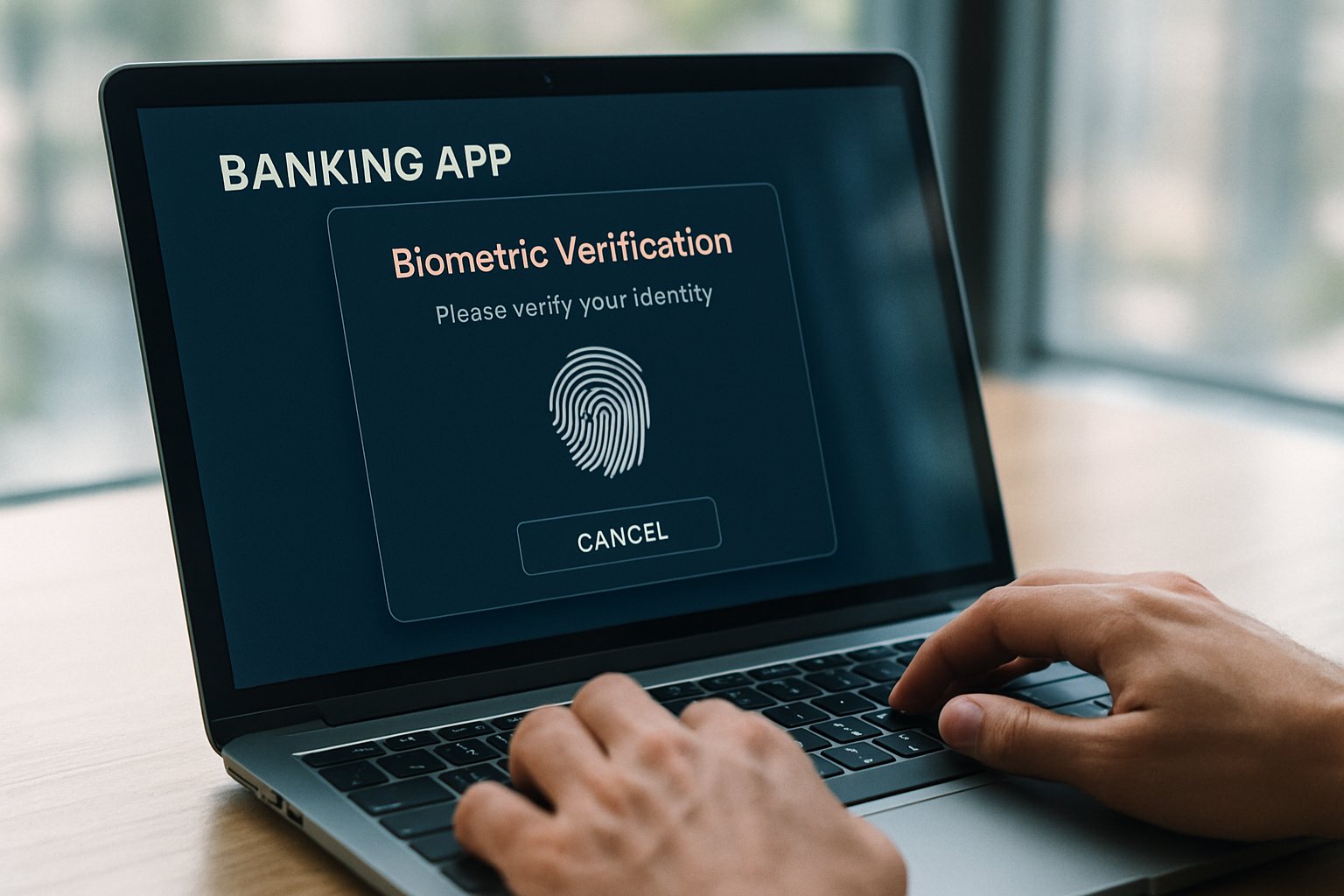
Behavioral biometrics captures how a person, not a device, behaves. BioCatch analyses micro-movements, hesitation, and correction patterns across sessions. Additionally, its dataset spans 16 billion sessions on 1.6 billion devices. Such scale feeds machine models able to differentiate subtle intent shifts. Nevertheless, privacy regulators scrutinize any invasive telemetry. Consequently, BioCatch stresses passive, consented collection aligning with open banking rules. DeviceIQ signals can complement interaction analytics by flagging emulator artefacts.
Moreover, combining the two stacks increases precision while reducing false positives. Therefore, effective Agentic Fraud Prevention relies on harmonised biometrics, DeviceIQ, and intent patterns. A short pause here summarises the principle: context beats surface signals. These insights prove behavior is decisive. Meanwhile, the next section quantifies the risk.
Data Trends Highlight Urgency
Numbers often crystalise abstract danger. BioCatch's 2024 survey paints a stark picture. Furthermore, 70 percent of 600 fraud leaders said criminals outpace banks with AI. Meanwhile, only three percent reported zero loss. Consequently, financial exposure climbs quickly.
- 70% say Agentic Fraud Prevention lags criminal innovation
- 33% lost under $5M due to agentic threats
- 12% suffered $25M+ losses despite controls
- 3% reported no Agentic Fraud Prevention program
In Australia, BioCatch Trust analysed over $60 million in attempted fraud during Q3 2025. Moreover, account takeover attempts jumped 47 percent year over year. BrowseSafe-Bench scaled to 14,719 samples, offering public measurement. Therefore, quantified evidence validates the growing risk. These figures demand accelerated Agentic Fraud Prevention roadmaps within banking programs. Consequently, industry responses are shifting rapidly.
Evolving Industry Response Patterns
Vendors respond with layered controls rather than outright blocks. Additionally, BioCatch integrates with Nasdaq Verafin for consortium sharing. Such sharing spreads intelligence across global banking peers fast. However, some teams prefer on-premise classifiers like DeviceIQ. cside launched an agent detection toolkit on 2/5/2026.
Consortium Sharing Rapidly Grows
Guardio offers browser extensions to warn users during checkout flows. In contrast, Purdue and Perplexity focus on content sanitisation gates. Moreover, standards bodies discuss secure agent APIs to enforce policy boundaries. Consequently, defenders enjoy a growing menu of complementary options. Effective Agentic Fraud Prevention will blend these approaches through rigorous testing. These trends illustrate a cooperative future. Therefore, practical implementation deserves focused attention next.
Implementation Best Practice Guide
Security leaders should begin with inventory of AI traffic sources. Next, instrument behavioral biometrics across critical journeys. Moreover, enrich sessions with DeviceIQ and telemetric context. Establish baselines for click timing, swipe patterns, and hesitation. However, avoid hard blocks that frustrate legitimate agent shoppers. Instead, route suspicious flows into step-up verification. Furthermore, share high-confidence fraud signals with consortium partners.
Maintain model feedback loops to reduce drift and false alerts. Consequently, continuous tuning sustains Agentic Fraud Prevention accuracy. Professionals can deepen skills through the AI Security Level 2 certification. These actions create resilient defences. Meanwhile, strategic planning must look beyond immediate deployments.
Strategic Outlook Years Ahead
Regulators will likely publish agentic guidelines within two years. Meanwhile, AI browsers will integrate native security guards. BioCatch plans further expansion of real-time intent scoring APIs. Additionally, research groups push open benchmarks for agent detection. In contrast, adversaries will refine multi-agent swarm attacks.
Moreover, they will spoof humanlike pause patterns to evade models. Therefore, defensive algorithms must evolve faster than template updates. Effective Agentic Fraud Prevention will hinge on adaptive learning and consortium telemetry. Consequently, early adopters secure customer trust and competitive edge. These projections prepare leaders for a dynamic decade. These outlooks set final priorities. Subsequently, the article concludes with clear action steps.
Conclusion And Next Steps
Agentic AI amplifies both convenience and crime. However, intent-centric defenses already prove effective in live banking environments. Behavioral biometrics, DeviceIQ context, and consortium signals create a resilient triad. Moreover, documented results show fewer false positives than legacy bot rules. Consequently, leaders should prioritise data sharing and model tuning now. Professionals seeking deeper mastery can secure the linked certification for practical guidance. Therefore, start piloting Agentic Fraud Prevention before adversaries widen their lead. Future customers will reward firms that move first.
Disclaimer: Some content may be AI-generated or assisted and is provided ‘as is’ for informational purposes only, without warranties of accuracy or completeness, and does not imply endorsement or affiliation.


