

AI CERTs
2 months ago
Privacy Leak Scandal rocks Meta smart-glasses ecosystem
Financial details caught on video. Intimate bathroom moments streamed to unseen strangers. However, millions still buy Meta’s Ray-Ban and Oakley smart-glasses. The unfolding Privacy Leak Scandal has jolted regulators and enterprise risk teams alike. Consequently, executives now question how a flagship Wearables product routed sensitive Data across borders without stronger Security guardrails. This article traces events, quantifies exposure, and outlines next steps for businesses watching the Breach story evolve.
Investigative reports from Svenska Dagbladet and Göteborgs-Posten triggered worldwide coverage between 27 February and 5 March 2026. Moreover, Meta’s brief statement citing its Terms of Service satisfied few observers. Regulators therefore demanded deeper answers. Meanwhile, EssilorLuxottica confirmed more than seven million units sold in fiscal 2025, amplifying stakeholder concern. Subsequently, offshore annotation contractors told journalists, “We see everything,” including card numbers. Those vivid quotes turned an obscure policy dispute into front-page news.
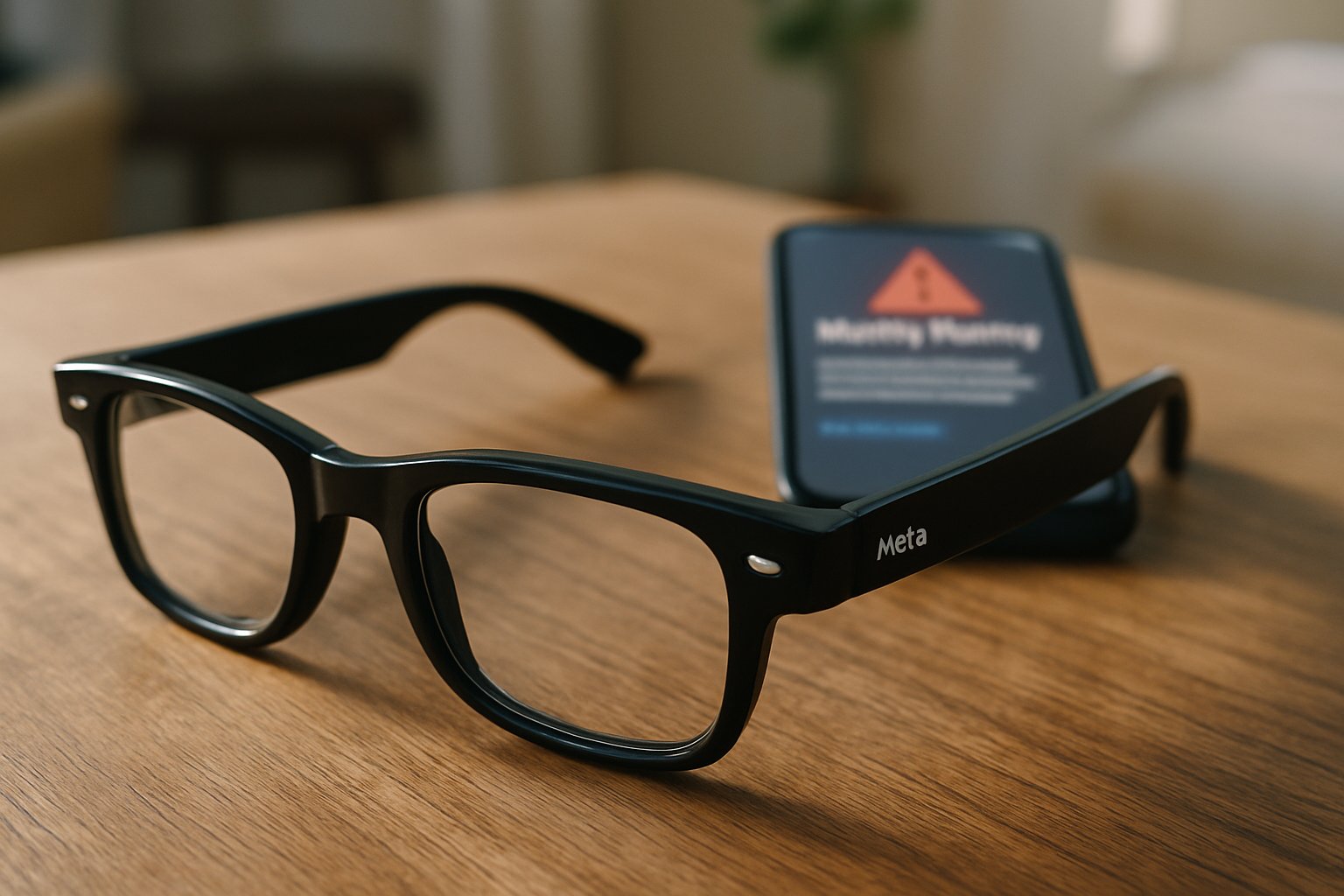
Investigation Timeline Rapidly Unfolds
The Swedish duo published their findings on 27 February 2026. Furthermore, BBC outlets echoed key claims by 3 March. In contrast, Meta responded with a single paragraph. Annotators in Nairobi described reviewing clips within hours of capture, raising fresh Breach alarms. Consequently, the UK Information Commissioner’s Office (ICO) wrote to Meta seeking clarification the same week.
Chronology matters for compliance teams. First, 11 February saw EssilorLuxottica’s investor call disclose the seven-million figure. Second, worker testimonies emerged two weeks later. Third, international regulators contacted Meta by early March. Therefore, legal exposure expanded swiftly. These milestones underline the scandal’s velocity. However, questions about cloud routing remained unanswered.
These dates show rapid escalation. Nevertheless, stakeholders need technical context, explored next.
Scale Amplifies Privacy Risk
Sales momentum surprised analysts. EssilorLuxottica boasted, “AI-glasses selling more than 7 million units in the FY,” during its call. Moreover, prior filings listed only two million cumulative units through early 2025. Consequently, adoption more than tripled within twelve months.
Each device records continuous audio and video when users trigger Meta AI features. Therefore, every additional headset multiplies potential Data exposure. Additionally, failing anonymization filters means even sporadic leaks scale into thousands of glimpses of banking credentials. For enterprises, one misplaced frame could breach internal Security policies and prompt mandatory disclosures under GDPR or CCPA.
- 7+ million devices in market
- Unknown percentage routed to human reviewers
- Multiple jurisdictions: EU, UK, US, Kenya
- Highly sensitive categories: finance, health, sexual content
The numeric growth intensifies regulatory scrutiny. Consequently, organisations must reassess Wearables guidelines. These volume metrics transition smoothly into pipeline mechanics.
Cloud Pipeline Exposed Loopholes
Meta touts on-device processing. Nevertheless, complex queries push footage to cloud servers for heavier inference. Subsequently, subcontractors validate AI outputs. Annotators spoke of face-blur algorithms that failed under poor lighting, leaving identifiers visible. Moreover, bathroom echoes defeated background-noise suppression, delivering raw audio offshore.
TechCrunch’s earlier reporting confirmed Meta may train models on any image a user submits for analysis. Consequently, footage analysed for object recognition also enters datasets. Meanwhile, bystanders never accepted those terms, challenging lawful-basis arguments under GDPR. In contrast, Meta maintains consent is implicit when owners enable services.
This technical gap fuels the Privacy Leak Scandal. Furthermore, cross-border transfers trigger Standard Contractual Clause obligations many firms ignore when employees wear the glasses onsite. Therefore, CISOs must map data pathways in risk registers before adoption.
Pipeline weaknesses feed into regulatory responses detailed below.
Regulatory Scrutiny Intensifies Globally
The ICO cautioned, “Devices processing personal data… should put users in control.” Subsequently, it sought Meta’s logs and DPIA documents. Swedish IMY opened a parallel inquiry. Additionally, privacy NGO NOYB hinted at collective actions. Therefore, Meta faces multi-front investigations.
Across the Atlantic, California’s CPPA monitors developments because Oakley Meta units sell strongly in the state. Moreover, class-action law firms have begun soliciting affected consumers. Consequently, corporate purchasers may confront derivative lawsuits if employee usage leaks client information.
Regulatory interest elevates board-level urgency. However, enforcement timelines remain uncertain, leaving organisations in limbo until findings emerge. Those dynamics overlap with worker welfare issues next.
Human Reviewers Face Dilemmas
Annotators employed by Sama described emotional strain from daily exposure to nudity and financial stressors. Moreover, previous controversies around pay and psychological support compound concerns. Consequently, labour advocates argue the Privacy Leak Scandal highlights hidden human costs behind slick Wearables marketing.
Meta claims workers sign confidentiality agreements and receive training. Nevertheless, observers question oversight quality. Additionally, blurring failures place reviewers in possession of accidental personal Data, potentially violating Kenyan and EU biometric rules. Therefore, vendor management audits should verify subcontractor safeguards, rotation schedules, and mental-health services.
Welfare gaps connect directly to mitigation pathways, discussed next.
Mitigation Paths For Industry
Organisations can adopt layered strategies. Firstly, restrict smart-glasses within sensitive areas like finance desks or R&D labs. Secondly, enforce policy banners reminding staff that recordings may exit devices. Moreover, legal teams should request Meta’s data-flow diagrams and retention periods. Consequently, procurement clauses can demand deletion confirmations.
Technical options exist as well. In contrast to current design, stronger on-device processing could keep frames local. Additionally, selective lens tinting or LED indicators could alert bystanders. Engineers may also push for edge AI chips, reducing cloud dependence and hence Security risk.
Professionals can deepen expertise through the AI Researcher™ certification, which covers privacy engineering for Wearables. Such knowledge empowers teams to audit Breach vectors systematically.
These measures reduce exposure. Nevertheless, leadership must embed continuous monitoring because threat surfaces evolve.
Key Takeaways And Action
The Privacy Leak Scandal underscores vital lessons. Millions of cutting-edge Wearables ship before safeguards mature. Consequently, sensitive Data can traverse opaque pipelines, creating a material Security Breach. Regulators already investigate, and litigation looms.
Enterprises should audit device policies, demand transparency from vendors, and adopt technical countermeasures. Moreover, employee training and subcontractor due diligence remain critical. Professionals who master privacy-by-design principles will guide organisations through this storm.
Maintain vigilance as inquiries progress. Meanwhile, consider role-based upskilling to stay ahead of emerging compliance demands.
Disclaimer: Some content may be AI-generated or assisted and is provided ‘as is’ for informational purposes only, without warranties of accuracy or completeness, and does not imply endorsement or affiliation.


