

AI CERTs
2 months ago
Policy Bypass Crisis: Shadow AI Threatens Enterprise Security
Executives expected clear AI policies. However, employees raced ahead with consumer chatbots. This uncontrolled adoption created what analysts label the Policy Bypass Crisis. Consequently, security leaders face hidden attack surfaces and escalating compliance questions. Harmonic Security analysed 22 million enterprise prompts and found 579,113 sensitive exposures. Moreover, six tools caused 92.6% of those leaks. WithSecure reports 89% of GenAI usage is invisible to organisations. Therefore, the scale is undeniable. Meanwhile, IBM links shadow AI to a CA$308,000 per Data Breach cost increase. Enterprises must grasp these numbers and act swiftly. The following report dissects exposure hotspots, market responses, governance shifts, and mitigation playbooks. Readers will gain actionable insight for protecting Productivity without stifling innovation.
Shadow AI Adoption Surge
Shadow AI spread rapidly during 2025. Moreover, Harmonic recorded 22 million prompts across 665 distinct tools. ManageEngine found 60% of employees used unapproved AI a year earlier. Consequently, adoption momentum intensified before many governance frameworks matured. WithSecure adds that 72% of workers rely on personal accounts for such activity. These personal channels evade enterprise monitoring and retention systems. Therefore, visibility gaps widen while sensitive material flows outward. Corporate IT teams struggle to map these shadow flows. This dynamic sits at the core of the Policy Bypass Crisis facing boards today. Unchecked growth also tempts attackers who exploit model interfaces for reconnaissance.
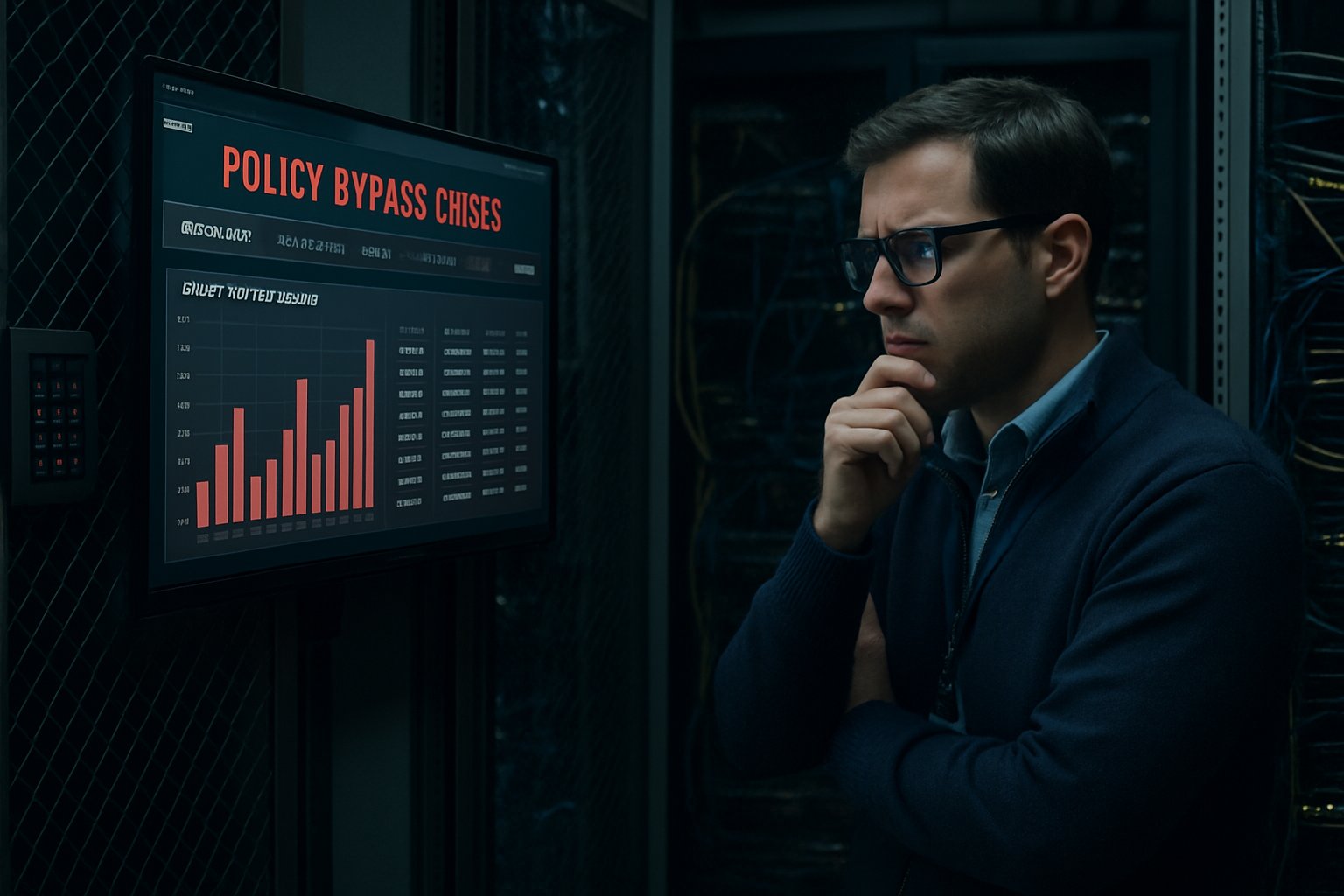
Adoption metrics illustrate explosive interest alongside surging exposure. However, understanding where data actually leaks is equally critical.
Concentrated Exposure Hotspots Rise
Harmonic isolated six applications responsible for 92.6% of sensitive content exposure. Furthermore, 16.9% of leaks travelled through free or personal plans. In contrast, paid enterprise tiers offered configurable logging and retention controls. Consequently, personal usage multiplies Risk without delivering equivalent governance.
- Customer data pasted into ChatGPT free accounts
- Source code shared with GitHub Copilot personal
- Contract text entered in Jasper AI trial
- Financial figures sent to Midjourney prompts
Meanwhile, WithSecure observed that 50% of GenAI pastes contained corporate material. IBM correlates such leakage with higher per-incident Data Breach costs. This pattern exemplifies the Policy Bypass Crisis playing out in microcosm. These findings confirm a small surface dominates overall Risk. Therefore, security teams should target resources at those hotspots first.
Focusing on the major culprits delivers quick reduction in exposure volume. Next, we examine how vendors are responding to this pressure.
Vendor Market Response Strategies
Security vendors raced to productize shadow AI controls. SentinelOne acquired Prompt Security in September 2025. Moreover, Cisco launched an AI Defense architecture describing discovery, inspection, and guardrails. WithSecure, Harmonic, and ManageEngine also released dedicated dashboards for shadow traffic. Consequently, market consolidation suggests runtime AI protection will become a standard platform feature. Analysts predict greater integration with existing CASB and EDR suites. Therefore, procurement teams should map emerging options against existing stack capabilities. Such mapping prevents redundant spend and accelerates deployment. The Policy Bypass Crisis is driving these investments at record pace. Nevertheless, technology alone cannot solve governance dilemmas.
Vendor moves offer necessary tools yet require aligned policy approaches. Accordingly, the next section explores governance models beyond blanket blocking.
Governance Without Blanket Blocking
Forrester warns that total bans drive usage underground and worsen visibility. In contrast, discovery combined with lightweight approval yields better compliance. Furthermore, contextual guardrails can strip or mask sensitive fields before transmission. Cisco recommends role based policies that assess content and destination together. Such controls minimize Data Breach exposure yet preserve employee Productivity.
Lightweight Approval Mechanisms Needed
Analysts suggest self service request portals with preset Risk tiers. Subsequently, employees gain sanctioned access within minutes instead of weeks. Managers retain audit logs for every approved transaction. Therefore, the Policy Bypass Crisis loses momentum as formal channels match user expectations. Education complements process by demonstrating real Risk scenarios during onboarding. Consequently, cultural change reinforces technical controls.
Balanced governance maintains innovation while safeguarding core assets. Next, we translate these principles into a concrete mitigation checklist.
Actionable Mitigation Checklist Guide
Discovery Prioritize Contextual Controls
Security leaders can deploy a phased program within one quarter.
- Discover usage with CASB, DNS, and proxy telemetry.
- Prioritize the six highest exposure apps highlighted by Harmonic.
- Apply contextual DLP policies that block pasting confidential fields.
- Offer enterprise LLM subscriptions matching IT governance requirements.
- Monitor metrics monthly and report reductions in Data Breach Risk.
Furthermore, SentinelOne’s new Prompt module already automates discovery and policy mapping. Professionals can enhance their expertise with the AI Network Security™ certification. Moreover, certified teams understand model attack surfaces and defensive tuning. As policies mature, dashboards should show declining Policy Bypass Crisis incidents. Consequently, audit committees receive quantitative assurance.
A disciplined checklist converts theory into measurable improvement. Finally, we review the broader strategic outlook.
Strategic Outlook And Recommendations
Shadow AI will remain attractive because it boosts individual Productivity. Nevertheless, unchecked usage escalates cumulative Risk over time. Governance must therefore evolve continuously, not as a one-time project. Analysts advise quarterly re-ranking of exposure hotspots using fresh telemetry. Additionally, procurement should bundle AI runtime protection with wider EDR renewals to cut cost. Boards must track Policy Bypass Crisis metrics alongside classic Data Breach indicators. Consequently, oversight aligns with the organisation’s enterprise Risk appetite. Market signals indicate further acquisitions and standards are imminent. Therefore, staying engaged with vendor roadmaps is essential. The Policy Bypass Crisis will likely become a standard audit theme within two years.
Proactive action today averts expensive remediation tomorrow. In conclusion, disciplined visibility, contextual policy, and user centric alternatives form the winning formula.
Final Thoughts And CTA
Enterprises now recognise that shadow AI governance defines modern security maturity. However, the Policy Bypass Crisis proves visibility is still missing in many programs. Consequently, leaders must blend tooling, process, and culture to close gaps. Executive IT committees must monitor progress quarterly. Timely discovery, contextual policy, and attractive approved alternatives should form the triad. Moreover, certification driven skills accelerate safe deployment. Teams should pursue the AI Network Security™ course to deepen defensive knowledge. Take action today and transform the Policy Bypass Crisis into a competitive security advantage.
Disclaimer: Some content may be AI-generated or assisted and is provided ‘as is’ for informational purposes only, without warranties of accuracy or completeness, and does not imply endorsement or affiliation.


