

AI CERTS
4 months ago
Supreme Court Targets Judicial Hallucinations in Legal Filings
This report examines the latest warnings, sanctions, and emerging compliance playbooks. Furthermore, it explains why unchecked hallucinations jeopardize veracity, accountability, and public faith in courts. We draw on February 2026 rulings from New Delhi and earlier penalties in New York. Moreover, we analyze data from global incident trackers logging hundreds of fabricated judgments. Finally, we outline practical steps, supported by certification pathways, to bolster professional resilience. In contrast, ignoring these lessons could invite costly sanctions.
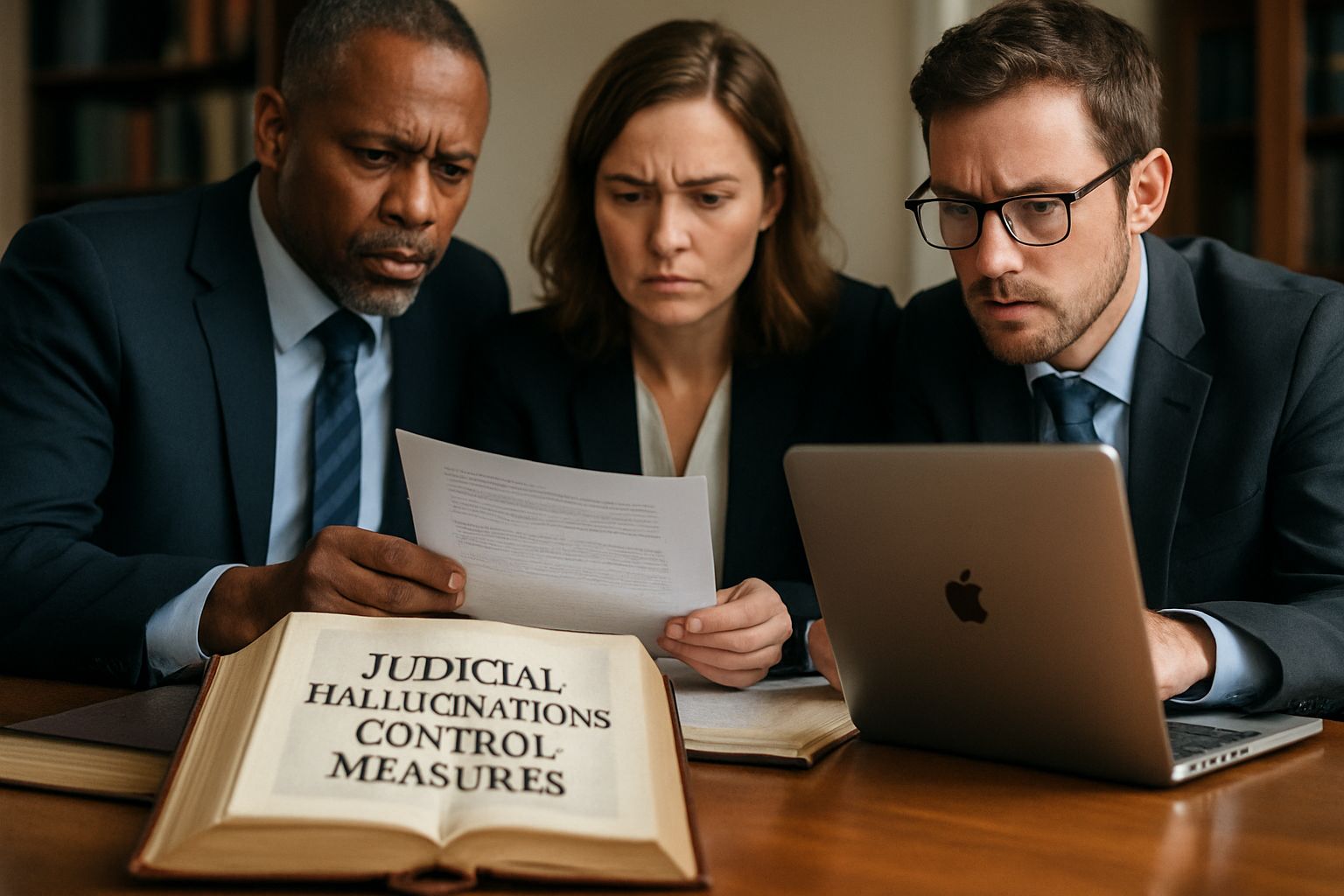
Alarming Global Court Trend
Meanwhile, courts across jurisdictions now track dozens of hallucination incidents every month. Damien Charlotin’s database lists hundreds of fabricated case entries and expanding sanction records. Therefore, regulators concede the trend is neither isolated nor temporary.
Mata v. Avianca remains the best known United States example. There, Judge Castel fined counsel $5,000 for relying on invented precedents. He called the conduct conscious avoidance of core legal duties.
European and Australian tribunals issued similar warnings, signaling converging accountability standards. Consequently, Judicial Hallucinations now threaten procedural veracity on an international scale. These statistics underscore escalating risk.
Global numbers confirm the problem’s breadth. However, India’s Supreme Court has delivered the sharpest recent rebuke.
Supreme Court India Response
On 17 February 2026, a bench led by CJI Surya Kant sounded an alarm. During arguments, Justices flagged a petition citing the phantom case “Mercy vs Mankind.” Moreover, the bench warned that such missteps erode judicial veracity and efficiency.
Subsequently, on 27 February, a separate bench in Gummadi Usha Rani escalated matters. The order declared that reliance on AI-generated non-existent judgments constitutes Misconduct, not simple error. It stayed the contested findings and summoned the Bar Council, Attorney General, and Solicitor General.
Justice Narasimha’s opinion stated: “legal consequence shall follow” when fabricated authorities mislead courts. Consequently, Judicial Hallucinations became a formally recognized disciplinary trigger in India. These Indian developments set the stage for wider regulatory tools.
Indian orders move hallucinations from error to actionable offense. Therefore, international observers watch subsequent sanction mechanics closely.
Notable International Sanctions
Beyond India, several courts have translated rhetoric into penalties. For example, the Southern District of New York sanctioned two lawyers for submitting six hallucinated opinions. Judge Castel emphasized attorney accountability and ordered corrective letters to every misquoted judge.
U.S. state courts have replicated that stance, although fines vary. In contrast, Canadian tribunals issued warnings without monetary punishment yet signaled future Misconduct findings. Meanwhile, Brazilian judges demanded affidavits assuring citation veracity before accepting AI-assisted briefs.
Collectively, these moves reinforce that Judicial Hallucinations invite swift discipline. Moreover, they reveal an emerging transnational baseline for professional accountability. Such harmonization pressures lagging jurisdictions to act.
Cross-border sanctions sharpen the urgency of preventive controls. Next, we examine how duties and ethics intersect with that urgency.
Duties, Ethics, Accountability
Professional codes already require diligence, competence, and candor. However, generative tools introduce new vectors for inadvertent falsehoods. Rule 11 in U.S. federal practice and comparable Indian standards still anchor accountability.
Therefore, lawyers cannot shield themselves by blaming technology. Bar councils stress that verification duties remain personal and non-delegable. Failure converts negligence into intentional Misconduct once warnings are clear.
Judicial Hallucinations complicate that duty set because outputs appear authoritative. Nevertheless, courts expect counsel to cross-check every citation with official reporters. Those checks preserve veracity and sustain institutional legitimacy.
Ethical frameworks therefore align with emerging practice directions. Consequently, technology literacy becomes a compliance priority.
Hallucination Technology Risks
Large language models generate text by probabilistic pattern matching. They lack built-in fact validation, so hallucinations remain inevitable. Moreover, training corpora often blend fiction with authentic case names, amplifying risk.
Developers propose retrieval-augmented generation to inject authoritative sources during inference. However, early evaluations show persistent error rates, especially with niche legal materials. Consequently, practitioners must implement multi-layer verification workflows, not blind trust.
Judicial Hallucinations therefore arise from model architecture, incentive structures, and user overconfidence. In contrast, authenticated research databases integrate editorial oversight, reducing false positives. Yet, convenience drives many users back to unchecked chatbots.
Technical fixes help but cannot replace informed human review. Accordingly, the next section outlines actionable compliance steps.
Curtailing Judicial Hallucinations Effectively
Regulators and firms are drafting structured guardrails. Firstly, many courts now demand affirmative certification that filings contain no hallucinated citations. Secondly, bar councils recommend continuing education on AI limits.
Professionals can enhance their expertise with the AI Security-3™ certification. That program covers verification pipelines, risk scoring, and audit logging.
Practical Verification Checklist Guide
- Adopt case-law databases with cryptographic hashes for citation Veracity.
- Embed automated cross-referencing tools inside drafting software.
- Require human sign-off before every external submission.
- Log model prompts to support post-incident Accountability reviews.
- Schedule quarterly audits to detect recurring Misconduct patterns.
Judicial Hallucinations diminish when these controls operate in combination. Nevertheless, enforcement mechanisms must accompany guidelines to achieve momentum. Therefore, organizations should assign a responsible officer for continuous compliance monitoring.
Robust governance transforms reactive patching into proactive assurance. The concluding section synthesizes key insights and next actions.
Conclusion and Next Steps
Courts have spoken clearly: technology cannot excuse inaccuracy. From New Delhi to New York, Judicial Hallucinations trigger sanctions and reputational damage. Moreover, the Supreme Court of India now labels reliance on fake citations as Misconduct.
Consequently, lawyers must protect veracity through disciplined verification and continuous education. Adopting secure research tools, logging workflows, and earning relevant certifications enhances accountability. Therefore, forward-looking practices will separate responsible firms from risky laggards.
Act now: review workflows and pursue the AI Security-3™ credential to safeguard your Legal future.
Disclaimer: Some content may be AI-generated or assisted and is provided ‘as is’ for informational purposes only, without warranties of accuracy or completeness, and does not imply endorsement or affiliation.


