

AI CERTS
4 months ago
Gen Z and the Generative Labor Shift: Entry-Level Crisis
Stanford researchers find 22–25 year-olds in highly exposed occupations suffered a 16% relative Employment decline. Consequently, policymakers, employers, and universities debate causes and cures. However, evidence shows concentrated disruptions rather than an economy-wide collapse. This article unpacks new data, competing explanations, and actionable responses. Readers will learn how the shift affects Employment pathways, Skills demands, and long-term Career design.
Data Signals Intensify Rapidly
Revelio Labs shows the steepest slide in entry-level listings since the pandemic. From January 2023 to late 2025, postings fell about 35%. Moreover, highly AI-exposed junior roles plunged beyond 40%. Consequently, the Generative Labor Shift now appears in hard numbers.
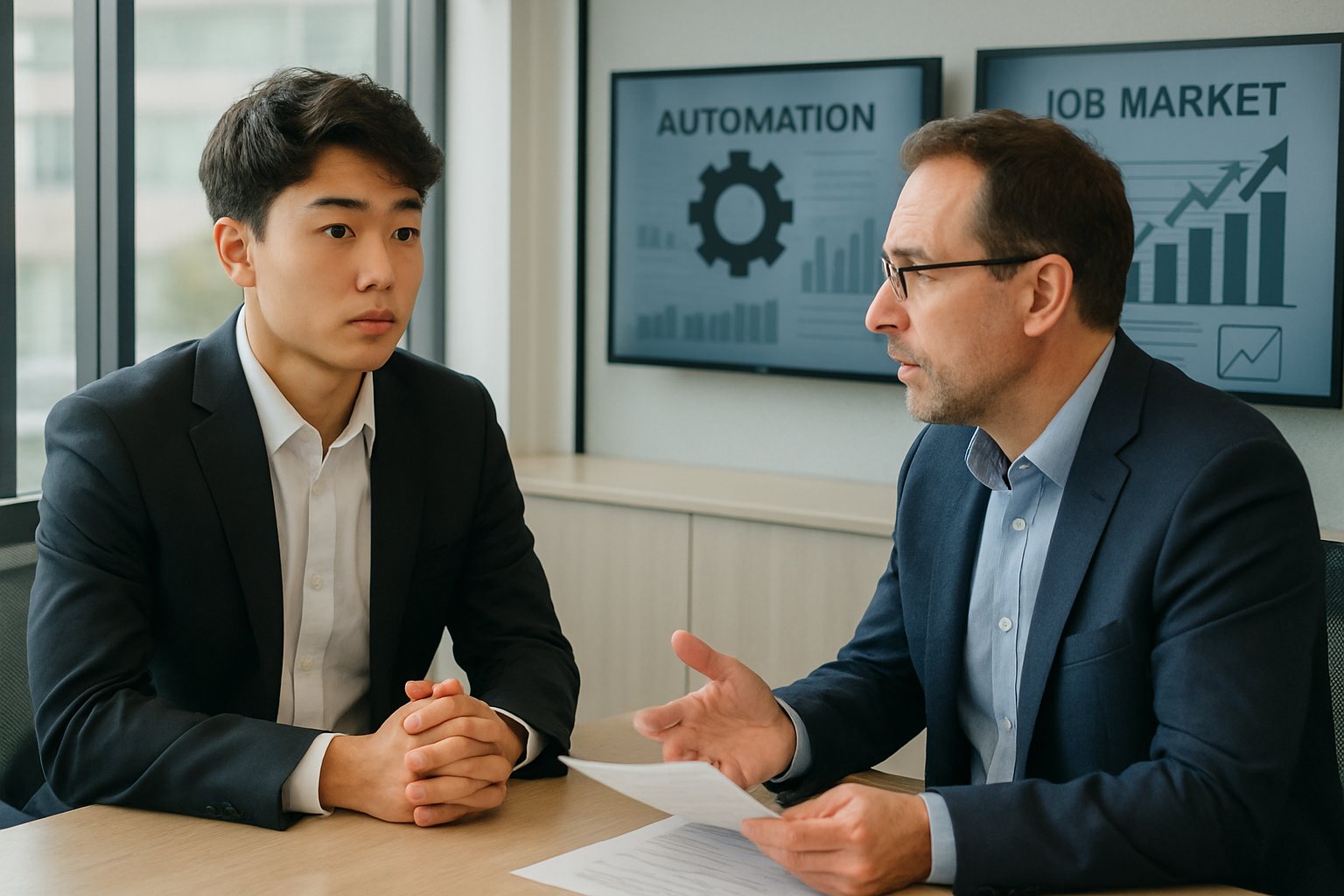
- Entry-level postings −35% versus January 2023 (Revelio Labs).
- AI-exposed junior postings −40% plus (Revelio Labs).
- Early-career Employment in exposed roles −16% (Stanford ADP data).
- Global junior postings −29 percentage points since 2024 (Randstad).
Stanford’s ADP panel extends the picture to actual payrolls. Researchers record a 16% relative decline for workers aged 22–25 in exposed occupations. In contrast, low-exposure cohorts saw near-flat Employment. Therefore, quantitative evidence suggests disruption concentrates among beginners.
Collectively, the numbers depict a clear early-warning system. Next, we examine which sectors feel those tremors most sharply.
Sector Employment Impacts Unevenly
Tech and digital marketing record the heaviest losses. Customer service and routine software testing also contract quickly. Meanwhile, healthcare and skilled trades register continued hiring. This split defines how the Generative Labor Shift reshapes sector Employment.
- Most impacted: software, design, customer support.
- Moderately impacted: accounting, legal research.
- Least impacted: nursing, construction, hospitality services.
Stanford exposure scores place software engineering in the top vulnerability quintile. Consequently, many graduates pivot toward data governance or product roles. Manufacturing automation displaced frontline tasks earlier; now white-collar juniors feel similar pressures.
Sector patterns guide job-seekers toward resilient niches. However, sentiment data reveals additional challenges beyond raw numbers.
Gen Z Sentiment Snapshot
Edelman’s 2025 survey captures heightened anxiety among young professionals. About 37% of U.S. Gen Z respondents fear imminent job loss. Moreover, 42% of Australian peers believe AI threatens their roles.
Interviews echo the survey, citing canceled graduate programmes and prolonged searches. One design graduate described submitting 200 applications without a single interview. These lived stories personalize the statistical Generative Labor Shift.
Rising anxiety can erode productivity and retention. Therefore, understanding root causes becomes urgent.
Root Causes And Debates
Researchers debate whether AI or macro headwinds drive the downturn. Brynjolfsson calls early-career workers "canaries in the coal mine." Goldman Sachs economist Brandon Briggs stresses sector specificity.
Higher interest rates, venture funding droughts, and hiring pauses coincide with the Generative Labor Shift. Nevertheless, Stanford’s robustness checks still find significant AI exposure effects. Consequently, analysts urge continuous monitoring.
Causal questions remain partially unresolved. Next, we explore how individuals can respond through proactive upskilling.
Upskilling Paths Emerging Fast
Gen Z workers increasingly invest in short, flexible learning. Randstad reports 75% of respondents use AI tools to build Skills.
Professionals can enhance their expertise with the AI Cloud Architect™ certification. Such credentials demonstrate applied cloud and automation Skills now prized by employers.
Bootcamps, apprenticeships, and micro-internships offer alternate entry-level on-ramps. Continuous learning mitigates displacement risk during the Generative Labor Shift.
However, organisational support remains vital.
Policy And Employer Responses
Employers confronting pipeline gaps pilot modern apprenticeship models. Randstad’s CEO urges designs that blend purpose, progression, and structured mentoring. As a result, firms hope to sustain future Skills flows during the Generative Labor Shift.
Universities expand experiential programmes and track graduate Employment more closely. Meanwhile, policymakers explore tax credits for entry-level placements and national Skill audits.
Coordinated action can soften cohort scarring. Finally, we recap insights and outline next steps.
Gen Z enters the workforce during unparalleled technological churn. Evidence from Revelio, Stanford, and Randstad confirms sharp entry-level contractions concentrated in AI-exposed fields. Macro factors intensify the trend, yet targeted upskilling, redesigned early careers, and supportive policies offer hope. Therefore, professionals should track the ongoing Generative Labor Shift, refine Skills proactively, and pursue robust Career credentials. Explore advanced learning options, including the linked certification, and stay ahead of an evolving Employment landscape.
Disclaimer: Some content may be AI-generated or assisted and is provided ‘as is’ for informational purposes only, without warranties of accuracy or completeness, and does not imply endorsement or affiliation.


