

AI CERTS
2 months ago
OpenClaw Ban: Google’s Token Proxy Crackdown Explained
Moreover, the enforcement raised fresh debates about platform governance, security, and fairness. This article unpacks the timeline, technical details, and commercial stakes behind the drama. Additionally, it explores how developers can adapt while safeguarding their workflows. Read on for data, expert commentary, and actionable guidance. In contrast, rival providers adopted quieter mitigation strategies. Therefore, understanding the root causes remains vital for any team building AI agents.
Why Google Enforced Action
Google framed its move as emergency triage. Specifically, Antigravity lead Varun Mohan cited a massive spike in malicious usage. Consequently, service quality degraded for ordinary subscribers. OpenClaw’s OAuth plugin had been forwarding consumer subscription tokens into automated agent pools.
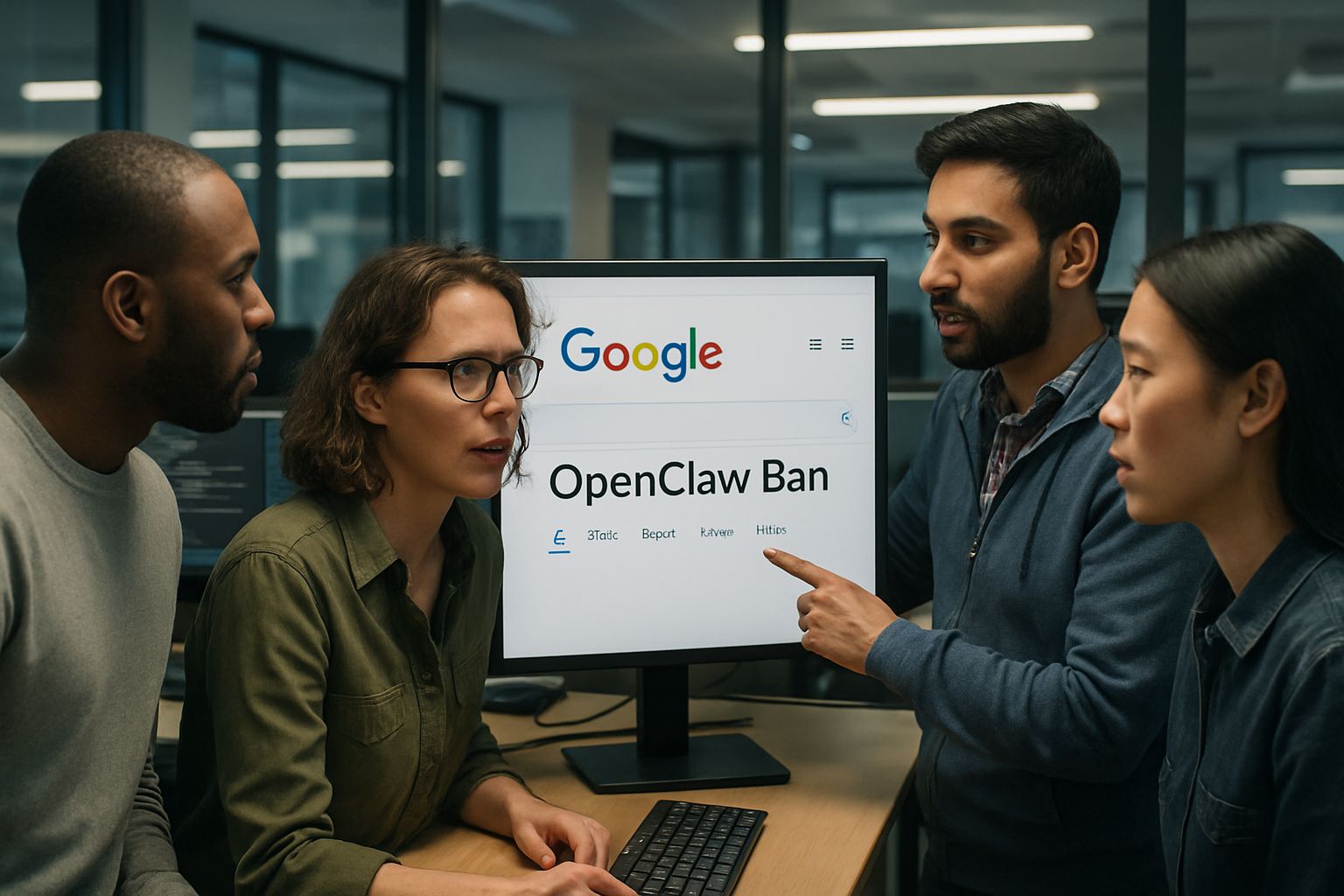
In Google’s view, that pattern breached acceptable use policies and bypassed internal cost controls. Furthermore, the sudden OpenClaw Ban signaled zero tolerance for subscription token routing. The company claimed immediate suspension was the only option to protect latency targets.
These claims explain Google’s public stance. However, critics argue the response punished compliant customers. The technical roots of the conflict clarify those disagreements.
Understanding Token Proxying Risks
Subscription OAuth tokens are bearer credentials under RFC 6750. Consequently, anyone holding them can invoke protected resources until expiry. Token proxying forwards those credentials through intermediary clients like agent frameworks. Moreover, the approach defeats prompt caching and batching designed for first-party apps.
Providers then pay compute costs without gaining metering insights per external workflow. Additionally, forwarding expands the attack surface for theft or misuse. Security researchers label such patterns 'API Abuse' and recommend explicit key exchange instead.
Key technical downsides include:
- Loss of request origin visibility
- Unexpected surge in token routing volume
- Higher per-request compute overhead
- Difficulty enforcing per-user quotas
In contrast, dedicated API keys let platforms attribute costs cleanly. Token proxying created measurable risk for Antigravity. Therefore, it sat at the center of the OpenClaw Ban controversy. Next, we examine the impact on developers.
Developer Ecosystem Impact Scope
OpenClaw attracted tens of thousands of GitHub stars within weeks. Meanwhile, many teams integrated the agent into production prototypes. Account suspensions linked to the OpenClaw Ban halted demos, customer pilots, and hackathon projects overnight. Nevertheless, some groups pivoted quickly to open models or on-prem clusters.
Observers highlighted three main pain points:
- Disrupted client commitments
- Unplanned migration costs
- Loss of coding tools integration
Moreover, coding tools integrations built around OpenClaw scripts broke when tokens failed. Independent developers reported losing valuable weekend work due to sudden 403 responses.
The ecosystem experienced abrupt turbulence after the OpenClaw Ban. Consequently, attention shifted toward the financial drivers behind Google’s stance.
Economic And Security Pressures
Antigravity’s Ultra tier charges a flat monthly fee. However, backend billing operates on consumed tokens, not users. Large bot chains generated by OpenClaw workflows distorted that balance. Therefore, costs ballooned in the wake of the OpenClaw Ban.
Security teams also flagged elevated API Abuse signatures, including abnormal geographic token routing. Additionally, bearer leaks threatened user privacy and refund obligations. Platform executives judged that unchecked usage could escalate into systemic risk.
Economic and security factors intertwined in Google’s calculus. Nevertheless, the blunt enforcement fueled community criticism.
Community Reactions And Critiques
OpenClaw founder Peter Steinberger called the OpenClaw Ban 'draconian' on X. Subsequently, maintainers published migration guides advocating API keys or self-hosted models. OECD.ai labeled the OpenClaw Ban an illustrative AI incident. Meanwhile, some users praised Google for protecting service stability.
Debate also touched on responsible Token Routing ethics. Furthermore, developers questioned why warnings or graduated rate limits were absent. Several security blogs urged providers to differentiate hobby misuse from coordinated API Abuse.
Opinions diverged sharply across forums. Therefore, policymakers began discussing clearer access frameworks.
Policy Lessons Moving Forward
Industry analysts recommend transparent, tiered access paths for agent frameworks. Moreover, providers should publish real-time dashboards showing usage anomalies. Such visibility would let operators curb API Abuse without blanket bans. In contrast, developers must avoid casual token routing and favor approved SDKs.
Professionals can strengthen their security chops through formal training. Consequently, many pursue specialized credentials. Interested engineers can enhance expertise with the AI-Ethical Hacker™ certification. Additionally, modern coding tools now embed guardrails to detect leaked bearer strings.
Clear policies and skilled practitioners reduce future disruption. Therefore, stakeholders can avoid another OpenClaw Ban scenario.
The OpenClaw Ban underscores the fragility of unofficial integration patterns. Moreover, it reminds teams that bearer tokens carry inherent security debt. Google protected its margins but bruised developer trust. Nevertheless, transparent policies and flexible tiers can balance both interests. Developers should audit workflows, replace proxy scripts, and plan graceful degradation paths. Additionally, upskilling through respected certifications sharpens incident readiness. Explore advanced safeguards with the AI-Ethical Hacker™ program and keep building responsibly.
Disclaimer: Some content may be AI-generated or assisted and is provided ‘as is’ for informational purposes only, without warranties of accuracy or completeness, and does not imply endorsement or affiliation.


