

AI CERTS
2 months ago
Anduril’s Software-First Weapons disrupt defense
Subsequently, mission autonomy flew missiles using inert rounds only four months later. Meanwhile, investors poured $2.5 billion into Anduril, pushing valuation above $30 billion. These moves compress development cycles and unsettle long-standing procurement norms. However, critics question how humans can supervise lethal decisions on such condensed timelines. This article examines the emerging paradigm, associated risks, and business drivers shaping the next decade.
Rapid Paradigm Shift Timeline
Historic context clarifies how swiftly events unfolded. In contrast, earlier unmanned programs required decades to integrate weapons. Fury’s maiden semi-autonomous sortie happened less than two years after contract award. Additionally, Shield AI’s Hivemind flew on the same jet during February 2026 integration trials. Consequently, mission software and airframe separated in operational tests rather than simulations.
Ghost Drones pioneered earlier swarm experiments but lacked the new Kinetic Autonomy stack now reaching maturity. Interceptors programs provided lessons on rapid avionics-weapon coupling that informed Fury development.
- Oct 31 2025 – YFQ-44A first semi-autonomous flight
- Feb 23 2026 – inert missile launch during integration trials
- Feb 26 2026 – Hivemind mission autonomy test completed
- Mar 27 2025 – $86 million USSOCOM autonomy contract awarded
Together, these dates illustrate the Software-First Weapons timeline moving from concept to flight within 18 months. Therefore, acquisition officers now track code sprints as carefully as airframe stress reports. These milestones confirm an irreversible shift. Meanwhile, the following section explores architectural foundations enabling such velocity.
Autonomy Stack Decoupling Now
Decoupling autonomy from hardware underpins the new architecture. Moreover, the Defense Department’s A-GRA mandates interchangeable mission brains across diverse vehicles. Consequently, vendors compete on algorithms instead of sheet metal. Anduril markets its Lattice fabric as the nervous system linking sensors, nodes, and effectors. Kinetic Autonomy enables split-second targeting by sharing fused data among Ghost Drones and larger Interceptors. However, software modularity demands rigorous interface standards and verification tools.
Shared Data Fabric Value
Therefore, Palantir’s enterprise pipelines retrain models while ArsenalOS distributes updates to forward units. Software-First Weapons rely on this loop to push new tactics without returning jets to depots. Nevertheless, each added layer of abstraction complicates cybersecurity and certification. Engineers now embed attestation chips, audit logs, and human override hooks within autonomy containers. This architecture accelerates innovation yet widens the attack surface. Subsequently, we must examine how ArsenalOS converts theory into repeatable production gains.
ArsenalOS Production Advantage
ArsenalOS treats manufacturing as a continuous software service. Consequently, code changes propagate through digital twins, supply orders, and maintenance manuals automatically. Anduril’s Arsenal-1 plant in Ohio embodies this principle by housing printers, testers, and deployment racks. Moreover, the factory aligns with venture funding cycles and quarterly capability drops. Investors back the model because they see faster revenue recognition than traditional defense primes. Software-First Weapons budgets now include sprint reviews, not just long-lead titanium purchases.
Ghost Drones once required bespoke tooling; ArsenalOS eliminates that constraint. Similarly, Kinetic Autonomy upgrades roll out as container images validated in virtual wind tunnels. Interceptors receive the same binaries, ensuring fleet coherence. Therefore, commanders can mix expendable wingmen with premium fighters without integration delays. Production velocity reshapes operational planning. However, human oversight frameworks must adapt just as rapidly, discussed next.
Evolving Human Oversight Debate
Ethical scrutiny intensifies as autonomy gains lethal agency. International academics warn that operators may merely rubber-stamp automated firing solutions. Meanwhile, Pentagon policies still require meaningful human control, yet definitions vary across services. Software-First Weapons compound the dilemma because update frequency challenges certification boards. Consequently, ArsenalOS must log every decision node for after-action analysis. In contrast, legacy systems stored limited mission data due to bandwidth limits.
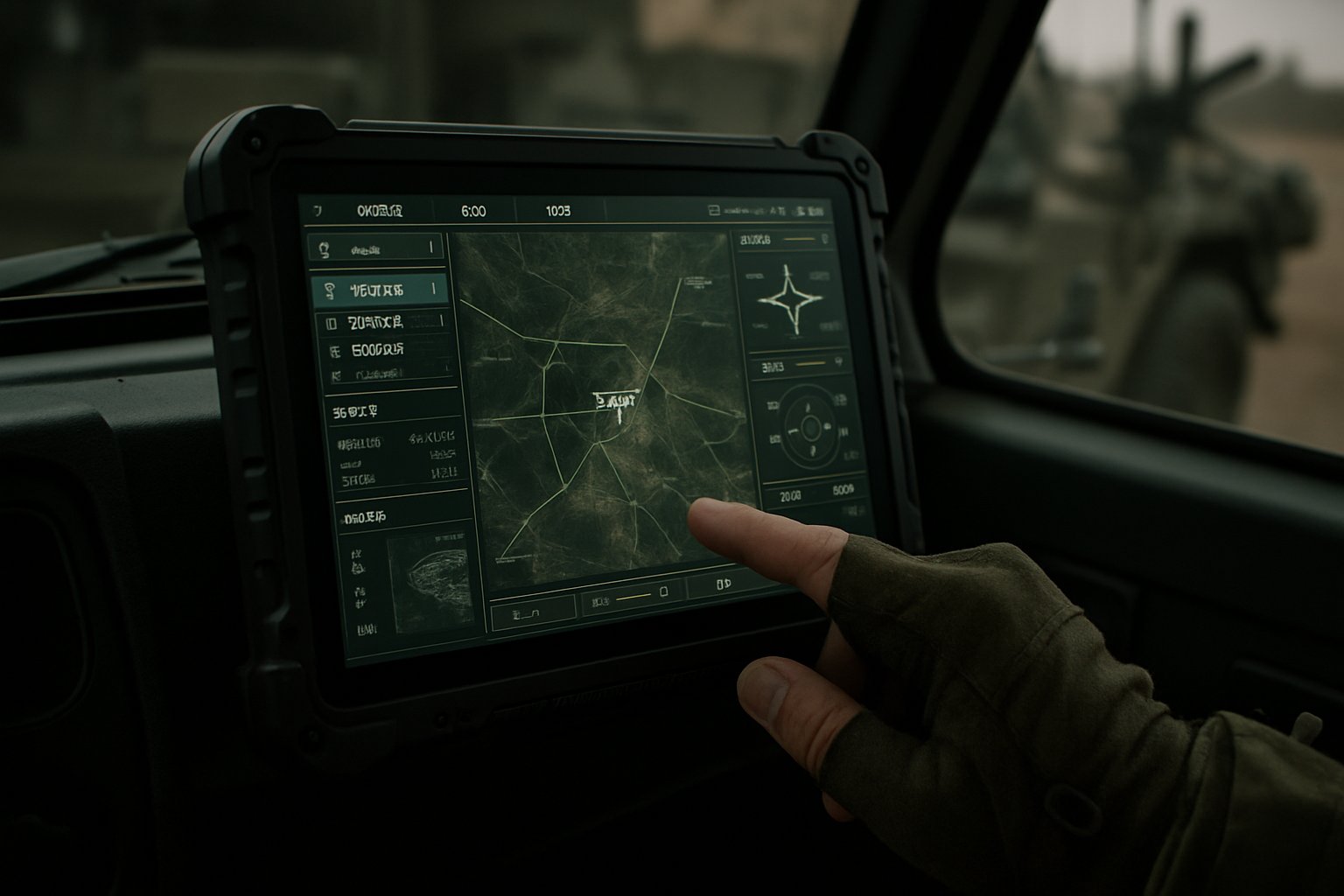
Shield AI asserts their interfaces keep humans on the loop through intuitive tablet views. Nevertheless, tempo during swarming Ghost Drones engagements may overwhelm attention spans. Kinetic Autonomy algorithms often outpace manual rule checking in contested electronic environments. Therefore, governance bodies explore automatic throttle mechanisms that delay weapon release unless confidence surpasses thresholds. Interceptors also raise questions, because missile carriage multiplies potential failure modes. These oversight challenges necessitate broader market and policy shifts, detailed in the next section.
Market Forces Accelerating Adoption
Venture capital and urgent threat assessments align to expand the market. Moreover, a $25-30 million unit cost places CCAs within reach of supplemental procurement lines. Consequently, mid-tier allies may license Software-First Weapons without full industrial bases. Palantir partnerships promise enterprise dashboards, while OpenAI research improves target classification for Ghost Drones formations. Kinetic Autonomy advances shorten pilot training timelines, appealing to air forces facing demographic shortages. Interceptors benefit because plug-and-play guidance bundles reduce integration cost with existing missile stockpiles.
Industry executives cite three adoption catalysts:
- Accelerated software certification pathways
- Digital supply chain visibility
- Low-cost attritable platforms
Additionally, the upcoming 2026 CCA down-select will validate the business case for modular autonomy. Therefore, procurement officials race to secure multiyear funding before congressional cycles shift. These commercial dynamics amplify existing risks. Subsequently, stakeholders must confront escalation, proliferation, and safety trade-offs.
Emerging Risks And Restraints
Rapid iteration introduces unforeseen failure modes in live tests. Furthermore, cybersecurity researchers warn about supply chain exploits hidden within third-party libraries. Software-First Weapons could propagate such vulnerabilities across entire fleets overnight. Moreover, exportable autonomy lowers entry barriers for non-state actors seeking cheap swarms. Malicious replication could spark unintended escalation cascades in hot zones. Nevertheless, emerging international norms might impose algorithm auditing and kill switch mandates.
Furthermore, insurers and investors increasingly demand rigorous safety validation before funding production ramps. Vendors now publish red-team reports to reassure skeptical regulators. Therefore, multi-stakeholder governance frameworks will shape deployment tempo. These restraints may slow adoption margins, yet they also protect credibility for the overall paradigm.
The evidence shows Software-First Weapons have progressed from slide decks to validated flight tests within 18 months. Consequently, production pipelines, data fabrics, and mission autonomy now outpace legacy acquisition clocks. However, success hinges on disciplined governance that keeps humans meaningfully connected to Software-First Weapons operations.
Investors, regulators, and commanders must collaborate to ensure Software-First Weapons remain safe, reliable, and ethically aligned. Moreover, technical professionals can sharpen skills by pursuing the AI Engineer™ certification. Such expertise will prove vital as autonomous fleets expand across air, sea, and cyber domains. Therefore, explore the certification today and stay ahead in the rapidly evolving defense technology landscape.
Disclaimer: Some content may be AI-generated or assisted and is provided ‘as is’ for informational purposes only, without warranties of accuracy or completeness, and does not imply endorsement or affiliation.


