

AI CERTS
2 months ago
Anduril Valuation: Chasing a $60B Defense Tech Round
Consequently, market observers are dissecting numbers, strategy, and risk. The analysis below breaks down the proposed raise, the programs it funds, and the wider implications for Autonomous Weapons, government procurement, and VC appetite.
Funding Talks Double Valuation
The Information first disclosed the ambitious Anduril Valuation target on 13 February. Reuters quickly syndicated the scoop, while TechCrunch later cited Wall Street Journal sources naming Thrive Capital and Andreessen Horowitz as lead backers. Moreover, Bloomberg hinted the round could reach $8 billion. These talks follow Anduril’s June 2025 Series G, which set a $30.5 billion price tag after raising $2.5 billion.
Therefore, the new goal represents a dramatic premium that few private defense firms have attempted. Analysts note comparable public primes trade at lower growth multiples. Nevertheless, private investors appear ready to pay for velocity and software DNA. These negotiations illustrate how fast perceptions can shift. However, final terms remain unconfirmed by regulatory filings.
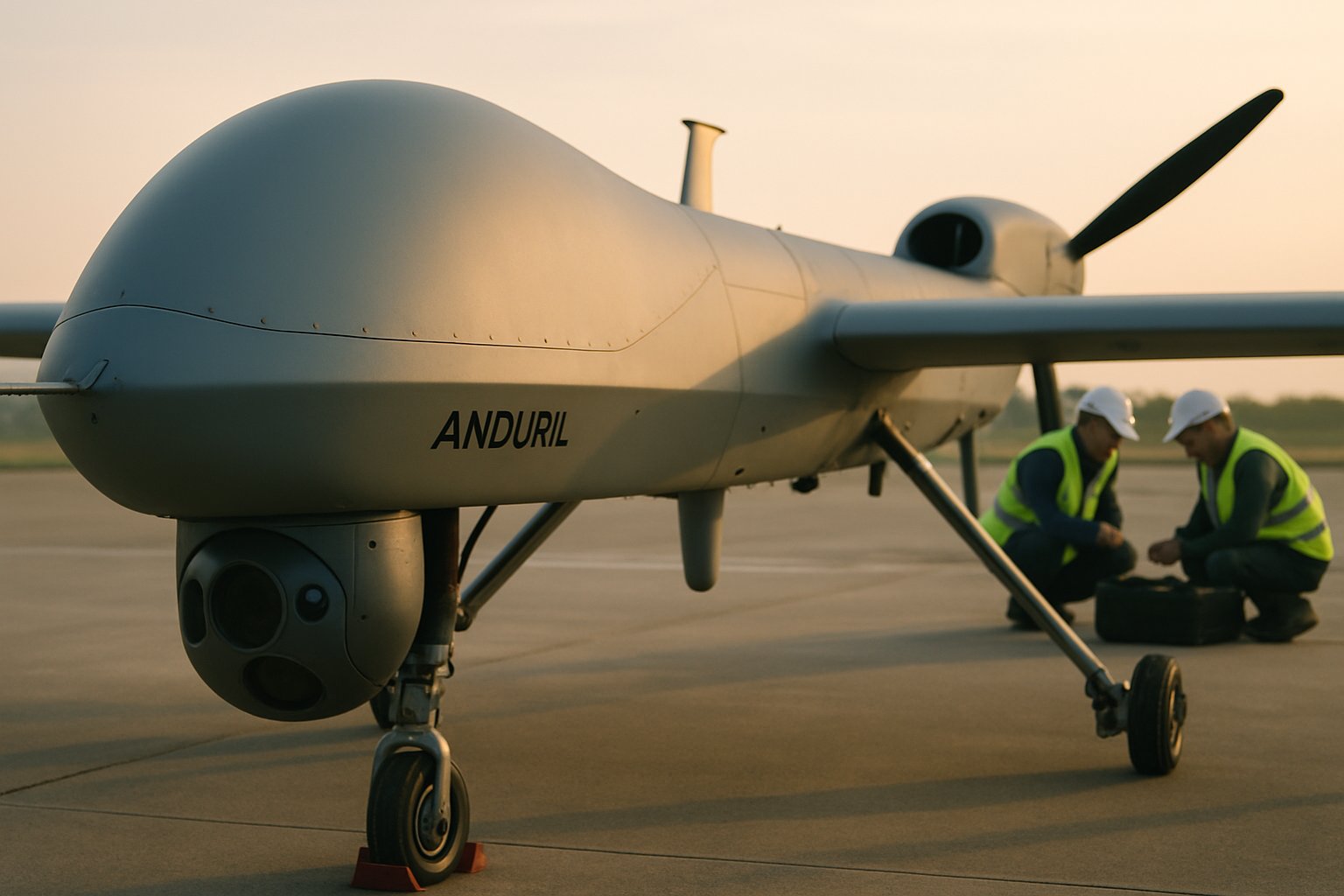
The prospective capital would bankroll a planned weapons factory and an autonomous fighter jet program, according to insiders. Those projects require heavy tooling, specialized labor, and strict certification. Consequently, management is courting deep-pocketed funds able to tolerate long hardware cycles. The company has not commented publicly, yet sources expect a formal announcement within months. These developments underscore how traction influences the Anduril Valuation trajectory. However, the market will judge execution next.
Market Context And Comparisons
Private valuations rarely mirror public caps. In contrast, listed giants like Lockheed Martin and RTX trade on revenue and margin stability. Anduril booked roughly $2 billion in 2025 sales, per internal guidance. Meanwhile, its reported burn hovered near $900 million. Consequently, the implied 30× revenue multiple surprises some portfolio managers. Yet backers argue the startup’s software-first stack justifies the premium. Furthermore, geopolitical tensions continue elevating defense budgets worldwide. Government urgency often compresses procurement timelines, benefiting nimble suppliers. Therefore, investors calculate that software-defined platforms can outpace legacy incumbents.
Key Financial Figures List
- Target raise size: “billions,” with $8 billion rumored
- Prior valuation: $30.5 billion in June 2025
- Proposed Anduril Valuation: ~$60 billion
- Estimated 2025 revenue: ~$2 billion
- Annual cash burn: $800-900 million
These numbers highlight rapid scaling and significant expense. They also frame comparisons with public peers whose market caps range from $40 billion to $120 billion. Consequently, observers debate sustainability. However, the final verdict will depend on profitable manufacturing at scale. These contrasts set the stage for examining growth catalysts.
Growth Drivers Behind Surge
Several factors push the Anduril Valuation upward. First, revenue apparently doubled year-over-year, signaling strong product-market fit. Additionally, the firm markets a broad catalog: Lattice OS, autonomous drones, counter-UAS interceptors, underwater vehicles, and rocket motors. This diversified portfolio reduces platform risk while deepening account penetration. Moreover, global conflicts have accelerated demand for distributed, attritable Autonomous Weapons. Militaries seek affordable swarming assets that complement manned fleets. Anduril advertises rapid update cycles similar to commercial software, attracting procurement officers frustrated with traditional primes. Furthermore, investors see potential export growth once U.S. approvals materialize.
Leadership also boosts confidence. Founder Palmer Luckey commands public attention and advocates reshoring critical capabilities. CEO Brian Schimpf emphasizes engineering efficiency, while Executive Chairman Trae Stephens bridges Capitol Hill and Sand Hill Road. Consequently, VC circles view the team as uniquely positioned to translate Silicon Valley speed into classified programs. These attributes have convinced top funds to re-up at higher prices. Nevertheless, every surge invites scrutiny, which we explore next.
Manufacturing Ambitions Expand Reach
The biggest allocation of new money targets bricks-and-mortar production. Management plans to build its first major weapons factory, reportedly in the American Midwest. Therefore, the company moves from prototype runs to full-rate manufacturing. That shift demands aerospace-grade quality systems, supply-chain resilience, and rigorous testing. Additionally, Anduril aims to develop an autonomous fighter aircraft, scaling lessons from smaller drones into a larger airframe. Success would deliver a disruptive capability and further lift the Anduril Valuation.
However, capex bills mount quickly. Tooling, composite fabrication, and propulsion integration require sustained funding. Consequently, the firm must balance rapid iteration with compliance. Professionals can enhance their expertise with the AI Robotics Specialist™ certification, gaining insight into autonomous system safety. Such knowledge becomes vital as software drives lethal hardware. These manufacturing plans could transform Anduril into a vertically integrated Defense Tech powerhouse. Yet the path contains hazards, outlined below.
Ambitious facilities promise scale advantages. Nevertheless, supply disruptions or certification delays could erode margins. These concerns feed directly into risk assessments. Consequently, stakeholders monitor progress closely.
Risks Temper Investor Optimism
No meteoric Anduril Valuation comes without warnings. Firstly, execution risk looms. Scaling from hundreds to thousands of airframes challenges even seasoned primes. Secondly, regulatory scrutiny over Autonomous Weapons intensifies as ethical debates escalate. Moreover, public protest campaigns could influence congressional appropriations, slowing adoption. Additionally, high cash burn persists until volume deliveries begin. Therefore, balance-sheet pressure may rise if economic conditions tighten. In contrast, legacy contractors possess entrenched production lines and lobbying resources.
Analysts also flag market timing. A future IPO would pit the company against public peers trading at lower multiples. Consequently, down-round risk exists if sentiment shifts. Furthermore, competition is heating up as startups like Shield AI and Skydio win Pentagon contracts. These rivals could dilute future revenue share. Nevertheless, Anduril’s head start in software integration remains significant. These risks underscore the premium nature of current negotiations. However, some mitigations are emerging, as discussed in the strategic outlook.
Understanding these challenges enables informed investment decisions. Consequently, due diligence focuses on delivery milestones and policy trends.
Strategic Outlook For 2026
Looking ahead, several milestones will influence the Anduril Valuation. The potential $60 billion round may close by mid-2026 if due diligence proceeds smoothly. Subsequently, ground-breaking on the weapons factory could follow, extending the firm’s industrial footprint. Furthermore, demonstration flights of the autonomous fighter concept would attract additional government interest. Meanwhile, growing international orders for counter-drone systems might diversify revenue beyond U.S. contracts. VC observers anticipate secondary share sales that provide liquidity without a full IPO. Consequently, board discussions reportedly include optional public offerings in 2027.
Strategic partnerships with legacy primes remain possible. Such alliances could de-risk production and speed foreign military sales approvals. Additionally, integrating Lattice OS across partner platforms would deepen moats. Nevertheless, management insists on maintaining product control to protect agility. Therefore, careful governance will shape expansion choices.
These forward-looking actions will either validate or challenge current pricing. However, transparent milestone reporting can reassure stakeholders and sustain momentum. The coming year, therefore, represents a pivotal proving ground.
Progress against these targets will determine funding accessibility. Consequently, all eyes remain on execution throughout 2026.
Conclusion
The rumored $60 billion Anduril Valuation signals unprecedented confidence in venture-backed Defense Tech. Rapid revenue growth, diversified Autonomous Weapons offerings, and bold manufacturing goals attract deep VC capital. However, large-scale production, ethical debates, and public market dynamics pose real hazards. Nevertheless, proactive governance and skilled talent can convert ambition into durable advantage. Consequently, professionals should monitor program milestones and policy shifts carefully. For readers wishing to deepen technical fluency, consider pursuing the linked AI Robotics credential. Stay informed, stay prepared, and capitalize on the transformation reshaping defense innovation.
Disclaimer: Some content may be AI-generated or assisted and is provided ‘as is’ for informational purposes only, without warranties of accuracy or completeness, and does not imply endorsement or affiliation.


