

AI CERTS
2 months ago
OpenAI Pursues NATO Contract for AI on Unclassified Networks
Subsequently, a company spokeswoman corrected the record, stressing the proposal targets NATO-UNCLASSIFIED infrastructure. The distinction matters because security, legal, and political hurdles differ sharply between tiers. Moreover, allied officials have yet to confirm any formal procurement. Industry analysts therefore view the talks as exploratory but significant.
Meanwhile, critics inside OpenAI fear mission creep toward autonomous warfare. Stakeholders across government and industry now watch for concrete language on ethical guardrails. This article unpacks the opportunity, the unanswered technical questions, and the broader market implications.
OpenAI Defense Strategy Pivot
Altman’s late-February X post stunned many employees. He wrote, “We reached an agreement with the Department of War to deploy our models inside their classified network.” Reporters rapidly reproduced the note worldwide. Consequently, analysts linked the post to the Pentagon’s 2025 frontier AI contract vehicle worth up to $200 million. Furthermore, the timing signaled accelerated military outreach just as Anthropic clashed publicly with the same customer.
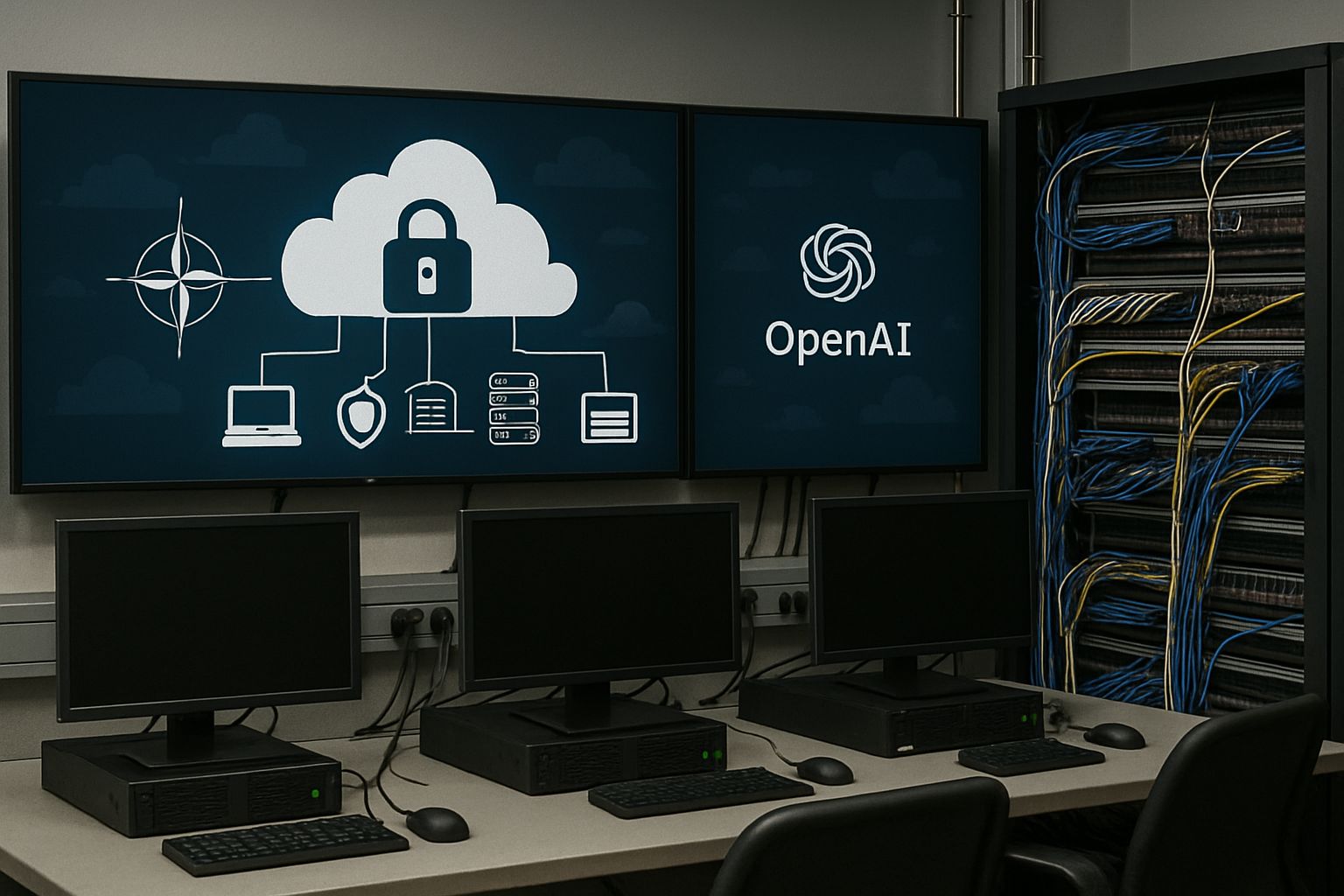
In contrast, Altman framed the forthcoming NATO Contract as less sensitive because it concerns Unclassified Networks. He emphasized that forward deployed engineers would handle setup and safeguards. Moreover, corporate lawyers are drafting language that bans domestic surveillance and fully autonomous use cases. Nevertheless, internal critics doubt enforcement once multiple allies access the system.
These moves demonstrate a strategic shift toward deeper defense integration. However, clarity around NATO governance remains essential before commitments solidify.
Clarifying NATO Network Scope
During a March staff meeting, Altman spoke about potential deployments on classified alliance systems. Subsequently, the Wall Street Journal reported the remarks, sparking fresh criticism. Consequently, OpenAI clarified that the NATO Contract would target NATO-UNCLASSIFIED environments, not secret tiers. That distinction aligns with NATO doctrine, labeling data beneath “NATO-RESTRICTED” as unclassified yet still controlled.
Furthermore, hosting on Unclassified Networks simplifies accreditation compared with secret enclaves. Network devices require less rigorous cryptographic separation. Nevertheless, NATO policy still enforces strong access controls, multifactor authentication, and continuous monitoring. Therefore, OpenAI must demonstrate compliance with STANAG security baselines across all participating nations.
Clarifying classification limits reduces technical friction yet does not erase oversight concerns. Consequently, procurement dynamics now move to center stage.
Alliance Procurement Dynamics Explained
NATO rarely buys commercial software centrally. Instead, individual states or the NATO Communications and Information Agency sponsor projects. Consequently, Reuters described the potential NATO Contract as exploratory rather than awarded. Moreover, alliance officials have issued no formal solicitation referencing generative AI platforms.
Procurement specialists suggest several paths. One option involves a limited “Spiral” pilot under the Federated Mission Networking program. Another relies on national frameworks, then federation across Unclassified Networks. Additionally, Microsoft Azure Government or AWS Secret could host the service behind alliance gateways. However, no hosting partner has been confirmed.
- July 2025 DoD frontier AI ceilings: up to $200 million each
- Alliance membership: 32 nations share procurement authority
- Current status: opportunity described as “considering,” no contract award notice
These procurement pathways illustrate flexibility but also fragmentation across stakeholders. Nevertheless, ethical considerations could still derail momentum.
Ethical Guardrail Debate Continues
Altman promised guardrails similar to those negotiated with the Pentagon. Specifically, the draft NATO Contract would prohibit intentional domestic surveillance of alliance citizens. Furthermore, any lethal use would require human authorization in the loop. In contrast, critics argue written clauses offer limited assurance without transparent auditing.
Anthropic’s pending lawsuit against the Department of Defense amplifies the debate. Moreover, employee groups within OpenAI fear reputational fallout. Subsequently, some engineers threatened resignation unless leadership commits to stronger public oversight. Consequently, management opened listening sessions to address concerns.
Stakeholder trust hinges on verifiable limits rather than marketing slogans. Therefore, technical implementation details warrant close analysis.
Technical Hosting Questions Persist
The NATO Contract discussion centers on how models would run inside alliance infrastructure. Experts say a hybrid Cloud pattern seems likely. For example, inference nodes could reside at allied data centers while training remains on commercial hyperscale facilities. Additionally, containerized deployments would ease patching across Unclassified Networks.
Nevertheless, cross-domain data flow requires strict guard gateways. Therefore, identity federation among 32 nations must honour diverse privacy laws. Moreover, logging standards must align with both NATO cyber directives and national regulations. OpenAI will deploy Forward Deployed Engineers to harden the stack.
Resolving these technical puzzles could determine operational timelines. Subsequently, market analysts evaluate broader commercial effects.
Market Impact Analysis Emerges
Investors greeted the DoD deal with optimism, pushing valuation chatter toward fresh highs. Similarly, a successful NATO Contract could legitimize defense revenue streams for generative AI firms. Consequently, rivals may accelerate bidding on allied modernization programs. Meanwhile, civil society groups promise vigorous oversight.
Moreover, Cloud providers stand to gain follow-on infrastructure sales. Microsoft already hosts classified workloads under existing frameworks. Additionally, AWS markets Secret Region services suited for coalition tenants. Therefore, platform alliances could reshape procurement alliances beyond software licensing. Nevertheless, any NATO Contract will demand transparent oversight to sustain public trust.
Financial upside thus appears material yet intertwined with policy risk. Consequently, observers ask what milestones lie ahead.
Next Steps Outlook Timeline
NATO ministers will meet in Brussels this spring. There, officials could decide whether to issue a request for proposal covering generative services. Additionally, the Pentagon must finalize amendment language restricting intelligence agency access to OpenAI tools. Meanwhile, employee activism may influence timing and scope. Consequently, an approved NATO Contract could surface before the year ends, observers say.
Professionals can enhance their expertise with the AI Cloud Strategist™ certification. Consequently, organizations improve readiness for cross-domain Cloud deployments in defense environments.
Decisions in the coming months will reveal whether rhetoric becomes reality. Nevertheless, rigorous scrutiny will accompany every step.
OpenAI’s tentative NATO Contract represents a pivotal test of industry alignment with allied defense objectives. Furthermore, clarification that deployments involve Unclassified Networks reduces classification barriers yet leaves ethical and technical challenges unresolved. Investors anticipate fresh revenue, while employees demand stronger guardrails. Moreover, procurement complexity across 32 nations could slow progress unless Cloud partners streamline hosting. Consequently, forthcoming NATO and DoD milestones will determine the project’s fate. Readers seeking to contribute meaningfully should pursue advanced certifications and track alliance procurement notices. Engage now and shape responsible defense innovation.
Disclaimer: Some content may be AI-generated or assisted and is provided ‘as is’ for informational purposes only, without warranties of accuracy or completeness, and does not imply endorsement or affiliation.


