

AI CERTs
2 months ago
Chinese Voice AI Opens Courier Work to Deaf Drivers
Food platforms across Asia now rely on artificial intelligence to include thousands of deaf courier drivers. Consequently, new tools convert text into lifelike speech, easing doorstep exchanges that once required live calls. Chinese Voice innovations headline these advances, replacing manual workarounds with automated, respectful interactions. Moreover, delivery stations staffed by sign interpreters still handle complex issues, creating a hybrid support model. Global health bodies warn that hearing loss curtails work opportunities for 430 million people. Therefore, the industry shift matters for human dignity and economic growth. This report unpacks the systems, business impact, and unresolved questions for operators, investors, and policymakers.
Courier Work Inclusion Trends
Platform economics once sidelined deaf riders because calls dominated last-mile confirmation. However, 2025 saw rapid rollout of AI calling across major Asian apps. Chinese Voice calling became the default handshake between rider and customer on Meituan. Accessibility advocates welcome the momentum and link inclusion directly to higher Labor participation.
Official data show Meituan now employs almost 15,000 riders with disabilities, 80 percent being hearing impaired. Furthermore, a reported Zhejiang University study found delivery delay dropped from 27 to 16.7 seconds after adoption. Riders reportedly complete 5 percent more orders weekly and earn higher Wages than previous factory roles. Nevertheless, analysts urge independent verification before large scale policy incentives.
Inclusive design improves efficiency and self respect. Meanwhile, understanding the technology stack clarifies remaining gaps.
How The Systems Operate
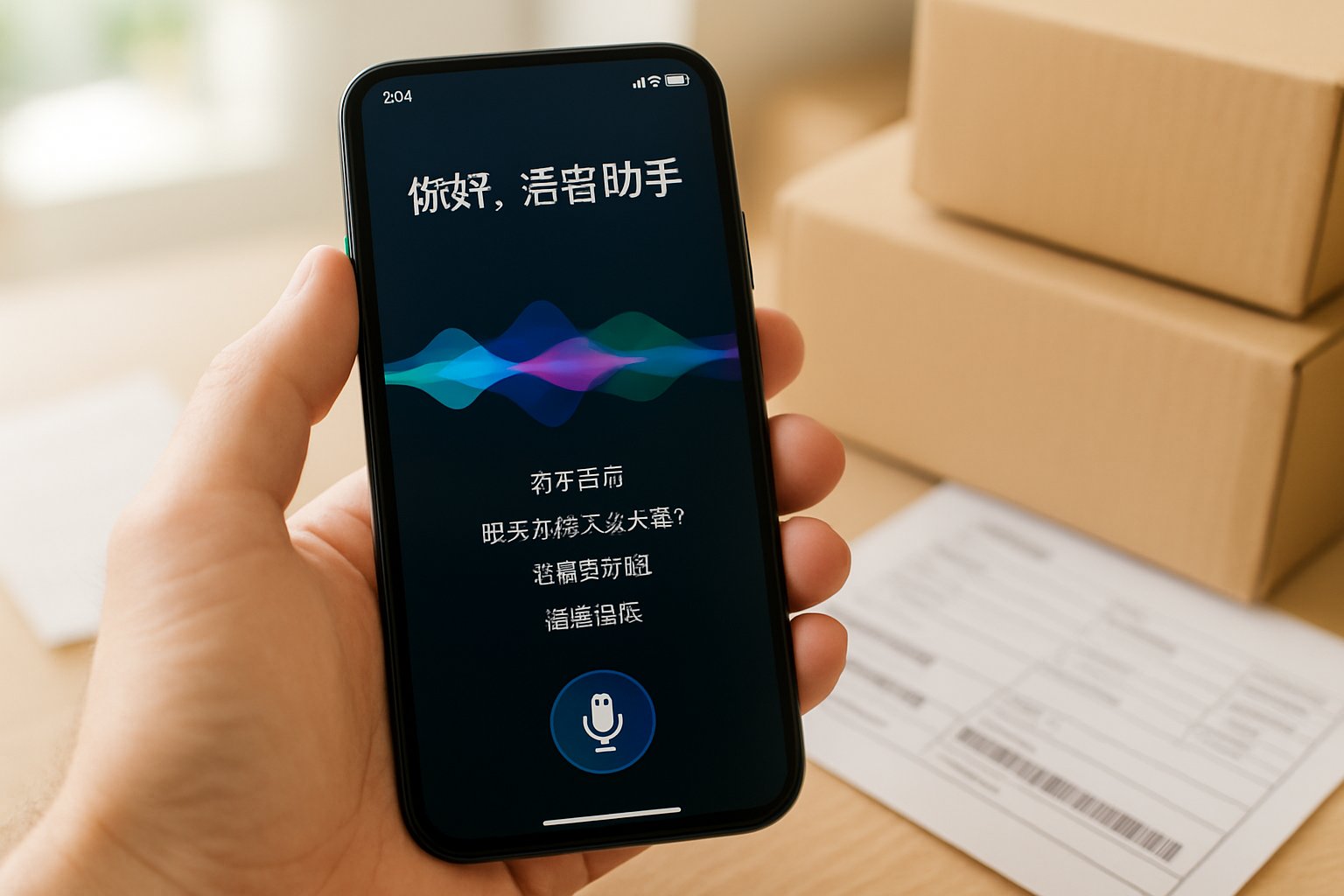
The assistive pipeline pairs Automatic Speech Recognition with Text-to-Speech synthesis. Consequently, customer speech converts to text for the rider, while rider text converts back into fluent audio. Chinese Voice algorithms supply the outbound call, sounding natural and regionally accented. Additionally, many apps overlay real-time captions so both parties can verify content.
Sign-Language Recognition pilots run in parallel. Signvrse and SignAll track body keypoints then translate gestures into short text strings. In contrast, avatar engines reverse the flow, displaying signing humanoids on customer screens. Communication redundancy, including haptic steering alerts from earlier Hyundai research, further boosts road safety.
Professionals can enhance their expertise with the AI Prompt Engineer™ certification. Moreover, the credential guides teams in prompt design, data privacy, and multimodal Accessibility compliance.
These layered systems convert barriers into seamless loops. However, efficiency only matters if metrics prove real world gains. The next section reviews those numbers.
Impact On Delivery Metrics
Operational data remains scarce yet promising. WHO warns untreated hearing loss suppresses earnings, but platform analytics suggest the opposite trend here. Chinese Voice calls reduce average confirmation time, cutting idle seconds that compound across shifts. Moreover, deaf riders report fewer complaint escalations thanks to clearer Communication.
Meituan internal dashboards, according to reporters, show disabled riders completing 5 percent more orders weekly. Consequently, Wages increase while gig Labor supply expands during peak demand. Zomato reports similar upticks among its 1,000 hearing-impaired partners after routing tweaks limited long-distance trips.
Key benefits appear in three categories:
- Chinese Voice confirmation trims roughly 10 seconds per order.
- Higher customer satisfaction scores, especially on politeness and clarity.
- Expanded Labor pool, supporting corporate diversity targets.
Faster cycles translate to higher revenue for platforms and riders. Nevertheless, investors must evaluate scalability and vendor choices. Vendor dynamics define cost and coverage.
Investor And Vendor Landscape
The assistive tech market attracts startups, cloud providers, and edge device makers. SignAll, Ava, and regional firms compete on model accuracy and language breadth. Chinese Voice API providers negotiate licensing with delivery apps, chasing tens of millions of daily calls. Furthermore, governments fund accessibility grants, stimulating private prototypes.
Market researchers project double-digit growth for sign translation software through 2030. Consequently, vendors race to patent datasets and avatar pipelines. Operators weigh subscription fees against employer branding benefits and reduced turnover Wages.
Relevant Certification Upskilling Pathways
Team leads seeking competitive edge pursue structured learning. Additionally, the earlier linked AI Prompt Engineer™ program covers multimodal prompt tuning, human-in-the-loop auditing, and Communication ethics. Skillful prompt tuning shapes Chinese Voice outputs across dialects.
Capital flows sustain research yet demand skilled implementers. Therefore, ethical risks deserve equal spotlight. The following section examines those challenges.
Challenges And Ethical Limits
Accuracy gaps still threaten safety. ASR falters in traffic noise, and sign avatars miss subtle facial grammar. Consequently, miscommunication can cause missed addresses or complaint penalties against riders.
Privacy also matters. Camera-based sign systems capture personal surroundings while call recordings store phone data. Moreover, data sets may exclude regional dialects, undermining Accessibility for minority communities.
Over-reliance on automation reduces human interpreter engagement. Nevertheless, Meituan reports one-third of tricky cases still escalate to station interpreters. Balanced workflows therefore remain essential. Dependency on Chinese Voice algorithms could amplify errors during network outages.
Ethical blind spots could erode trust quickly. However, policy frameworks can align incentives. The next section explores such frameworks.
Policy And Future Steps
Regulators now draft standards for inclusive gig platforms. WHO frames hearing care as a socio-economic priority, inspiring subsidy discussions for assistive tooling. Chinese Voice standards could anchor localized compliance tests across Asia.
Consequently, platforms might soon disclose model error rates and interpreter response times. Investors expect transparency, while Labor unions push for guaranteed minimum Wages irrespective of impairment.
Public procurement of accessible logistics may accelerate adoption. Meanwhile, automotive OEMs refine haptic alerts that complement phone-based Communication, extending benefits to courier vans and bikes.
- Standardized error reporting across ASR, TTS, and SLR modules.
- Tax incentives for hiring workers with disabilities.
- Mandatory human fallback channels within two minutes.
Clear rules would stabilize innovation and protect workers. Subsequently, continued research will refine multilingual, low-power models. We now close with key reflections.
AI is reshaping last-mile delivery for millions with hearing loss. Chinese Voice solutions must evolve responsibly. Sign translation, haptic cues, and caption overlays unlock new Labor avenues, fairer Wages, and smoother Communication. Moreover, measured efficiency gains entice investors while motivating broader Accessibility standards. Nevertheless, accuracy, privacy, and cultural nuance still need vigilant oversight. Consequently, professionals should begin with the AI Prompt Engineer™ certification and build products that genuinely include everyone.
Disclaimer: Some content may be AI-generated or assisted and is provided ‘as is’ for informational purposes only, without warranties of accuracy or completeness, and does not imply endorsement or affiliation.


