

AI CERTs
2 months ago
Perplexity Agent Debuts Multi-Model Computer For Enterprise AI
Perplexity Agent just moved from concept to commercial reality. Consequently, industry watchers are scrutinizing the release of Perplexity Computer, the company’s new agentic platform. The cloud-only launch bundles autonomous reasoning, deep integrations, and multi-model orchestration under one roof. Furthermore, executives pitch the tool as an always-on digital worker for demanding enterprise tasks. Analysts agree the debut matters because it signals a shift toward specialized AI computer agents that coordinate many models. Meanwhile, the AI computer narrative shifts attention from isolated chat to integrated action. However, questions about pricing, security, and legal exposure still loom. This article unpacks features, economics, and trade-offs in language tailored for technical buyers. Readers will also see balanced commentary from press coverage and early testers. Moreover, we map how the launch fits within broader platform and device ecosystems. Perplexity Agent appears exactly where analysis demands. In contrast, we avoid marketing jargon, offering clear, verifiable details. Consequently, decision makers can judge adoption timing and required safeguards. Let’s begin with why the market shift matters.
Launch Signals Market Shift
February 2026 saw Perplexity unveil Computer to its Max subscribers. Moreover, the rollout accompanied Comet toolbar updates and a fresh Samsung partnership. TechCrunch framed the event as proof that models are specializing rather than converging. Therefore, orchestration becomes a platform differentiator, not a minor feature.
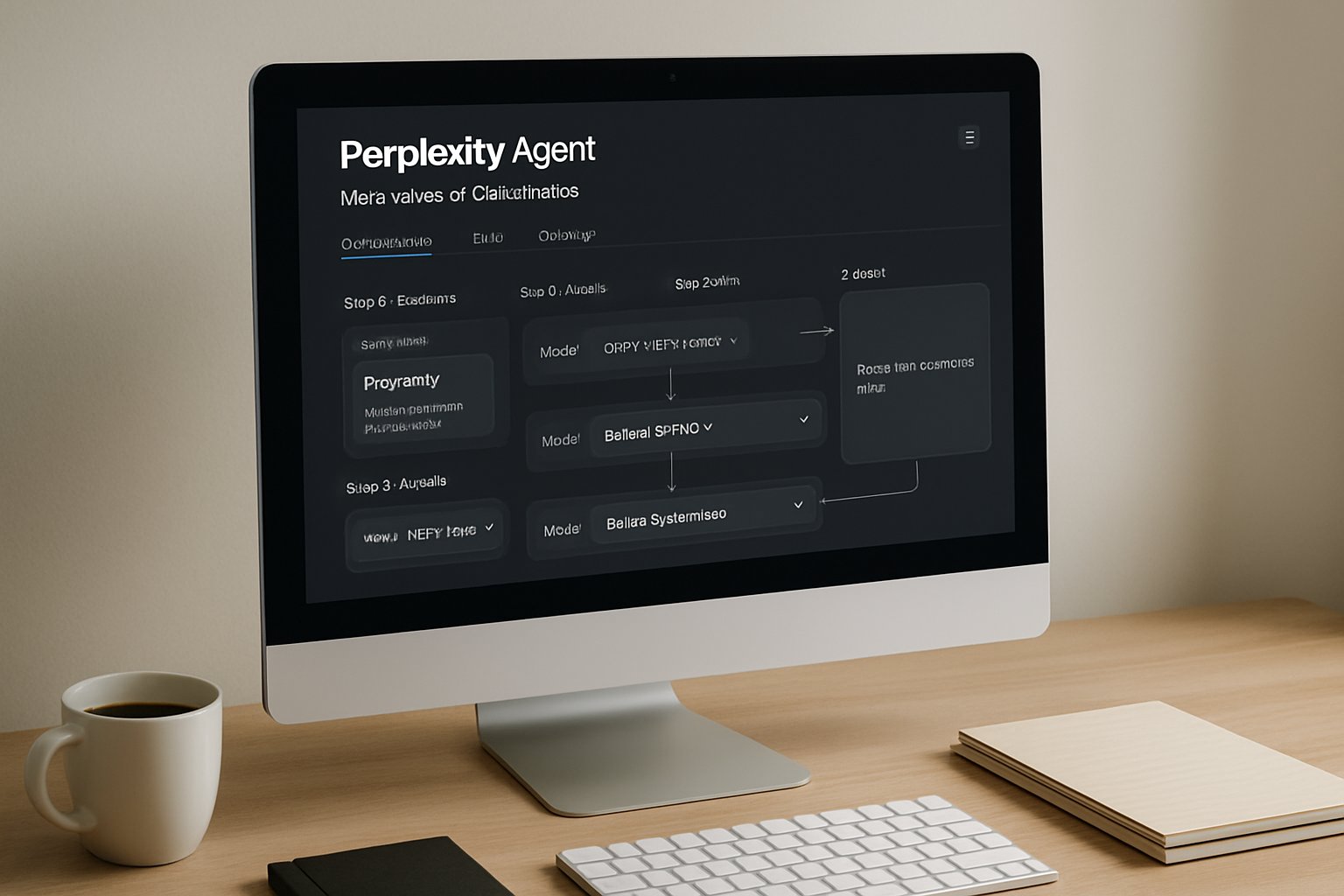
The agent platform coordinates nineteen specialist models, including reasoning and coding systems. Consequently, tasks such as website creation, data scraping, and reporting now complete without manual prompts. Perplexity Agent acts as project manager across those subtasks. Meanwhile, persistent workflows can run for months, pinging users only on completion. Press outlets labeled the capability a meaningful step beyond chat answers.
The launch underscores an inflection point for agentic tooling. Specialization plus routing may redefine enterprise automation economics. Inside the platform, technical design choices reveal further clues.
Inside The New Platform
Agentic Design Explained Simply
Computer accepts a high-level goal and splits it into subagents instantly. Subsequently, each subagent operates inside an isolated cloud sandbox with its own file system. This structure limits cross-talk yet permits shared memory when needed. Consequently, parallel execution accelerates complex workflows. Most importantly, multi-model orchestration decides which model tackles every sub-task. In contrast, single model agents rely on one generalist, often lowering quality.
Model Routing Mechanics Detailed
Perplexity integrates providers like Anthropic, Google, xAI, and OpenAI. Moreover, routing logic examines latency, cost, and domain alignment before dispatching calls. Therefore, a coding request might hit Claude, while a light query chooses a smaller model. This dynamic illustrates multi-model orchestration principles in production. Engineers monitor token budgets through credit consumption dashboards within the AI computer console.
Technically, Computer blends sandboxed agents with smart model routing. That fusion offers flexibility yet introduces billing complexity. Pricing comes into focus next.
Pricing And Access Details
The Max subscription tier costs $200 monthly and unlocks Computer. Additionally, subscribers receive 10,000 monthly credits and a 20,000 bonus at launch. Credits meter processing time across every integrated model. Consequently, heavy users must forecast consumption carefully.
Perplexity plans to extend access to Pro and Enterprise tiers later. However, the firm has not disclosed final credit bundles for those customers. Observers note that premium pricing may deter small teams. Nevertheless, some testers argue the productivity gain offsets fees. For budget committees, Perplexity Agent costs are easier to justify when mapped to saved hours.
- 19 specialist models orchestrated in parallel.
- Hundreds of authenticated connectors support real actions.
- 10,000 recurring credits per Max subscriber monthly.
- One-time 20,000 bonus credits at launch.
Pricing clarity enables forecasting but still limits broader adoption. Early cost debates mirror cloud era discussions. Beyond numbers, perceived strengths drive initial excitement.
Strengths Highlighted By Press
Coverage praises the agent’s productivity lift. TechCrunch cited Perplexity Agent as proof that orchestration beats monolithic design. Moreover, authenticated connectors let the tool send emails, update boards, and push code. Therefore, Computer moves from answer engine to task finisher.
Analysts also commend multi-model orchestration for matching model strengths to sub-tasks. Consequently, image generation, reasoning, and code compilation each hit optimal engines. Meanwhile, isolated sandboxes reduce the blast radius of rogue code. Such strengths attract developers building repeatable workflows.
Press narratives celebrate speed, specialization, and deep integrations. These benefits form the optimism side of the ledger. Balanced analysis also requires confronting material risks.
Risks Facing Early Adopters
Security experts flag cloud-only execution as an expanded attack surface. Furthermore, connector scopes may expose sensitive systems if configured poorly. Legal journalists spotlight ongoing publisher litigation that could affect content scraping. Consequently, enterprises must evaluate compliance posture before deployment.
Accuracy challenges persist because multi-model orchestration cannot fully eliminate hallucinations. Moreover, merging outputs from disparate models increases verification overhead. Cost risk also exists; uncontrolled workflows might burn credits quickly. A high subscription tier may compound that budget stress. Misconfigured Perplexity Agent instances could breach data boundaries.
Threats span security, legal, accuracy, and finance dimensions. Ignoring them jeopardizes ROI. Enterprises therefore need a disciplined integration plan.
Enterprise Integration Considerations Now
Implementation teams start by scoping access rights for every connector. Additionally, network egress policies can restrict unintended data flows. Perplexity Agent appears in enterprise identity providers via SAML soon. Consequently, single sign-on will simplify provisioning.
Architects should benchmark AI computer workloads against existing automation scripts. In contrast, localized agent frameworks may offer lower latency but lack deep integrations. Moreover, professionals can enhance their expertise with the AI Product Manager™ certification. Such education supports sound implementation governance.
- Define use cases and expected credit spending.
- Map data classifications and connector scopes.
- Establish review gates for generated outputs.
- Measure latency, cost, and user satisfaction monthly.
Structured rollout mitigates identified adoption risks. Certification-backed skills further strengthen governance. The strategic outlook now warrants reflection.
Final Thoughts And Action
Perplexity Agent now stands as a flagship example of orchestrated autonomy. It marries multi-model orchestration with an ambitious credit economy. Early trials prove mechanical feasibility, yet business hurdles remain. Nevertheless, organizations prepared to manage security, pricing, and accuracy will unlock tangible value.
Future updates may broaden connector catalogs and drop entry pricing for another subscription tier. Meanwhile, competitive pressure from OpenAI and others should accelerate innovation. Consequently, staying informed and trained will be essential. Decision makers can pilot low-risk projects, gather metrics, and iteratively expand scope. Moreover, cross-functional oversight can balance experimentation with compliance. Professionals seeking a structured career edge should consider earning the AI Product Manager™ certification. This credential validates skills in agent governance, deployment economics, and agile AI computer lifecycle management. Ultimately, deliberate planning today positions teams to harness Perplexity Agent advantages tomorrow. Start experimenting with a controlled Perplexity Agent sandbox and measure outcomes relentlessly.
Disclaimer: Some content may be AI-generated or assisted and is provided ‘as is’ for informational purposes only, without warranties of accuracy or completeness, and does not imply endorsement or affiliation.


