

AI CERTs
5 months ago
Apple Foundation Models to Harness Google Gemini in Landmark Deal
Markets braced for routine software news from the Cupertino giant this winter. However, a surprise joint statement on 12 January 2026 changed expectations immediately. The release confirmed that the next generation of Apple Foundation Models will be built on Google’s Gemini architecture. Consequently, analysts scrambled to reassess roadmaps for digital assistants, cloud infrastructure, and consumer hardware. Moreover, the announcement signalled a pragmatic alliance between historical rivals in mobile computing. In contrast, privacy advocates raised early questions about dependence on external cloud systems. Meanwhile, shareholders cheered Alphabet’s valuation bump past four trillion dollars reported that same week. Industry veterans recall similar turning points when Apple adopted Intel chips or moved to Arm silicon. Yet this collaboration touches not only processors but also core reasoning engines. Therefore, understanding the scope, economics, and risks behind the deal becomes essential for technology leaders. This feature distils the facts, expert views, and strategic implications already shaping upcoming product cycles. Subsequently, readers will see why the move could redefine every smartphone interaction across the coming decade.
Deal Overview Essentials Now
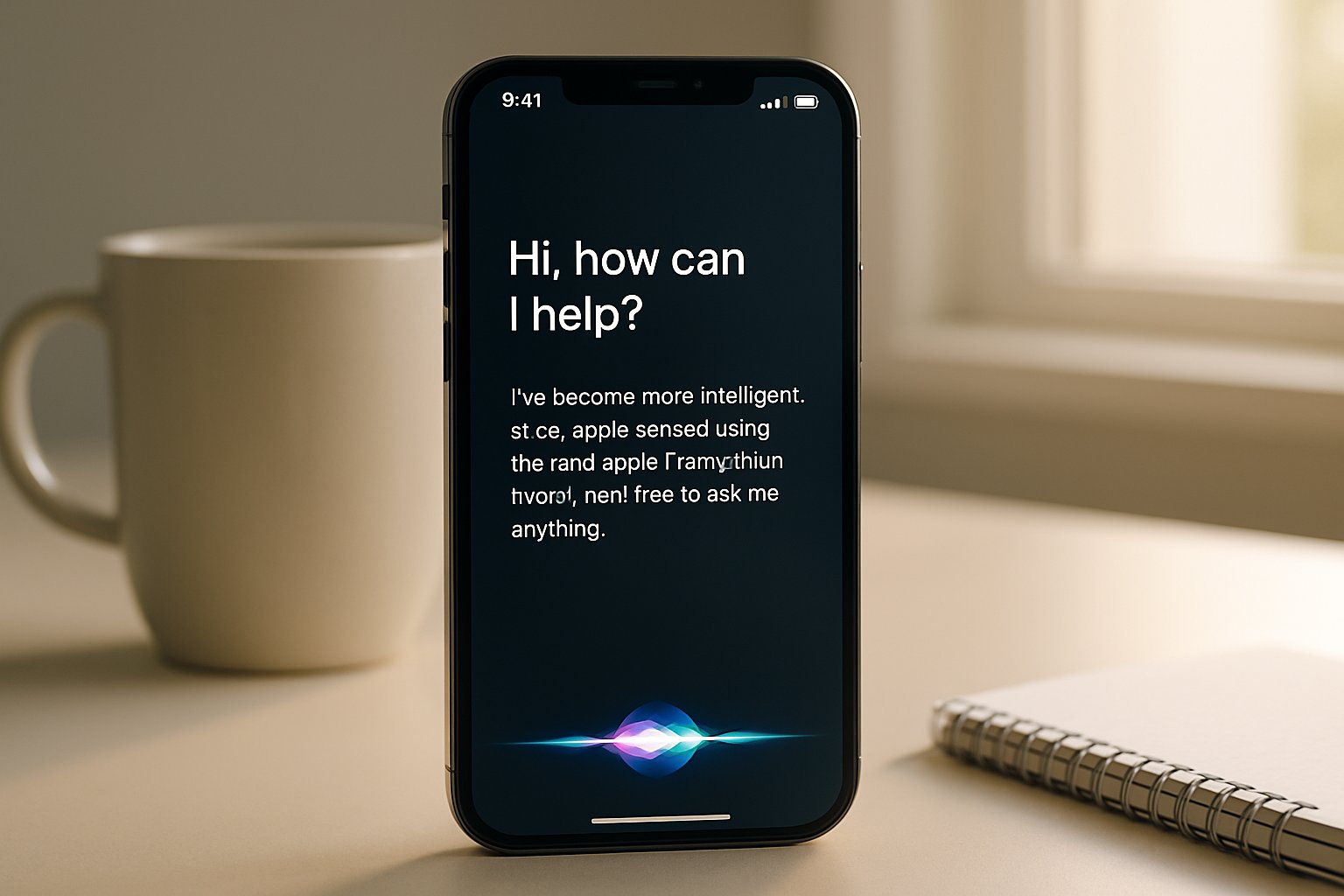
In the joint note, executives described a multi-year partnership centred on integrating Gemini into future Apple Foundation Models. Furthermore, both firms pledged to maintain distinct brand identities while sharing selected infrastructure. The Cupertino company retains interface control and Private Cloud Compute, according to the statement. Google will supply customised Gemini checkpoints plus elastic cloud capacity tuned for the iPhone vendor’s latency targets. Consequently, product teams can accelerate feature rollouts without rebuilding every component in-house.
- Date announced: 12 January 2026
- Term: Multi-year, non-exclusive
- Model supplied: Custom Gemini variant
- Rollout target: iOS 26.4 Siri update
- Estimated cost: About $1 billion yearly
Importantly, regulators received no detailed pricing data, leaving commentators reliant on Bloomberg and FT estimates. Initial numbers suggest annual fees nearing one billion dollars, scaling over time with usage. Nevertheless, neither side confirmed exclusivity clauses, leaving room for parallel model suppliers later. Observers note that Apple Foundation Models already underpin features like Notification Summaries and Writing Tools. These terms frame a flexible but costly arrangement. However, deeper technical insight reveals further nuance.
Technical Stack Explained Clearly
Gemini belongs to a multimodal family that handles text, image, audio, and code in unified embeddings. Therefore, its agentic design supports planning tasks, tool calls, and conversational memory. Google exposes Gemini through Vertex AI, yet the variant powering Apple Foundation Models will live inside Private Cloud Compute. Consequently, Apple engineers can fine-tune weights while avoiding raw data transfer back to Mountain View. Moreover, inference requests will route through a gated API layer enforced by Secure Enclave keys. In contrast, most consumer queries currently hit on-device compact models no larger than three billion parameters. The shift toward Gemini aims to expand reasoning depth for summarization, creativity, and cross-app orchestration. Subsequently, users could ask Siri to draft emails, arrange travel, and adjust photos with one voice request. Engineers expect latency below 150 milliseconds even when offloading heavy calculations to cloud GPUs. Apple Foundation Models will still determine whether execution remains local or escalates to the cloud. Gemini offers breadth, while PCC provides containment. Consequently, both pieces jointly balance capability and privacy. Next, financial considerations reveal why each firm accepted the trade-offs.
Economics And Stakes View
Investor reaction was swift. Business Insider reported Alphabet’s market capitalisation crossing four trillion dollars following the announcement. Meanwhile, analysts estimate the arrangement could funnel one billion dollars yearly into Google’s cloud division. Bloomberg cites sources placing cumulative payments near five billion by 2030. However, the figures remain unofficial, and SEC filings showed no corresponding line items yet. For Cupertino, the calculus differs. Developing frontier-scale models internally might exceed ten billion in capital expenditure annually. Therefore, leasing Gemini accelerates roadmap delivery while limiting upfront risk. Consequently, the net present value of faster feature launches could outweigh recurring fees. Apple Foundation Models also help lock customers deeper into the ecosystem, boosting services revenue. The partnership also shields Cupertino from immediate GPU shortages plaguing many enterprises. Numbers reinforce pragmatism on both sides. However, compliance and privacy still dominate boardroom worries. Those concerns emerge sharply when examining data governance.
Privacy Safeguards Questioned Today
Apple built its brand around privacy pledges. Nevertheless, outsourcing core inference to a rival raises fresh scrutiny. Regulators will examine how encryption, key management, and audit logging isolate user material. Google claims technical blindfolds prevent human access, yet watchdogs seek proof. Meanwhile, Apple Foundation Models working with Gemini will run under the Private Cloud Compute perimeter by default. Furthermore, on-device decisions will determine whether a prompt needs cloud horsepower. Consequently, many trivial tasks, like setting alarms, never leave the handset. In contrast, complex multimedia questions likely cross the network boundary. Advocacy groups request third-party penetration testing and formal certifications before launch. Professionals can enhance their expertise with the Chief AI Officer™ certification. The partnership’s credibility rests on transparent safeguards. Subsequently, competitive dynamics intensify scrutiny even further. Competitive positioning now shifts across hardware and software lines.
Competitive Landscape Shift Rapidly
The agreement surprised rivals like Microsoft, Anthropic, and OpenAI. Moreover, it blurs traditional platform boundaries separating operating systems, clouds, and assistants. Samsung already markets Gemini-powered functions on Galaxy devices. Therefore, Apple Foundation Models leveraging the same backbone could neutralise that advantage. However, critics argue Apple now depends on a competitor that controls Android search defaults. Elon Musk publicly warned of heightened concentration, drawing antitrust attention in Brussels and Washington. Meanwhile, smaller startups fear decreased bargaining power as model providers consolidate. Nevertheless, analysts counter that Apple still dictates user interface and hardware integration. Consequently, whichever party owns the model may matter less than who owns the customer relationship. Developers will watch iOS 26.4 closely to decide resource allocation across ecosystems. Competitive outcomes remain fluid and multifaceted. Therefore, strategic forecasting becomes paramount for enterprise planners. That forecasting hinges on long-term product vision.
Strategic Outlook Ahead Now
Looking beyond 2026, leadership teams must assess three critical scenarios. First, Gemini could stay dominant, cementing a semi-permanent supply chain for advanced cognition. Second, Apple may eventually create an independent large model and sunset the arrangement. Third, models could commoditise, letting Apple shop for the best wholesale option each cycle. Moreover, the smartphone sector might shift toward subscription intelligence tiers rather than hardware refreshes. Consequently, procurement teams should negotiate flexible multi-cloud terms today. In contrast, regulators may impose interoperability rules, forcing open model standards. Regardless, Apple Foundation Models built on Gemini will set the benchmark for integrated privacy engineering in the interim. Subsequently, chief AI officers must balance vendor leverage against innovation velocity. Quarterly reviews should track latency metrics, cost per inference, and user trust scores. Scenario planning remains vital under rapid capability shifts. However, the final user verdict will depend on practical Siri improvements. Those improvements form the real test as the rollout nears.
Concluding Thoughts And Action
The Apple Foundation Models collaboration with Google Gemini signals a pragmatic shift toward modular innovation. Moreover, the deal offers faster deployment, impressive multimodal reach, and cost control. Nevertheless, unanswered privacy and antitrust questions require ongoing vigilance. Consequently, technology leaders should monitor latency figures, regulatory filings, and real-world Siri performance. Additionally, professionals can future-proof their strategies by deepening AI governance skills. Consider advancing with the Chief AI Officer™ certification to steer informed decisions. Stay engaged, evaluate quarterly metrics, and transform every smartphone interaction into competitive advantage.
Disclaimer: Some content may be AI-generated or assisted and is provided ‘as is’ for informational purposes only, without warranties of accuracy or completeness, and does not imply endorsement or affiliation.


