

AI CERTs
6 months ago
Claude AI workplace tools embed apps, reshape work
Enterprise chatbots just got a serious upgrade. On 26 January 2026, Anthropic revealed in-chat applications that blur tool and assistant boundaries. The announcement positions Claude as more than text, turning it into a live workspace for teams.
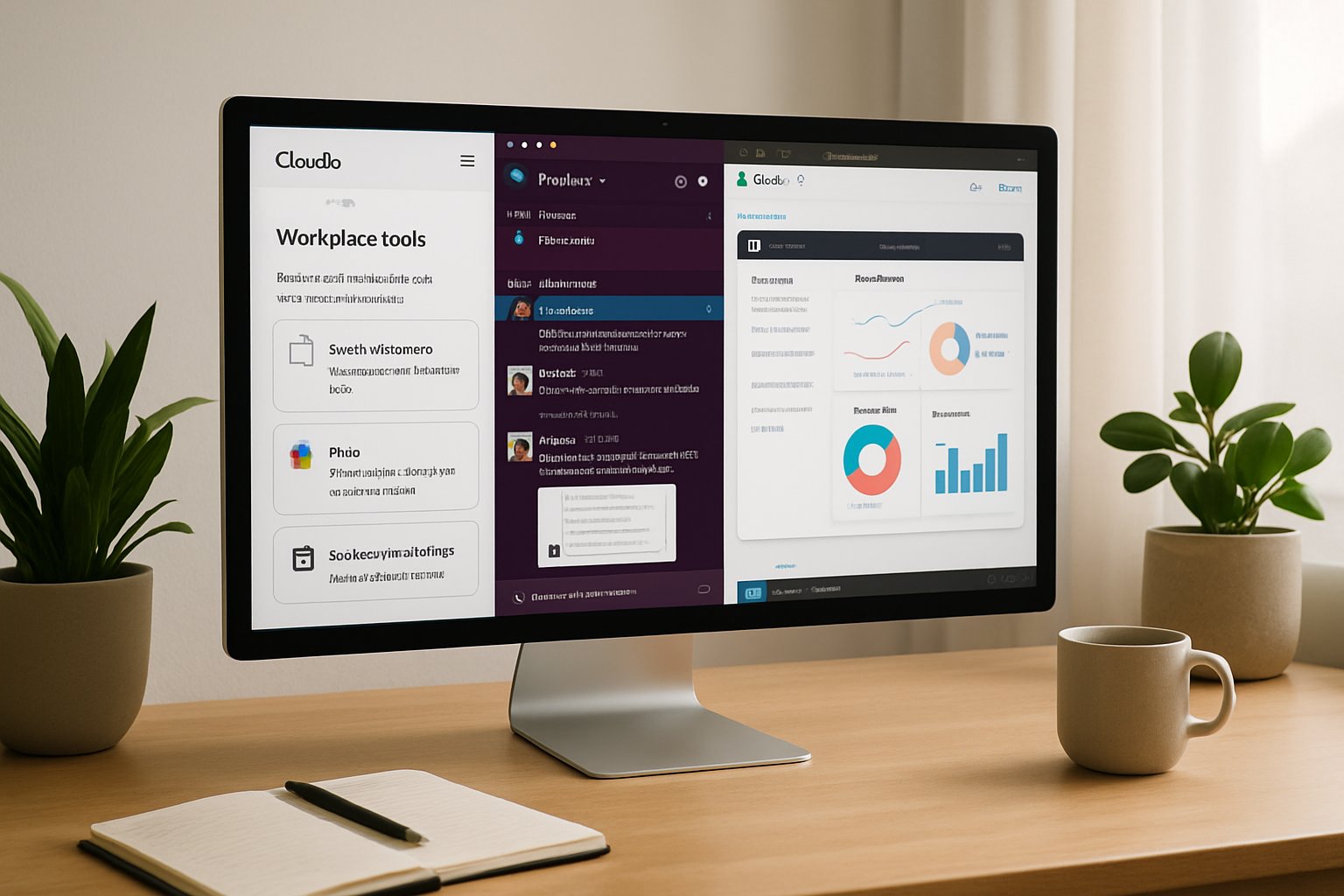
Users can now open Slack, Figma, or data dashboards directly inside the conversation window. Consequently, tasks span fewer tabs, and decisions happen within a single context. This article dissects the launch, benefits, risks, and strategic stakes of Claude AI workplace tools.
Furthermore, we compare Anthropic's move with rival platforms and explore open standard implications. Security researchers' early findings will also be examined for enterprise relevance. Finally, readers gain actionable guidance, certification resources, and future outlooks.
Workspace Evolution Accelerates Fast
Digital work has shifted repeatedly, yet embedded applications signal a sharper inflection. Previously, assistants passed links or ran background calls. Now, Claude literally renders the partner interface, capturing attention and inputs simultaneously. Moreover, Slack Figma AI integration appears side by side with chat, creating fluid conversation-action loops.
Anthropic leverages the Model Context Protocol to orchestrate this handoff between model and widget. Therefore, developers write once and distribute across any MCP-compatible client. Such portability could anchor Claude AI workplace tools as the preferred cross-stack veneer.
In short, embedded apps compress workflows and elevate context. However, understanding the underlying extension clarifies why the launch matters.
Inside MCP Apps Extension
MCP Apps extends the open protocol with interactive payloads. Each payload contains code, permissions, and UI definitions rendered safely in the chat client. Additionally, state persists through authenticated sessions, letting users edit Figma frames or approve Asana tasks.
Anthropic's directory already lists more than seventy-five connectors. Meanwhile, over 10,000 public servers broadcast capabilities to compatible models. Consequently, network effects accelerate as every new server enriches Claude AI workplace tools.
Slack Figma AI integration is possible because the extension supports OAuth handshakes and incremental permission scopes. Nevertheless, enterprise administrators maintain override controls through the Claude console. These technical guardrails address basic compliance, yet deeper risks remain. Those risks deserve separate attention and will be discussed later.
Productivity Gains And Workflows
Professionals crave frictionless iteration between ideation, drafting, and execution. Moreover, embedded canvases slash context switching, a known cognitive tax. Anthropic claims teams iterate "faster than either could offer alone" when visual tools join reasoning.
- Average design review cycle shortened 35% during internal Claude AI workplace tools pilot.
- Data analysts saved 22 clicks per chart by running Hex cells within chat.
- Slack Figma AI integration reduced cross-app toggles from nine to two per task.
- MCP SDK downloads hit 97 million monthly, indicating strong developer momentum.
Therefore, quantitative evidence supports the intuitive productivity narrative. Still, stakeholders must weigh gains against operational risk. The next section investigates security realities.
Security Risks Still Loom
Prompt injection persists as the most cited threat. In mid-January, PromptArmor demonstrated file exfiltration via crafted documents processed by Cowork. Consequently, giving agents file and API access enlarges the attack surface.
Anthropic urges enterprises to restrict sensitive repositories until hardened flows ship. Additionally, admin dashboards expose granular scopes, though human factors complicate enforcement. In contrast, open standards simplify auditing because requests flow through visible MCP servers.
Slack Figma AI integration inherits each platform's permission model, yet blended contexts introduce novel chaining exploits. Nevertheless, predictable logging aids incident response.
Balancing openness and protection remains pivotal, especially with fierce competition unfolding. Competitive factors arrive next.
Competitive Landscape Quickly Shifts
OpenAI added ChatGPT Apps months earlier, sparking a race toward operating-system-style chat clients. Meanwhile, Microsoft and Google bundle Copilot and Gemini inside productivity suites. However, Claude AI workplace tools emphasize openness by donating MCP to the Linux Foundation.
Developers therefore face fewer gatekeepers when shipping connectors across ecosystems. Moreover, enterprises may prefer vendor-neutral layers that sidestep platform rivalries. Slack Figma AI integration inside multiple agents exemplifies that impartial stance.
Competition will hinge on ecosystem breadth, user trust, and governance transparency. Governance factors merit close review.
Governance And Standards Matter
MCP governance now resides within the Agentic AI Foundation, a Linux Foundation fund. Therefore, multiple stakeholders influence versioning, security disclosures, and certification criteria. Consequently, Claude AI workplace tools benefit from collaborative stewardship rather than unilateral control.
Open governance also accelerates professional upskilling. Practitioners can validate competencies through the AI Human Resources™ certification. Such programs align with rising demand for AI fluency across human capital functions.
Standards reduce integration friction and bolster trust. Strategic implications surface in the final section.
Strategic Takeaways For Leaders
Business leaders must evaluate readiness, risk, and roadmap alignment. Firstly, pilot low-risk workflows before expanding sensitive use cases. Secondly, establish cross-functional governance boards covering policy, audit, and incident response. Moreover, mandate continuous training on prompt-safety for every power user.
Investing early delivers competitive advantage because network effects compound quickly. Therefore, integrating Claude AI workplace tools may unlock differentiated productivity at portfolio scale. Meanwhile, parallel adoption of Slack Figma AI integration ensures visual and communication loops stay tight.
These strategic actions prepare organizations for an AI-mediated future. Consequently, foresight today mitigates disruption tomorrow.
Ultimately, Claude AI workplace tools signal a major user-interface milestone. They fuse reasoning, content, and action within one controllable panel. Organizations adopting Claude AI workplace tools today gain early insight into emerging collaborative behaviours. However, prudent teams will pair Claude AI workplace tools with rigorous permission audits, security drills, and documented fallback plans. Moreover, continued engagement with open standards ensures portability and supplier leverage. Consider deepening expertise through curated certifications and join the dialogue shaping next-generation productivity. Visit the certification directory to explore advanced pathways and accelerate your AI career.
Disclaimer: Some content may be AI-generated or assisted and is provided ‘as is’ for informational purposes only, without warranties of accuracy or completeness, and does not imply endorsement or affiliation.


