

AI CERTs
5 months ago
Delhi Police Deploys AI Smart Glasses for Parade
Crowd surveillance in India is about to receive a conspicuous upgrade. Delhi Police will pilot AI Smart Glasses during the 2026 Republic Day parade. The wearable devices promise instant face checks, thermal scans, and live alerts for field officers. However, the announcement also reignites long-running debates about accuracy, oversight, and civil liberties.
This article maps the technology, market forces, and regulatory questions shaping the rollout. Industry professionals will gain data-driven insights and actionable next steps. Furthermore, we examine Ajna Lens, the Mumbai startup supplying the glasses, and its expanding investor network. Consequently, readers can assess commercial potential while understanding policy friction points. Meanwhile, career-minded leaders can explore relevant certifications to navigate emerging governance roles. Moreover, global market shifts make the experiment a regional bellwether. Therefore, understanding the full picture has never been more urgent.
Republic Day Deployment Plan
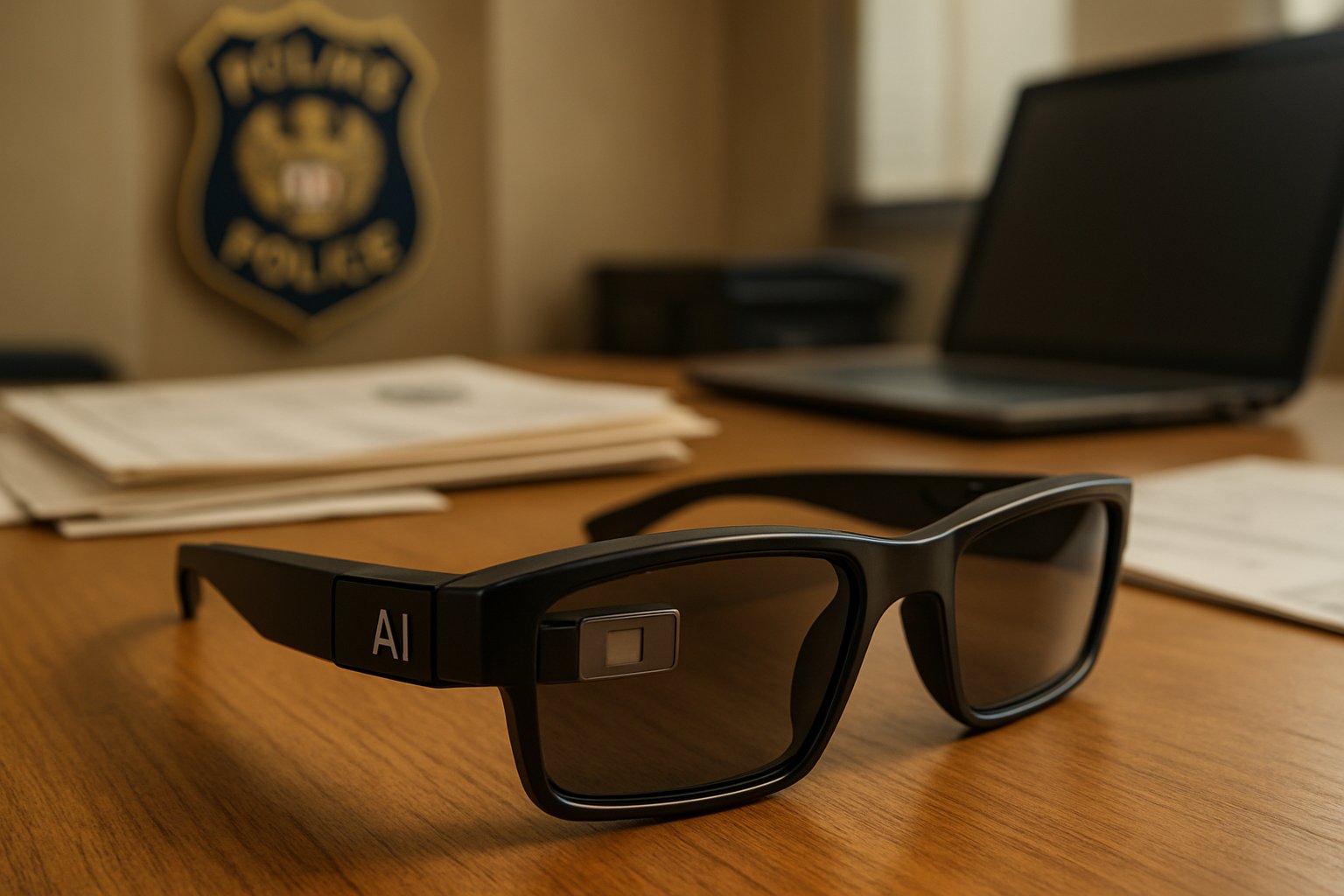
On 21 January 2026, Additional Commissioner Devesh Kumar Mahla confirmed the tactical use of AI Smart Glasses. He stated that sub-inspectors would monitor entry gates, junctions, and the parade route. Moreover, feed matching will occur against an on-device criminal database, avoiding dependence on mobile networks. News wires report conflicting database sizes, ranging from 10,000 to 65,000 records.
Nevertheless, officials declined to reveal procurement volumes or unit costs to reporters. Such opacity has raised fresh calls for granular disclosure from Delhi Police Tech observers. The pilot therefore showcases ambition mixed with unanswered questions. In contrast, the next section dissects what the glasses actually do.
Core Device Capabilities
Ajna Lens claims the glasses scan faces within seconds and flag matches with colour codes. Consequently, officers receive a red alert when a suspect is identified. Additionally, a thermal module seeks concealed metal objects by analysing heat patterns. Experts caution that thermal imaging can misread innocuous items.
Video analytics also measure crowd density and detect unattended packages. Such layered functions exemplify a rising Public Security AI toolkit.
- AI Smart Glasses enable real-time 1:n facial recognition against encrypted police images.
- Offline architecture connecting to a secure smartphone app.
- Thermal scanning for concealed objects detection.
- Behaviour analytics spotting crowd anomalies.
Detection Speed Metrics Data
Field demonstrations clock identification times between two and five seconds, depending on network congestion. Moreover, Ajna Lens asserts 95 percent accuracy for daytime captures, though documents remain unpublished. Stakeholders therefore require independent verification before scaling the eyewear beyond pilot events.
These features illustrate the promise of rapid, mobile intelligence. However, market forces also shape adoption, as the following section reveals.
Expanding Smart Glasses Market
Global smart-glasses shipments topped roughly two million units in 2024, according to Counterpoint estimates. Moreover, analysts project double-digit billion valuations by early 2030s. In contrast, India’s XR market stands near $600 million yet shows aggressive growth curves. Ajna Lens received investment from eyewear giant Lenskart, signalling domestic optimism.
The funding supports advanced AI Smart Glasses prototypes tailored for enterprise clients. Meanwhile, Meta, Qualcomm, and Oakley compete internationally, pushing component prices downward. Such competition helps public agencies acquire emerging Public Security AI gear faster. Delhi Police Tech adoption feeds a virtuous cycle for local manufacturing.
Consequently, more Indian buyers may demand AI Smart Glasses for logistics, defense, and healthcare. Therefore, market momentum frames the policing trial within broader commercial stakes. Yet such momentum collides with privacy worries, discussed next.
Privacy And Legal Questions
Civil-society groups remain wary of continuous facial surveillance in democratic spaces. Internet Freedom Foundation cites past misidentification cases involving an 80 percent similarity threshold. Furthermore, India’s new DPDP Act lacks specific safeguards for live biometric tracking. Academic lawyers argue constitutional proportionality tests still apply.
Critics also question database composition and retention timelines. They fear marginalised communities could face disproportionate scrutiny from AI Smart Glasses and broader Public Security AI deployments. Nevertheless, Delhi Police insists algorithms handle beard changes and facial injuries gracefully. Independent audits have not yet verified those performance claims.
The accountability vacuum therefore persists despite technological sophistication. Consequently, governance mechanisms deserve separate examination below.
Governance And Data Oversight
Effective governance starts with transparent procurement and open algorithmic testing. Yet official tender documents remain undisclosed. Moreover, no privacy impact assessment has surfaced, despite global best practices. External audits could measure demographic bias and false positives.
Additionally, policy drafts circulating in Parliament propose periodic algorithm audits for all critical systems. Consequently, early compliance could position agencies for smoother statutory approval. Subsequently, secure key management is essential because stolen databases present unique harm. Ajna Lens claims local encryption for its AI Smart Glasses but withholds technical specifics.
Professionals can enhance oversight skills through the Chief AI Officer™ certification. The program covers risk frameworks for AI Smart Glasses governance. Delhi Police Tech committees could benefit from such structured guidance. In contrast, hurried deployment risks reputational damage.
Robust oversight therefore anchors sustainable technology adoption. Meanwhile, commercial incentives still drive innovation, explored in the final section.
Business Opportunities Ahead Now
Corporate suppliers view police wearables as a gateway to enterprise and consumer verticals. Consequently, Ajna Lens can leverage publicity to court logistics firms and airlines. Furthermore, integrators deploying Public Security AI platforms will demand managers fluent in policy and technology. Talent scarcity creates premium salaries.
Therefore, professionals versed in AI Smart Glasses integration can lead multimillion-rupee transformation projects. Certification pathways accelerate readiness.
- Demonstrate compliance expertise to regulators.
- Guide ethical data life-cycles inside agencies.
- Coordinate vendor evaluations and accuracy benchmarks.
Delhi Police Tech partnerships can become templates for other Indian states. Nevertheless, success depends on transparent metrics and citizen trust. Consequently, commercial wins align with robust governance. We now conclude with key takeaways.
Conclusion And Next Steps
Delhi’s upcoming parade will showcase more than ceremonial splendour. It will spotlight frontline officers wearing AI Smart Glasses for rapid identification. The devices combine facial recognition, thermal sensing, and analytics within a contested regulatory landscape. Meanwhile, global market growth and local manufacturing amplify commercial significance.
However, unresolved issues around data accuracy, privacy safeguards, and independent audits remain pressing. Therefore, stakeholders must demand transparency while pursuing innovation. Consider upskilling through the linked certification to steer ethical, profitable deployments. The choice to balance security and rights now lies in professional hands.
Subsequently, early lessons from Delhi may guide national standards. Act promptly, because policy windows rarely stay open for long.
Disclaimer: Some content may be AI-generated or assisted and is provided ‘as is’ for informational purposes only, without warranties of accuracy or completeness, and does not imply endorsement or affiliation.


