

AI CERTs
4 months ago
Sovereign AI India Nears Launch
India has set an audacious deadline for its artificial intelligence ambitions. Union minister Ashwini Vaishnaw declared at Davos that, within one year, most AI workloads will rely on home-grown models. Consequently, the phrase Sovereign AI India has moved from policy documents to a countdown on engineering dashboards. Meanwhile, officials argue that achieving Digital Sovereignty will unlock new economic value exceeding one trillion dollars by 2035.
IndiaAI Mission, administered by MeitY India, already funds multiple large-language model teams including Sarvam AI and BharatGen. Moreover, a government shared compute pool reportedly exceeds thirty-eight thousand GPUs, with further capacity scheduled online this year. Therefore, engineers, policymakers, and investors are watching February 2026, when prototypes should debut at the India-AI Impact Summit. Against this backdrop, professionals should track core milestones, resource allocations, and emerging challenges that will determine project success. Consequently, this article dissects the roadmap, evaluates risks, and suggests practical actions for stakeholders.
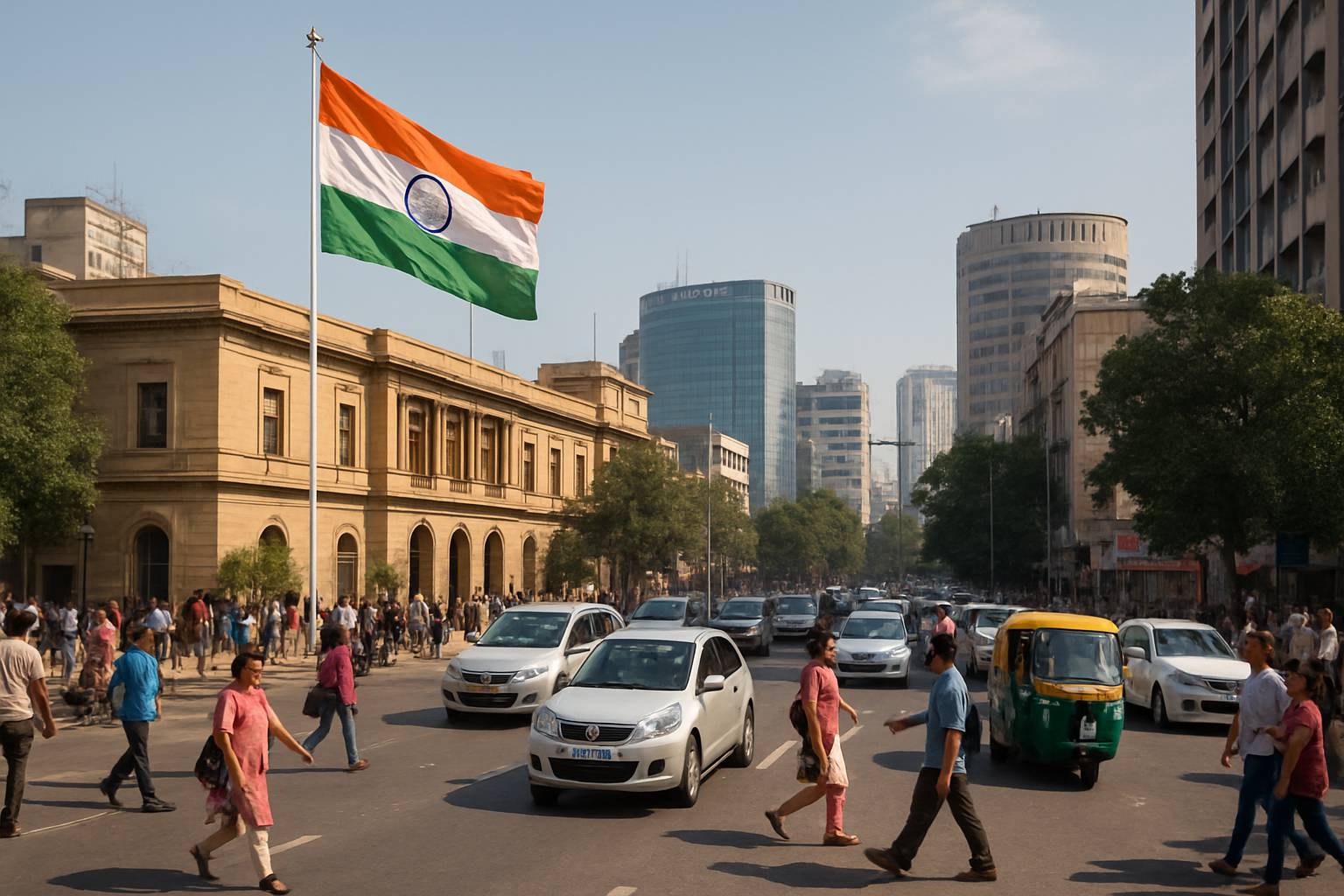
Sovereign AI India Policy
Prime Minister Narendra Modi has framed AI as a core pillar of national strategy. Additionally, the cabinet approved the IndiaAI Mission with a five-year outlay of ₹10,372 crore in early 2025. Consequently, policy documents now emphasise home-grown foundational models, secure datasets, and safe governance frameworks. MeitY India anchors the agenda through three pillars: compute, data, and talent. Furthermore, new draft guidelines require ministries to prioritise sovereign stacks for citizen-facing services whenever feasible. Nevertheless, officials concede that international hardware dependencies remain a constraint, even with growing domestic fabrication initiatives.
Policy momentum is undeniable, delivering clear funding signals and compliance incentives. However, execution now shifts from paperwork to production, which demands massive resources.
Accordingly, the next section tracks how compute and capital are scaling to meet expectations.
Funding And Compute Surge
IndiaAI organisers opened two proposal rounds, receiving 187 submissions by March 2025. Moreover, eleven projects secured immediate grants and subsidised GPU credits.
Sarvam AI gained 4,096 NVIDIA H100 GPUs and significant cash support for a multilingual large-language model. Meanwhile, BharatGen received ₹988.6 crore and 13,642 GPUs, the programme’s largest single allocation.
Consequently, the shared compute facility now spans almost forty thousand units, according to MeitY India updates. Officials plan to double capacity through cloud partnerships with Microsoft and other hyperscalers.
GPU Allocation Snapshot Data
- Sarvam AI: 4,096 H100 GPUs for 12 months
- BharatGen: 13,642 NVIDIA GPUs for one year
- Common pool: ~38,000 GPUs available programme-wide
- Additional cloud bursts planned for 2026 workloads
Therefore, resource bottlenecks are easing, yet energy and operational costs remain material concerns.
Capital and silicon are arriving faster than many analysts predicted. Nevertheless, sustainable utilisation will decide whether Sovereign AI India ambitions translate into durable capabilities.
With compute in hand, attention shifts to the domestic teams building the actual models.
Key Domestic Builders Rise
India’s sovereign push relies on startups, research labs, and corporate champions. Among them, Sarvam AI targets an open multilingual foundation while BharatGen coordinates an IIT Bombay-led consortium.
Additionally, Soket AI, Gnani.ai, and Gan.AI focus on speech, video, and enterprise security models respectively. Meanwhile, Fractal Analytics and Tech Mahindra contribute training expertise and domain datasets.
S. Krishnan, Secretary, MeitY India, expects an entirely Indian foundation ready before the February 2026 summit. Consequently, project teams are racing to publish benchmark scores, safety audits, and transparent model cards.
Sovereign AI India will appear in many permutations, from massive 70-billion-parameter models to lighter specialised variants.
Domestic innovators now command resources and political backing. However, they must deliver competitive accuracy and safety to vindicate Sovereign AI India promises.
The potential rewards of success justify this urgency, as the next section explains.
Benefits And Market Opportunities
Government studies forecast AI could lift GDP by $1.7 trillion before 2035. Moreover, Digital Sovereignty would protect sensitive citizen data, enabling broader public-sector adoption across health, agriculture, and education.
Enterprises also expect lower inference costs once the common compute facility matures. Consequently, startups can prototype services in Indian languages without paying foreign API fees.
- Cultural alignment across 22 scheduled languages
- Faster compliance with Indian regulations
- Local job creation in model engineering
- Export potential for regional AI services
Professionals can further strengthen career prospects through the AI Prompt Engineer certification, which aligns with forthcoming sovereign stacks.
Sovereign AI India therefore opens multi-layered opportunities for developers, investors, and policy experts.
Economic upside, cultural relevance, and data control form a powerful incentive matrix. However, significant hurdles could still derail timelines, as the following section explores.
Challenges Still Loom Large
Training frontier models consumes enormous electricity, networking, and cooling budgets. In contrast, programme grants cover only initial cycles, leaving long-term operational funding uncertain.
Data readiness also lags; many public datasets remain fragmented, noisy, or poorly labelled. Therefore, teams must invest heavily in curation, annotation, and bias mitigation.
Safety remains another gap. MeitY India plans an AI Safety Institute, yet governance structures are still nascent.
Digital Sovereignty goals also face hardware dependencies, because GPUs originate from foreign suppliers. Nevertheless, domestic chip initiatives remain early-stage.
Cost, data quality, and safety could stall deployments if unaddressed. Consequently, risk mitigation defines the next phase for every Sovereign AI India builder.
The forthcoming roadmap reveals how authorities intend to close these gaps before the Davos deadline.
Roadmap And Next Steps
February 18-20, 2026 will showcase initial sovereign prototypes at the India-AI Impact Summit in New Delhi. Subsequently, ministers have promised public APIs and code releases within the same calendar year.
Moreover, MeitY India targets quarterly benchmark disclosures, including multilingual accuracy, toxicity scores, and energy metrics. Independent academics will be invited to verify claims and publish comparative research.
Sovereign AI India will also expand into domain-specific variants for agriculture, health, and justice services. Furthermore, policy dockets mention a follow-up mission focused on indigenous accelerator hardware.
Achieving these checkpoints will signify practical Digital Sovereignty, not merely aspirational slogans.
Clear milestones, transparency promises, and hardware plans outline the year ahead. Nevertheless, only timely delivery will cement global confidence in Sovereign AI India efforts.
Conclusion And Action Call
India’s sovereign agenda has progressed from concept to scheduled debut. Moreover, policy clarity, huge GPU pools, and enthusiastic builders have aligned in rare synchrony. Nevertheless, cost overruns, data hurdles, and safety audits could still threaten timelines.
Sovereign AI India must therefore convert milestones into measurable performance on multilingual benchmarks. Digital Sovereignty depends on that proof, while investors depend on sustainable business models. For practitioners, monitoring MeitY India dashboards and independent evaluations offers early signals.
Consequently, upskilling through the earlier cited certification positions professionals to build, audit, or integrate sovereign stacks. Ultimately, the world will watch February 2026 to judge whether Sovereign AI India delivers genuine strategic advantage. Stakeholders should engage now, because decisions in the next months will shape Sovereign AI India for decades.
Disclaimer: Some content may be AI-generated or assisted and is provided ‘as is’ for informational purposes only, without warranties of accuracy or completeness, and does not imply endorsement or affiliation.


