

AI CERTs
6 months ago
Color Harmony Generators Transform Fashion Workflows
A killer palette can make or break a collection. Yet building that palette once required hours of eye-straining tinkering. Today, Color Harmony Generators promise instant cohesion and data-backed direction. Fashion houses are moving these algorithms from inspiration to production. Consequently, executives see a path to faster cycles, lower waste, and bolder palettes. This article maps the trend, tools, and risks for professionals tasked with color strategy. Furthermore, insights come from runways, software vendors, and forecasting data covering 2024 to 2026. Read on to learn practical steps that turn algorithms into saleable garments.
AI Palettes Reshape Workflows
Design teams once built colorways manually, comparing swatches on foam boards. However, modern software now generates hundreds of options in seconds. Many teams feed Color Harmony Generators the latest WGSN seed palette. Stylezone’s Colorway Generator then applies those hues across every 3D garment render. Subsequently, reviewers can approve or reject variants before any fabric gets dyed.
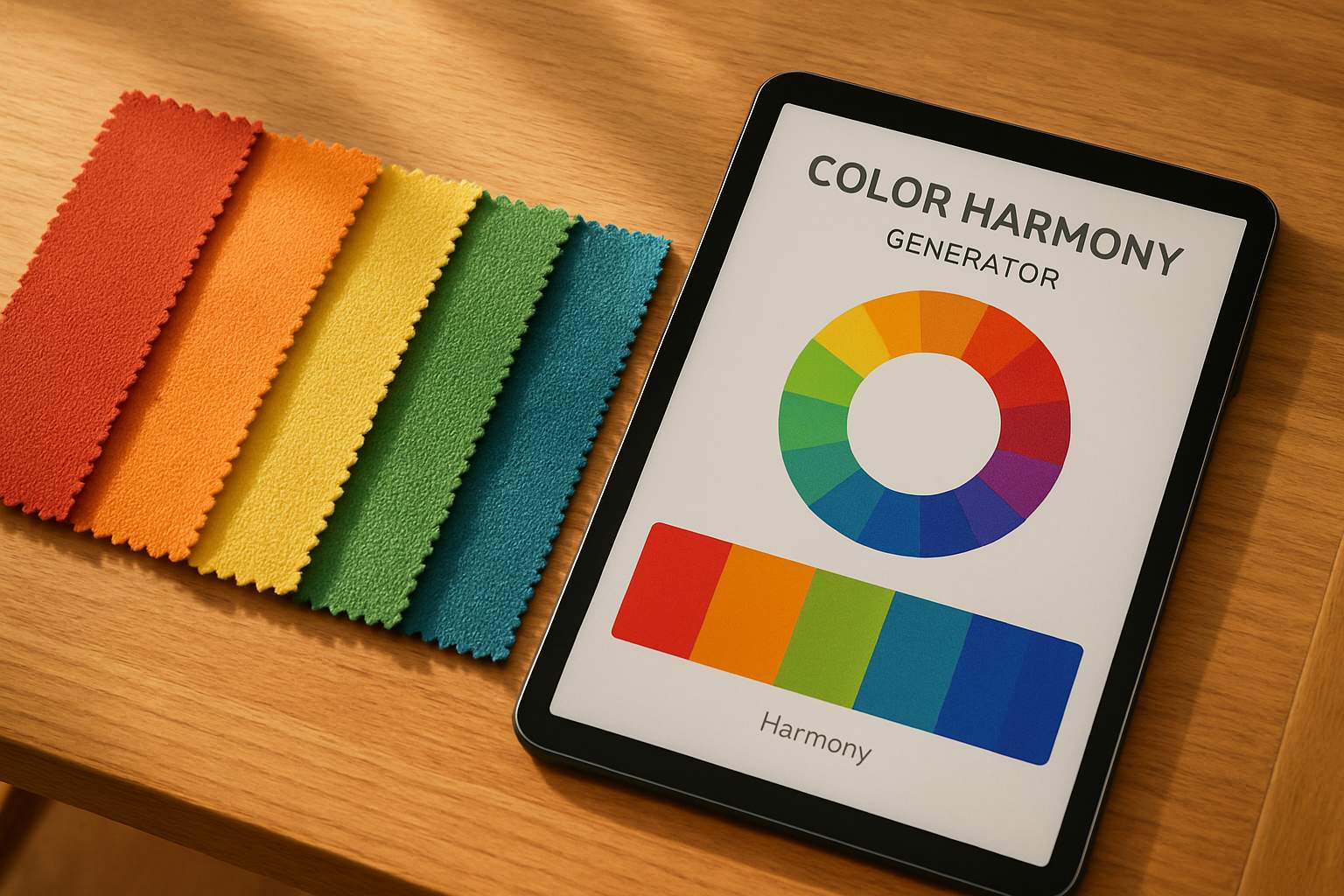
Speed advantages are quantifiable. Browzwear reports ideation-to-render cycles dropping from days to minutes. Moreover, virtual sampling reduces physical lab dips that drain budgets and resources. Rapid digital iteration reshapes daily routines. Meanwhile, market data explains why executives invest.
Market Demand And Data
Adoption intent shadows clear business signals. McKinsey found 73% of fashion executives naming generative AI a top priority. Therefore, design departments feel pressure to deliver measurable gains. Color Harmony Generators appear attractive because design value equals roughly 25% of projected AI impact. Additionally, Heuritech claims it predicts trending colors 24 months ahead, supporting informed palette choices.
Consider social visibility for brown hues, which showed double-digit growth into 2026. Consequently, several mass-market labels scheduled earthy capsules aligned with those signals. Data confirms that timing matters. In contrast, tool ecosystems explain how timing becomes execution.
Key Tools And Players
Tool diversity spans free websites to enterprise CAD suites. Khroma, Coolors, and Adobe Color support quick ideation inside Figma or Photoshop. These accessible Fashion Design Tools democratize palette play for independent labels. However, production teams require Color Harmony Generators that export Pantone ASE files and dye recipes. Browzwear, Recolor.io, and MYTH AI fill that professional gap.
Forecasting bodies also influence tooling. Pantone, Coloro, and WGSN embed palettes directly into partner platforms. Creative Automation features then recombine those hues into unique stories. A connected ecosystem now exists. Subsequently, benefits and drawbacks emerge.
Workflow Benefits And Limits
Advantages concentrate around speed, insight, and sustainability. Moreover, Creative Automation reduces repetitive recoloring tasks. Designers can focus on narrative rather than hexadecimal tweaking. Waste drops because virtual renders replace many physical prototypes.
Key quantified wins include:
- Up to 90% fewer lab dips, per Browzwear case studies.
- Hundreds of colorways generated in one click, saving days.
- Data-aligned palettes boosting on-shelf relevance, per Heuritech metrics.
Nevertheless, challenges persist. Digital hues still need substrate tests to ensure faithful reproduction. Some Fashion Design Tools now offer contrast checks, yet fabric chemistry remains unpredictable. Pros and cons must balance. Therefore, engineers continue refining color science foundations.
Technical Advances Driving Accuracy
Historical generators relied on HSL math that distorts perceived distances. In contrast, new engines calculate palettes in OKLCh or CIELAB space. Consequently, triads look evenly spaced to the human eye. Precision matters because Color Harmony Generators now feed directly into production dye labs. Additionally, automatic Pantone conversions reduce translation errors across suppliers.
Accessibility features also matured. Adobe Color flags contrast failures that could hinder inclusive design. Meanwhile, plugins export measurable lightness values, helping compliance with regional standards. Such advancements tighten the digital-to-physical loop. Next, governance challenges demand attention.
Governance IP And Security
Legal clarity lags behind technical progress. However, bodies like the CFDA draft guidance for generative ownership. Brands worry that training datasets could leak signature prints or palettes. Using private Color Harmony Generators mitigates some exposure but increases infrastructure cost. Moreover, any leaked palette could erode competitive edge before runway debut.
Security teams now audit model inputs and outputs for IP compliance. Subsequently, multi-factor controls restrict who can export production files. Creative Automation must therefore integrate governance hooks, not just flashy algorithms. Governance frameworks curb risk exposure. Finally, brands seek actionable next steps.
Strategic Actions For Brands
Executives can structure adoption around clear milestones. First, build a cross-functional pilot covering design, tech, and sourcing. Integrate Color Harmony Generators within existing PLM or CAD infrastructure. Secondly, measure success using lead time, lab dip count, and sell-through uplift.
- Secure tool budgets aligned with ROI projections.
- Upskill staff via the AI-for-Everyone certification.
- Create governance policies covering data and IP.
- Scale successes to additional product lines.
Consequently, structured rollouts minimize expensive surprises. Fashion Design Tools should integrate with enterprise resource planning to avoid manual duplication. Furthermore, Creative Automation strategies must respect local compliance on chemical usage and labeling.
Strategic discipline transforms novelty into lasting advantage. Consequently, brands position themselves for the next design revolution.
Color momentum increasingly flows through algorithms rather than paint chips. Yet human judgment still defines narrative and emotional resonance. When teams blend expertise with Color Harmony Generators, they unlock speed, insight, and sustainability. Moreover, robust governance and upskilling ensure those gains persist beyond hype. Professionals ready to lead this shift should pursue structured learning and pilot experimentation. Therefore, explore the linked certification to deepen practical AI fluency and future-proof your design career.
Disclaimer: Some content may be AI-generated or assisted and is provided ‘as is’ for informational purposes only, without warranties of accuracy or completeness, and does not imply endorsement or affiliation.


