

AI CERTs
4 months ago
Why Publishers Reject AI Writer Authorship Rules And Impacts
Publishers are racing to set authorship rules for automated text. Yet confusion persists over whether any AI Writer deserves formal author credit. The debate touches ethics, law, labor, and scientific integrity. Consequently, editorial boards worldwide now publish detailed guidelines. This article unpacks the refusal to list generative systems as authors. Moreover, we examine policy trends, legal drivers, and practical steps for responsible use. Every sentence stays concise, ensuring smooth professional reading. By the end, you will navigate the evolving authorship landscape with confidence. Additionally, the piece highlights actionable standards for disclosing any AI assistance. In contrast, it clarifies what tasks remain exclusively human responsibilities. Researchers, editors, and corporate teams alike should find concrete value beyond rhetoric. Consequently, compliance efforts can align with fast changing global expectations. The analysis relies on recent studies, union contracts, and copyright rulings. Therefore, conclusions rest on verifiable evidence rather than speculation. Keep reading to update policy handbooks and project workflows immediately. Consequently, your teams will avoid costly retractions or legal clashes.
Why Authorship Rules Matter
Under prevailing academic criteria, authors must accept accountability, disclose conflicts, and answer post-publication questions. Generative models fail those tests because tools lack agency and legal personality. Therefore, listing a chatbot as an author undermines peer-review trust. Publishers consequently treat any AI Writer as a sophisticated instrument, not a responsible person. Human oversight thus remains central to originality, Expression, and scientific rigor.
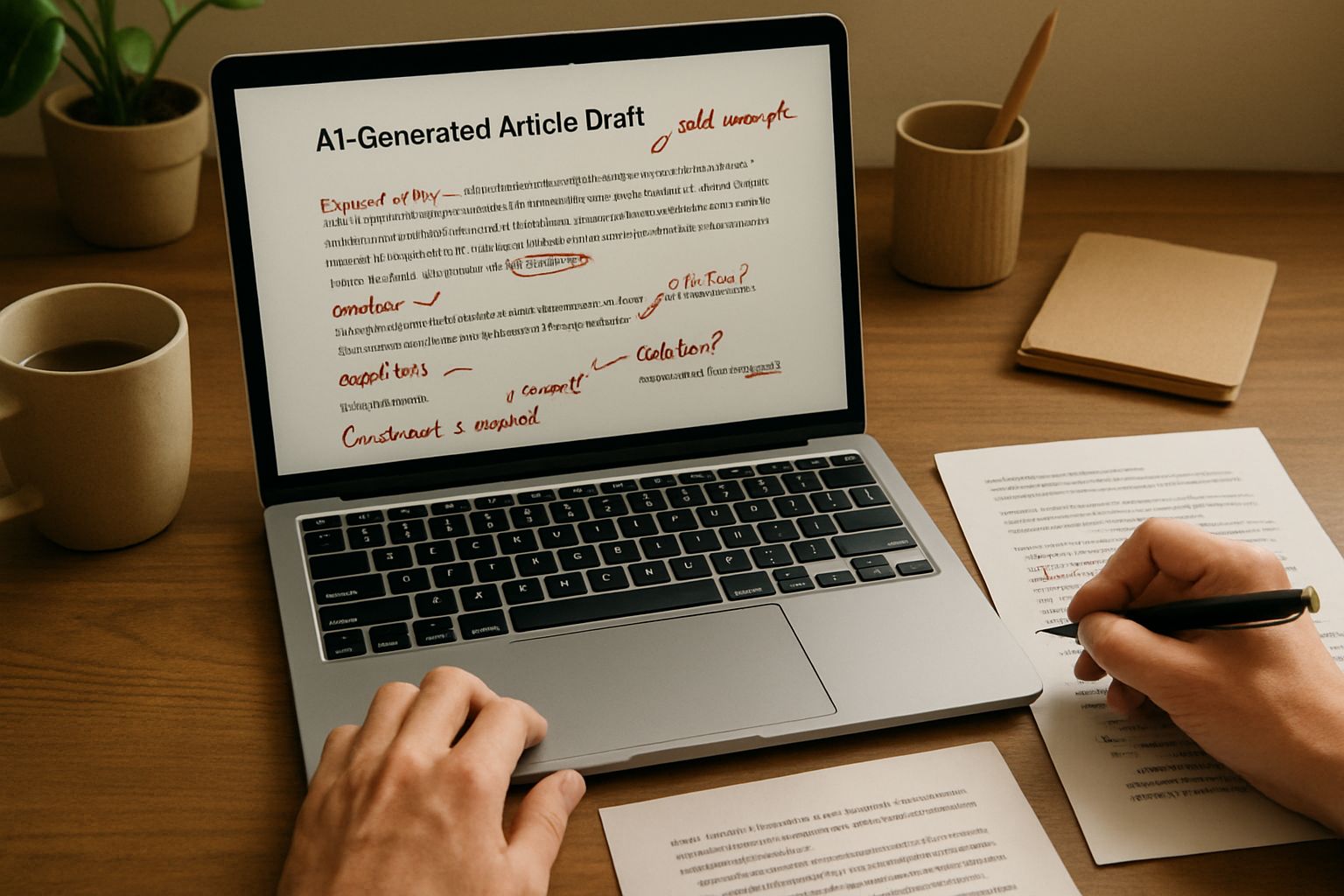
Several concrete benefits motivate the refusal stance.
- Accountability stays clear because named Human authors face inquiries and sanctions.
- Copyright ownership attaches securely to people, reducing IP ambiguity for journals.
- Public trust grows when readers know responsible individuals validated the Content.
- Labor protections ensure creators are compensated for unique Expression not machine output.
These benefits preserve scholarly integrity. However, policy details differ between publishers, as the next section explains.
Current Journal Policy Landscape
Recent surveys reveal rapid, yet uneven, policy adoption. A November 2025 BMC Primary Care audit examined 40 family-medicine journals. It found 82.5% mentioned AI, while 77.5% banned AI authorship. However, 72.5% still allowed supervised drafting support. Nature, Science, and JAMA echo the same stance: disclose usage, never credit the AI Writer. Consequently, conformity exists on attribution, yet disclosure formats remain diverse.
Some outlets demand prompt logs, while others accept tool names alone. In contrast, image rules fluctuate more, reflecting detection challenges. Editors continually update guidelines to follow ICMJE and COPE language. Therefore, authors must monitor submission pages before every manuscript.
The numbers confirm consensus against nonhuman authorship. Moreover, legal and labor forces reinforce that consensus, as we explore next.
Legal And Labor Drivers
Lawmakers anchor creative rights in human originality. The U.S. Copyright Office reaffirmed this baseline in December 2023 decisions. It refused registration for works listing software as creator. Therefore, any AI Writer lacks independent Copyright protection without substantial Human input. Courts also assess whether the person provided meaningful Expression beyond prompt selection.
Labor unions extend the legal logic into workplace contracts. The Writers Guild of America’s 2023 deal prevents companies from forcing writers to use generative tools. Consequently, studios cannot classify an algorithm as a staff author. Similar clauses appear in emerging news-room and advertising agreements. Therefore, staff writers keep contractual credit, residuals, and bargaining power. Publishers welcome this clarity because IP ownership stays traceable. In contrast, misattributed Content could trigger infringement suits.
Legal rulings and labor wins form a sturdy backbone. However, daily production workflows still need concrete guidance.
Practical Guidance For Writers
Professionals should start with transparent disclosure. List the tool, version, and task scope within acknowledgements or methods. Keep prompt logs, dates, and file hashes for provenance. Consequently, reviewers can audit questionable passages efficiently.
Never list the system as an author, even when drafts appear flawless. Instead, acknowledge the AI Writer in a footnote or transparency statement. Meanwhile, retain ultimate responsibility for factual accuracy, tone, and Copyright compliance. Supervisors should update editorial checklists to mirror these steps.
Skill upgrades help teams govern tooling wisely. Professionals can enhance their expertise with the AI Engineer™ certification. Moreover, structured learning reduces compliance errors and improves Content quality.
Following these measures keeps teams ahead of policy shifts. Subsequently, attention must turn to detection challenges.
Detection Gaps And Risks
Automated detectors promise quick answers yet still miss nuanced cases. False positives can wrongly accuse legitimate authors of misconduct. Conversely, paraphrased text may pass undetected. Therefore, editors rely on layered checks, including manual review and metadata forensics.
Enforcement remains difficult when submission volumes surge. Moreover, global norms differ, complicating cross-journal collaboration. Researchers continue testing watermarking and cryptographic provenance methods. Nevertheless, no universal standard has emerged so far.
Detection uncertainty exposes reputational risk for both publishers and scholars. Consequently, stakeholders monitor upcoming regulatory guidance.
Future Policy Outlook Roadmap
Policy harmonization will likely accelerate during 2026 as datasets of disclosed usage grow. Major publishers already discuss shared disclosure taxonomies and machine-readable author statements. Meanwhile, courts could clarify what degree of prompt engineering counts as Human Expression. If decisions shift, AI Writer recognition rules might adjust, yet accountability clauses should persist.
Regulators also examine IP issues tied to training data provenance. Consequently, transparent licensing models may influence permissible Content creation workflows. In contrast, unions plan to revisit contract language before the next bargaining cycle. Therefore, organizations should build adaptive governance councils that track these parallel developments.
Industry guardrails are tightening, yet innovation continues. Therefore, proactive education and monitoring remain the safest strategy.
Across publishing, law, and labor, the message sounds consistent. An AI Writer can assist, yet it cannot sign the manuscript. Refusal rules protect Human accountability, secure Copyright, and stabilize IP ownership. Furthermore, they honor creative labor and the trust readers place in vetted Content. Consequently, any future recognition of an AI Writer will demand new responsibility frameworks first. Meanwhile, experts advise rigorous disclosure, prompt logging, and continuous education. Organizations that apply this guidance today position every AI Writer tool as a safe collaborator, never a rogue author. Therefore, invest in governance now and pursue relevant certifications to sharpen competitive advantage. Explore the linked course, share updated policies, and keep monitoring regulatory signals. Your commitment will show every stakeholder that an AI Writer serves people, not replaces them.
Disclaimer: Some content may be AI-generated or assisted and is provided ‘as is’ for informational purposes only, without warranties of accuracy or completeness, and does not imply endorsement or affiliation.


