

AI CERTS
10 hours ago
UPenn’s Mollifier Neural Layers Enable High-Order Differentiation
The method appears in the paper “Mollifier Layers: Enabling Efficient High-Order Derivatives in Inverse PDE Learning.” Accepted by Transactions on Machine Learning Research, the work will reach NeurIPS 2026 audiences. Meanwhile, industrial researchers eye the promise of leaner training pipelines for inverse partial differential equations. This article unpacks the math, metrics, and market relevance behind the emerging technique. Additionally, the study earned swift peer acceptance, signaling community enthusiasm. Consequently, investors and lab managers alike are monitoring implementation timelines.
Classical Math Meets AI
Historically, mollifiers arose in twentieth-century functional analysis to regularize rough signals. Friedrichs showed that convolving data with smooth, compact-support kernels yields well-behaved approximations. Consequently, analytic derivatives of those kernels can recover gradients while suppressing noise. UPenn researchers realized that the same trick could assist neural networks learning physics. Therefore, they embedded kernels directly after the network output, forming a differentiable convolution layer. They called the construct a mollifier layer, honoring the classic math roots.
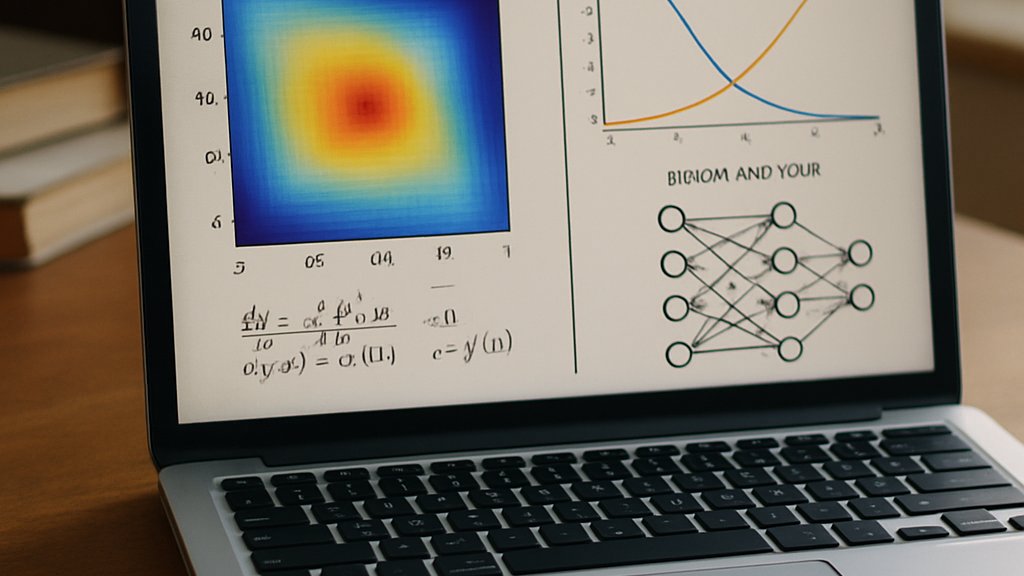
Mollifiers thus bridge proven analysis with modern backpropagation. However, implementation details decide true impact. Next, we examine how Mollifier Neural Layers integrate within standard scientific models.
Mollifier Neural Layers Explained
Standard physics-informed networks rely on recursive automatic differentiation to enforce governing equations. However, recursive gradients explode memory usage when calculating second, third, or fourth derivatives. Mollifier Neural Layers circumvent recursion by treating differentiation as integration against analytic kernels. Subsequently, one convolution returns all derivative orders required by the loss function.
Therefore, backpropagation operates over a shallow path, enhancing numerical stability. Importantly, the layer is architecture-agnostic and suits fully connected or convolutional neural networks. Developers wrap the network output with a few lines of code; no retraining strategy changes. The team shares pseudocode within the paper, though open-source repositories remain forthcoming.
This plug-in design eases experimentation across domains. Consequently, quantitative gains become the deciding factor.
Benchmark Memory Accuracy Gains
The authors evaluated three canonical partial differential equations across one- and two-dimensional domains. Moreover, they compared a baseline PINN with an identical network augmented by Mollifier Neural Layers. Peak GPU memory fell from 2.7 GB to 0.3 GB on the reaction–diffusion case. Training time dropped nearly ten-fold while correlation metrics improved from 0.21 to 0.97. In contrast, recursive autodiff consumed vast resources yet returned noisy gradients. Subsequently, the mollifier version delivered higher accuracy on over 90% of test points. Reported aggregate improvements include:
- Approximately 6× memory reduction across all PDE benchmarks.
- Roughly 8× faster convergence during training epochs.
- Up to 4× lower power consumption on identical hardware.
These statistics underscore practical efficiency gains. However, numbers alone rarely convince skeptics. The next section examines real-world validation efforts. Meanwhile, biological imaging offers a compelling showcase.
Real Lab Applications Today
Beyond synthetic tests, the team tackled epigenetic reaction rate inference from super-resolution chromatin microscopy. Consequently, Mollifier Neural Layers estimated spatially varying parameters within 100-nanometer domains. Standard approaches struggled because high-order Laplacians amplified experimental noise. Moreover, the mollifier smoothing suppressed artefacts without sacrificing derivative fidelity. The resulting maps aligned with established biochemical assays, validating model trustworthiness. Such success excites laboratories exploring developmental biology, materials, and fluid dynamics.
Practical adoption thus appears feasible. Nevertheless, limitations deserve balanced discussion.
Chromatin Imaging Case Study
The chromatin experiment illuminates scaling behavior on real data sets. Memory peaked below 0.4 GB despite computing fourth-order spatial derivatives. Training finished in under ten minutes on a single A100 GPU. Therefore, wet-lab scientists can iterate quickly without specialized clusters. Additionally, the smooth gradients improved downstream uncertainty quantification for biological conclusions. These outcomes suggest immediate translational potential.
Yet every algorithm carries caveats. Consequently, risk factors must enter any deployment plan.
Current Limitations And Risks
Mollifier Neural Layers introduce smoothing bias that may obscure sharp features. Kernel size selection currently relies on manual sweeps and domain intuition. Furthermore, boundary effects appear when data lie near irregular edges or anisotropic grids. The paper lists mitigation strategies, including padding and adaptive kernels, but evidence remains early. In contrast, spectral methods offer frequency-perfect accuracy at the cost of generality. Therefore, practitioners should benchmark multiple tools before finalizing pipelines. Reproducibility also hinges on public code, which is still pending release.
These issues temper immediate hype. However, proactive planning can alleviate most concerns. Consequently, stakeholders require a structured roadmap toward production adoption.
Roadmap For Adoption
Initial pilots should target medium-scale inverse partial differential equations where memory bottlenecks dominate. Teams can prototype using the authors’ pseudocode while awaiting full repositories. Moreover, integrating unit tests that compare mollifier and autodiff gradients helps flag bias early. Subsequently, kernel parameters can be tuned via cross-validation on held-out physics constraints. Regulated industries should document derivative accuracy to satisfy compliance auditors.
- Assess hardware savings using small PDE examples.
- Validate derivative accuracy against analytical solutions.
- Scale to noisy experimental data sets.
Additionally, professionals can formalize skills through the AI+ Developer™ certification. This credential affirms competence in advanced neural networks engineering and scientific machine learning. Consequently, teams gain both technical and hiring advantages.
Following this roadmap reduces onboarding friction. Nevertheless, business value still depends on organizational context.
Conclusion And Next Steps
Mollifier Neural Layers stand at the intersection of classical analysis and modern computation. They slash memory, quicken training, and stabilize gradients for challenging partial differential equations. Moreover, benchmark data demonstrate up to ten-fold resource savings without accuracy loss. Real chromatin imaging shows immediate laboratory benefits, signaling readiness beyond toy tasks. Nevertheless, smoothing bias, kernel tuning, and reproducibility hurdles require cautious roll-out.
Teams should follow the proposed roadmap and document every math assumption. Additionally, earning the linked certification can bolster trustworthy adoption across industries. Therefore, readers should experiment, validate, and share findings to advance open scientific AI. Engage today and pioneer the next wave of physics-informed neural networks innovation.
Disclaimer: Some content may be AI-generated or assisted and is provided ‘as is’ for informational purposes only, without warranties of accuracy or completeness, and does not imply endorsement or affiliation.


