

AI CERTS
1 month ago
Tutor’s Robot Data Factory Scales 100 Robots in Watertown
Consequently, industry observers see DF1 as a potential inflection point for embodied AI. This article explores the scale, workflow, commercial stakes, and lingering risks behind the project. Furthermore, we examine how DF1 fits wider robotics manufacturing trends. Investors have already supplied $42 million to fuel this experiment. Meanwhile, early warehouse pilots hint at the prize: reliable robotic labor sold as a service. Yet many technical and ethical hurdles remain before factories fully trust remote-tutored machines.
Inside DF1 Training Scale
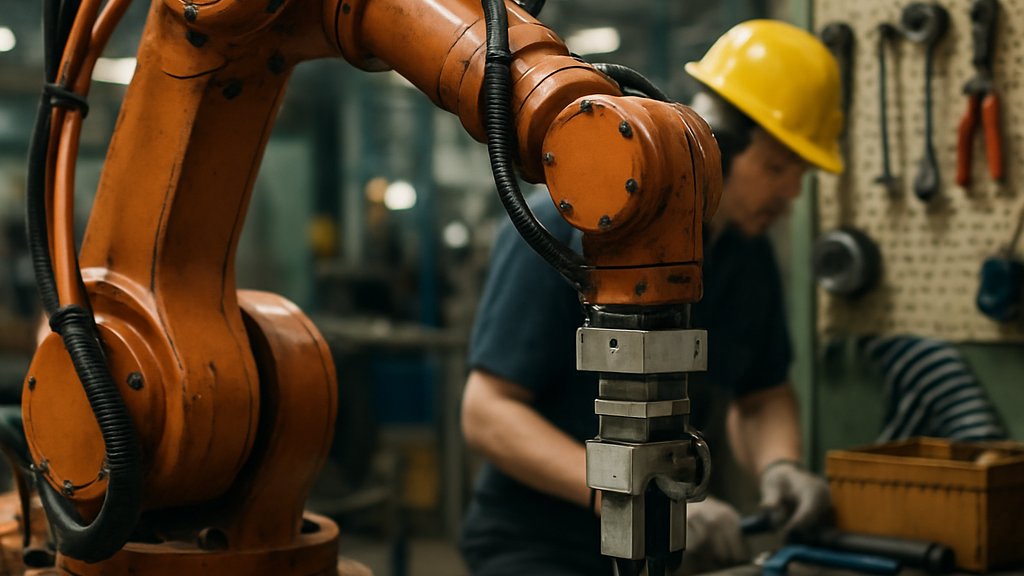
DF1 operates like a kindergarten for robots, according to CEO Josh Gruenstein. Instead of crayons, the 100 Sonny units within the Robot Data Factory wield bimanual grippers and vision packs. Moreover, each robot streams four camera feeds plus proprioceptive sensors to cloud dashboards. AWS provides compute while human tutors supervise from stations in the United States, Mexico, and the Philippines. Consequently, the factory generates about 10,000 hours of training data every week.
Those numbers dwarf typical academic labs. In contrast, single-robot studies might gather the same volume across an entire semester. Tutor Intelligence argues that scale surfaces edge cases faster. For example, a corner scenario appears within five minutes at DF1, versus eight hours on one robot.
Key DF1 statistics:
- Area: 35,000 square feet in historic Watertown building.
- Fleet: 100 Sonny semi-humanoids plus spare units.
- Throughput: ≈10,000 hours weekly training data.
- Camera count: roughly 500 lenses capturing multimodal scenes.
- Funding: $34 M Series A, $42 M total capital.
These metrics highlight a deliberate attempt to industrialize data collection. Nevertheless, size alone does not guarantee useful datasets. Quality hinges on the tutor workflows described next. DF1 already sets a new bar for physical scale. However, the learning advantage emerges only when those robots act as one fleet.
Fleet Learning Speed Advantage
Running one policy across 100 identical bodies creates a parallel experiment farm. Moreover, synchronized rollouts let engineers compare outcomes within minutes. Edge-case discovery accelerates because rare situations aggregate quickly across the swarm. Therefore, Tutor Intelligence can patch Ti0 almost daily with fresh corrections. Subsequently, patched policies redeploy overnight, closing the loop.
Proprioceptive teleoperation underpins this feedback cycle. Human mentors wear VR headsets that return force and joint signals. Consequently, demonstrations feel natural and reduce labeling overhead. Each corrected trajectory enters a supervised learning queue alongside reinforcement schedules. Robotics researchers note the approach marries data-centric AI with classical control safeguards.
Yet scale introduces congestion in networking, storage, and safety verification. Tutor Intelligence claims redundant wireless channels and strict collision thresholds mitigate disasters. Nevertheless, external audits have not yet validated those claims.
Fleet learning within the Robot Data Factory clearly trims experimentation time. Next, we examine how collected bits become deployable intelligence.
From Data To Model
Ti0 is the firm’s inaugural Vision-Language-Action network. It ingests synchronized video, language prompts, and motor commands from the Robot Data Factory. Additionally, the model aligns embeddings so verbal instructions map to precise pick-and-place motions. The company retrains Ti0 weekly as DF1 expands its corpus.
The company pursues a three-stage recipe. First comes behavior cloning from teleoperation traces. Second, supervised fine-tuning refines failure modes flagged by anomaly detectors. Finally, reinforcement learning adds robustness in cluttered scenes. Consequently, Ti0 performance improves steadily, though official benchmarks remain private.
Experts caution that overfitting to DF1 lighting or fixtures could hamper generalization. Nevertheless, Tutor Intelligence deploys identical sensor stacks in customer sites to narrow that gap. Moreover, synthetic domain-randomized scenes supplement real footage.
Turning torrents of training data into reliable policies proves non-trivial. Commercial pilots reveal whether the effort translates to factory revenue.
Commercial Pilots And Stakes
Cassie, the heavier industrial sibling, already lifts cases in a Dallas 3PL run by Productiv. Paul Baker, the customer’s CFO, reports human-level throughput on that single line. However, other pilots remain below parity and need months of refinement.
Tutor Intelligence offers robots through a subscription model, bundling hardware, software, and remote tutoring. Consequently, manufacturers avoid large capital purchases and shift risk to the vendor. Watertown operations feed performance improvements back into field units.
Investors like Union Square Ventures view the data moat as defensible. Moreover, a mature Robot Data Factory could house thousands of robots, multiplying the moat.
Early pilot indicators:
- Cycle time: 4.7 seconds average pick (Cassie line).
- Uptime: 82% with remote interventions.
- Error rate: 4% mis-picks, trending downward.
- Cost: undisclosed RaaS fee, comparable to agency labor per sources.
These figures entice partners seeking predictable labor costs. Yet unresolved risks temper enthusiasm, as discussed next.
Risks And Open Questions
Sonny units still drop items and occasionally collide during dense traffic. Therefore, safety certifications and OSHA reviews will shape deployment speed. Independent audits have not yet published results.
Data governance raises further concerns inside the Robot Data Factory context. Cameras observe packaging logos, employee faces, and proprietary workflows. In contrast, Tutor Intelligence shares little about anonymization or retention limits. Regulators may soon demand detailed policies.
Labor advocates also watch displacement effects in robotics manufacturing and logistics. Nevertheless, new robot technician roles could offset some job losses. Consequently, training programs will matter. Professionals can enhance their expertise with the AI Robotics™ certification.
Hardware longevity constitutes another wildcard. Warehouse robots face dust, temperature swings, and forklift impacts. Tutor Intelligence must prove five-year mean time between failures to win large contracts.
The path to trustworthy autonomy remains crowded with technical, legal, and social hurdles. However, strategic industry effects are already emerging.
Strategic Industry Implications
Global competitors are racing to replicate the Robot Data Factory concept. Chinese humanoid startups advertise similar campuses, while legacy robotics giants expand simulation plus real data loops. Consequently, data ownership threatens to become the next platform war.
Manufacturing executives see a chance to alleviate labor shortages and increase uptime. However, they also fear vendor lock-in if datasets remain proprietary. Therefore, some consortiums push for shared standards.
Meanwhile, policy makers debate incentives for domestic robot production in Watertown and beyond. Robotics clusters could anchor high-skill jobs even as repetitive roles decline. Additionally, environmental groups evaluate the energy footprint of massive training farms.
The next two years will clarify winners, regulations, and public sentiment. Stakeholders who understand DF1 today can better navigate that future.
Conclusion And Next Steps
Tutor Intelligence has built more than a flashy demo in Watertown. DF1 shows how disciplined engineering plus capital can industrialize robot learning. Moreover, the Robot Data Factory now produces unprecedented volumes of training data. Fleet learning compresses iteration cycles, while subscription pilots test commercial appetite. Nevertheless, open safety audits, transparent governance, and reliable hardware remain essential before widescale manufacturing adoption.
Stakeholders should watch KPIs from Cassie deployments and future DF1 expansions. Consequently, early movers can seize competitive gains or shape ethical standards. Readers who plan to lead forthcoming robotics programs can validate skills through the earlier linked certification. Act now, investigate DF1 progress, and position your teams for the autonomous factory era.
Disclaimer: Some content may be AI-generated or assisted and is provided ‘as is’ for informational purposes only, without warranties of accuracy or completeness, and does not imply endorsement or affiliation.


