

AI CERTs
2 months ago
SuperQ’s ChatQLM Signals Quantum AI Consumer Breakthrough
CES 2026 may be remembered for one breakthrough. SuperQ Quantum Computing unveiled ChatQLM, a conversational interface that quietly routes complex questions across classical, GPU, and quantum resources. Consequently, analysts now debate whether the launch marks the first true consumer step for Quantum AI. Furthermore, enterprise observers see fresh competitive signals that extend far beyond the Las Vegas show floor.
This article dissects the debut, the technology, and the business context. Moreover, it highlights risks and next actions for decision makers exploring Quantum AI adoption.
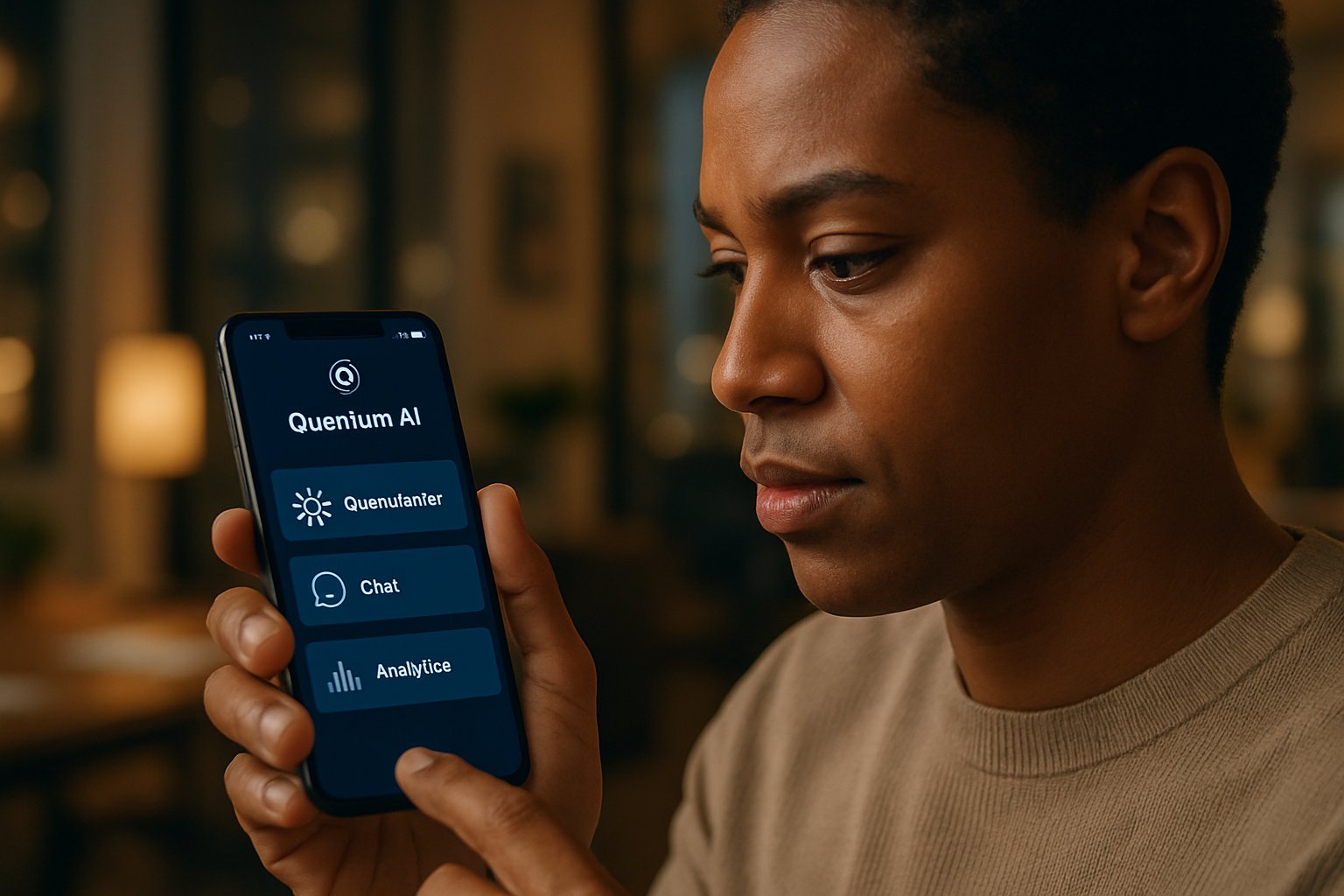
CES Launch Spotlight Moment
SuperQ chose the bustling Foundry hall for its public demo on 7 January. Hundreds witnessed ChatQLM optimize delivery routes in seconds while explaining each computational hop. However, most press coverage repeated the company release, leaving technical depth unexplored.
The vendor claims ChatQLM is the world’s first consumer application powered by live quantum back-ends. Dr. Muhammad Khan, SuperQ’s CEO, said the crowd’s response “proved the world is ready for quantum utility.” In contrast, independent benchmarks remain scarce.
Key launch facts include:
- Public demo during CES dates 6-9 January 2026.
- Provisional patent filed for Quantum Leveraged Model (QLM) orchestration.
- Memoranda of understanding signed with finance, logistics, and energy firms.
These milestones highlight commercial ambition. Nevertheless, sustained traction will require validation beyond trade-show enthusiasm. Therefore, the next section examines how the hybrid stack works.
Hybrid Architecture Explained Simply
ChatQLM combines large language models with classical solvers, NVIDIA clusters, and two quantum modalities: annealers and gate-based processors. Moreover, the QLM orchestrator selects the cheapest or fastest path for each subtask. Routing choices adapt in real time as queue depths and problem sizes shift.
Routing Layers Under Hood
The workflow begins with natural-language input. Subsequently, an LLM parses intent and generates an optimization schema. The annealer might tackle combinatorial cores while GPUs refine gradients. Meanwhile, a gate-based machine can handle variational subcircuits when chemistry or simulation surfaces.
SuperQ positions this dynamic plumbing as invisible to end users. Nevertheless, latency remains a hurdle because quantum cloud access adds queuing overhead. Therefore, caching and fallback heuristics are critical for mobile responsiveness.
Hybrid design aligns with recent peer-reviewed findings that near-term advantage emerges when quantum engines complement, not replace, classical methods. Consequently, SuperQ’s architectural bet matches mainstream research trajectories.
This section revealed why orchestration, not raw qubits, drives ChatQLM’s promise. However, market size and timing also matter, as the next analysis shows.
Market Context And Growth
Grand View Research pegs the global quantum-computing market at USD 1.42 billion in 2024, growing above 20 percent CAGR through 2030. Additionally, Quantum AI subsegments start smaller yet accelerate as hybrid use cases mature.
Consumer adoption remains nascent. Nevertheless, SuperQ’s freemium model could seed thousands of optimization queries daily. Those data points may, in turn, refine backend selection algorithms and generate enterprise leads.
Moreover, venture capital shows renewed interest. Recent hybrid-application startups have raised mid-eight-figure rounds by proving incremental speedups on logistics benchmarks. Consequently, investors will watch ChatQLM retention metrics closely.
These figures underline favorable macro winds. Yet, market gaps persist, prompting a closer look at rivals.
Competitive Landscape Snapshot Today
Several players offer hybrid orchestration libraries, though none package them as consumer chatbots. Zapata, Multiverse, and SandboxAQ target enterprise developers instead. Meanwhile, hardware vendors like D-Wave provide cloud portals and hybrid solvers, but lack a friendly front-end.
SuperQ thus occupies an unusual middle ground. The firm owns no large hardware fleet, instead brokering capacity across multiple providers. Consequently, its moat hinges on the QLM patent and user experience.
Furthermore, hyperscalers operate quantum research services, yet corporate bureaucracy slows productization. In contrast, startups can iterate faster on UX and pricing. Nevertheless, deep pockets and existing user bases give cloud giants eventual leverage.
Competitive dynamics indicate early-mover visibility for ChatQLM. However, durability demands trust and verified performance, topics explored next.
Opportunities And Open Questions
Potential strengths include a lower barrier for optimization newcomers and a flexible revenue ladder. Moreover, hybrid routing matches real-world computational heterogeneity. Businesses could test small problems cheaply before scaling.
Open issues remain:
- Quantum advantage is problem-specific and difficult to generalize.
- Latency may hurt user satisfaction if queues grow.
- Result verification needs transparent benchmarks and reproducibility protocols.
Independent hands-on reviews are therefore essential. Additionally, enterprises will request cost per solve metrics and security assurances.
Professionals can enhance their expertise with the AI Product Manager™ certification. Such training prepares teams to evaluate hybrid claims rigorously.
These challenges illustrate why governance must accompany excitement. Nevertheless, pragmatic strategies exist, as the final section details.
Strategic Takeaways For Leaders
Executives evaluating ChatQLM should first demand structured benchmarks against trusted classical solvers. Secondly, ask SuperQ to disclose backend providers and latency statistics. Furthermore, pilot only those workflows where combinatorial complexity dominates cost or revenue impact.
Certification Pathways To Upskill
Staff readiness matters. Consequently, managers can enroll engineers in specialized programs to bridge AI and quantum fluency. Courses covering optimization framing, hybrid orchestration, and risk management shorten adoption cycles.
Meanwhile, monitor regulatory guidance on quantum-safe encryption because new pipelines may expose data in novel environments. Additionally, negotiate service-level agreements that address queuing variability and cost ceilings.
Organizations following these steps will separate hype from value. Therefore, they can invest confidently when Quantum AI proofs mature.
This section offered actionable guardrails. In conclusion, the article recaps overarching insights and suggests next moves.
Conclusion
SuperQ’s ChatQLM brings Quantum AI into mainstream conversation through an accessible chat interface. The launch showcases hybrid routing, strategic partnerships, and ambitious patents. However, independent validation and careful ROI analysis remain vital. Moreover, leaders must balance latency, verification, and security considerations while cultivating internal skills. Consequently, early experiments should focus on high-value optimization cases where quantum back-ends can shine.
Stay ahead by tracking performance studies and refining talent pipelines. Finally, explore industry-recognized programs, including the linked certification, to position your team for the Quantum AI era.


