

AI CERTS
2 months ago
Subquadratic Debate: Machine Learning Faces New Efficiency Claims
In contrast, Subquadratic presented only selective results, leaving researchers hungry for full data. Meanwhile, the $29 million seed round and rumored $500 million valuation amplify both excitement and Startup Risk. Therefore, the industry now watches a high-stakes experiment unfold.
Ambitious SubQ Launch Details
Subquadratic released SubQ 1M-Preview alongside its Subquadratic Sparse Attention architecture. Additionally, the firm opened a private beta for API, Code, and Search products. Founders Justin Dangel and Alexander Whedon highlighted eleven PhD hires drawn from premier labs. However, no weights or full technical report accompanied the launch. Consequently, independent verification remains impossible today.
Investors still praised the promise of dramatic Efficiency gains. Furthermore, company materials positioned SubQ as the “first fully subquadratic” large model capable of 1 million-token context in production. Critics immediately asked how the system maintains Machine Learning robustness across general tasks. These early questions framed the debate.
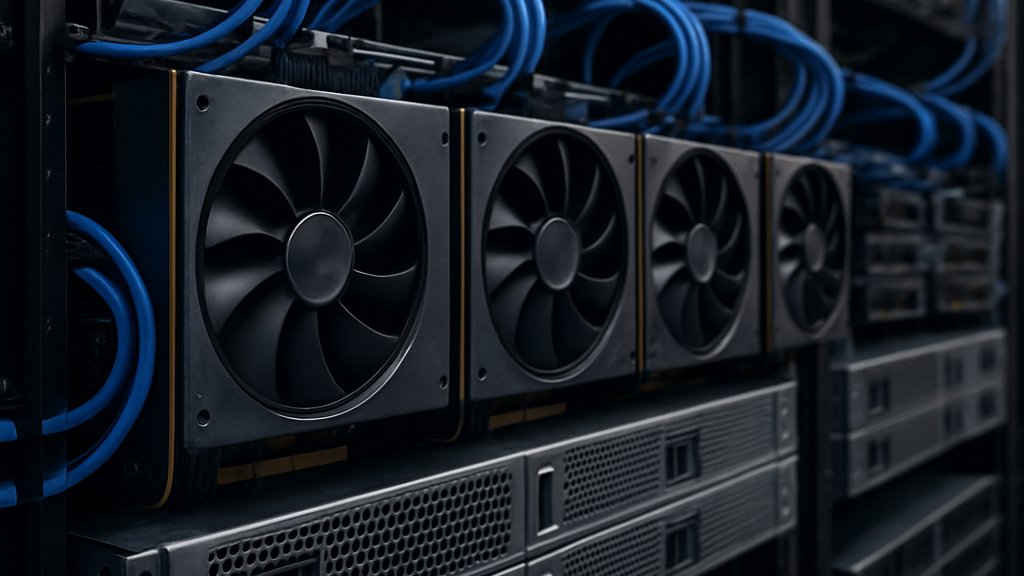
The section shows rapid product rollout yet sparse documentation. Nevertheless, missing artifacts hinder reproducibility. Subsequently, attention shifts to the headline performance numbers.
Headline Speedup Claims Analyzed
Company slides compared SSA to FlashAttention on Nvidia B200 GPUs. Moreover, Subquadratic reported 7.2× faster attention at 128 K tokens and 52× at one million. In contrast, a research configuration supposedly reached twelve million tokens with nearly 1,000× compute reduction. However, only single-run timings were shown, without confidence intervals. Additionally, cost marketing quoted an $8 bill for RULER-128 K versus $2,600 for Claude Opus. VentureBeat warned that undisclosed API pricing prevents fair cost checks. Therefore, Efficiency claims depend on unshared assumptions about batch sizes and hardware saturation.
Key Benchmark Numbers Listed
- RULER-128 K accuracy: SubQ 95.0 % vs Claude 94.8 %
- MRCR v2-1 M: SubQ lab 83, production 65.9
- SWE-Bench Verified: SubQ 81.8 vs Opus 80.8
- Speedup on 512 K tokens: 23× over FlashAttention
- Claimed 12 M-token context: ~1,000× attention compute reduction
These figures impress at first glance. Nevertheless, absent broader suites like MMLU or HELM, Scaling Laws extrapolation remains speculative. Consequently, analysts call for larger empirical coverage.
Research Community Reactions Intensify
Experts split quickly after the press cycle began. Will Depue suggested SSA might repackage earlier sparse attention work. Meanwhile, Dan McAteer labeled the launch either “breakthrough or AI Theranos.” John Rysana countered that strong engineering could still beat skepticism. Moreover, theory researchers cited conditional hardness proofs that limit subquadratic universal attention.
Consequently, many academics demanded publicly available weights before drawing conclusions. Fello AI and LessWrong posts dissected methodology, noting gaps between research and production MRCR scores. Additionally, worries about Startup Risk grew because inflated expectations can harm early customers. Therefore, rigorous peer review now appears essential for reputational survival.
The section captures polarized sentiment and reputational stakes. However, understanding theoretical constraints clarifies why doubts persist.
Theoretical Limits Debated Forcefully
Papers by Alman & Yu argue certain similarity tasks need quadratic time under SETH. Consequently, genuinely general subquadratic attention may trade accuracy for speed. Moreover, Gupta et al. showed conditional subquadratic algorithms that work only with bounded head dimensions. In contrast, Subquadratic claims no quality loss across tasks. Meanwhile, historical patterns from Kimi Linear and Hyena reveal degraded retrieval under extreme compression.
Therefore, Scaling Laws analysis suggests benefits might plateau beyond specific context lengths. Additionally, Efficiency gains often vanish once dense residual layers dominate runtime. These complexities remind Machine Learning engineers to test end-to-end workflows, not just micro-kernels.
The discussion reveals formal speed limits and practical design trade-offs. Subsequently, attention shifts toward business consequences if claims hold or fail.
Commercial Impact Horizons Examined
Should SSA prove robust, long-context reasoning could disrupt retrieval-augmented generation pipelines. Enterprises may drop expensive chunking logic, improving Efficiency and latency. Moreover, training footprints could shrink because fewer tokens need quadratic passes. Consequently, cloud providers might redesign accelerator roadmaps around memory-light kernels.
In contrast, unmet promises will raise Startup Risk, potentially chilling funding for similar bets. Additionally, regulatory interest may spike if efficiency leaps alter compute demand forecasts. Forward-looking CIOs therefore monitor verification efforts while exploring skill upgrades. Professionals can deepen expertise with the AI Researcher™ certification to navigate these shifts in Machine Learning practice.
This section highlights potential rewards and pitfalls for adopters. Nevertheless, realization depends on transparent third-party testing, which we examine next.
Verification Steps Move Forward
Independent labs have requested model access for repeatable benchmarking. Moreover, journalists asked Subquadratic for raw logs, hyperparameters, and cost spreadsheets. Consequently, the firm promised a detailed report “soon.” Academic groups plan to rerun MRCR, RULER, and broad reasoning suites on multiple GPUs. Additionally, hardware teams want wall-clock profiling to confirm claimed Efficiency at scale.
Meanwhile, venture analysts weigh Startup Risk against first-mover advantage. Therefore, reproducibility timelines may influence funding rounds and partnership talks. In contrast, delayed transparency could erode goodwill within the Machine Learning ecosystem. Scaling Laws watchers will also study whether real-world latency improves linearly as advertised.
This final section outlines concrete next steps toward evidence. Consequently, the stage is set for decisive third-party results.
Conclusion
Subquadratic’s sparse attention story blends daring engineering with unresolved questions. Moreover, the episode underscores how Machine Learning progress intersects with Scaling Laws, Efficiency targets, and Startup Risk. Community scrutiny now focuses on reproducible code, broad benchmarks, and theoretical rigor.
Consequently, the coming months will reveal whether SSA shatters the quadratic ceiling or joins earlier overhyped techniques. Meanwhile, professionals should track emerging data and refine skills. Therefore, consider earning the linked AI Researcher™ certification to stay competitive as long-context architectures evolve.
Disclaimer: Some content may be AI-generated or assisted and is provided ‘as is’ for informational purposes only, without warranties of accuracy or completeness, and does not imply endorsement or affiliation.


