

AI CERTS
1 hour ago
Studios Lead Creative AI Backlash Movement
This article unpacks the statistics, case studies, and policy signals guiding this pivotal moment. In contrast, it also weighs efficiency benefits touted by AI vendors. Readers will gain actionable context for funding, staffing, and product decisions. Prepare for a fact-driven tour through an industry rallying behind authentic entertainment values.
Creative AI Backlash Trends
Analysts trace the first spark to a February 2025 labor clash. Over 30 Apex Legends voice actors rejected contracts asking for perpetual training rights. Consequently, unions demanded explicit consent, fair pay, and disclosure around synthetic voices. Subsequently, press coverage coined the wider movement the Creative AI Backlash, framing it as an ethical uprising. By 2026, high-profile studios amplified the stance instead of retreating. Red Hook Studios refused to clone narrator Wayne June, despite recorded permission from the late performer. Meanwhile, S-GAME confirmed every Phantom Blade Zero asset remained hand drawn and animation-tested.
These headline moments gave players vivid proof that many teams still honor human creativity. Moreover, social media sentiment rewarded transparency with positive preorder spikes. Developers saw brand value in distancing themselves from opaque automation. However, the next section examines whether surveys support that strategic choice.
Studios Reject AI Replacement
Survey numbers reveal how widespread the rejection has become. GDC’s 2026 State of the Game Industry sampled roughly 2,300 professionals across game development roles. Additionally, 52% said companywide generative tools already exist, yet 52% still labeled impact negative.
- 36% of individuals employ generative AI in daily tasks.
- 66.1% of studios report zero AI use for final assets.
- 88.4% want mandatory Steam disclosure labels for any generative content.
In contrast, management often highlights speed gains, yet layoffs fuel workforce anxiety. Consequently, many teams market their projects as fully artisan to reassure investors and fans. Phantom Blade Zero publicity specifically referenced the ongoing AI backlash to differentiate its brand. Moreover, Darkest Dungeon press notes emphasized respect for legacy performers. Statistical evidence underscores a clear disconnect between tool adoption and perceived value. The forthcoming section explores how that gap intensifies within voice performance.
Worker Sentiment Survey Data
Developers’ feelings appear nuanced beyond headline statistics. GamesIndustry.biz surveyed 826 workers across programming, design, and narrative layers. Moreover, 66.1% reported no generative usage inside their studio at all. Only tiny fractions allowed AI to reach final voice, text, or music assets. Nevertheless, nearly nine in ten demanded public disclosure on Steam product pages. That insistence highlights reputational risk lurking behind silent integrations. Consequently, marketing leaders must weigh transparency against competitive secrecy.
Developers also blamed automation for recent layoffs, linking job insecurity to accelerated pipelines. Meanwhile, respondents expressing optimism cited mundane scripting or quality-assurance automation as acceptable. Their outlook suggests space for balanced adoption within game development without undermining creators. Survey sentiment reinforces the broader Creative AI Backlash narrative across production floors. However, ethical debates become sharper when deceased performers enter negotiations.
Ethical Voice Work Debate
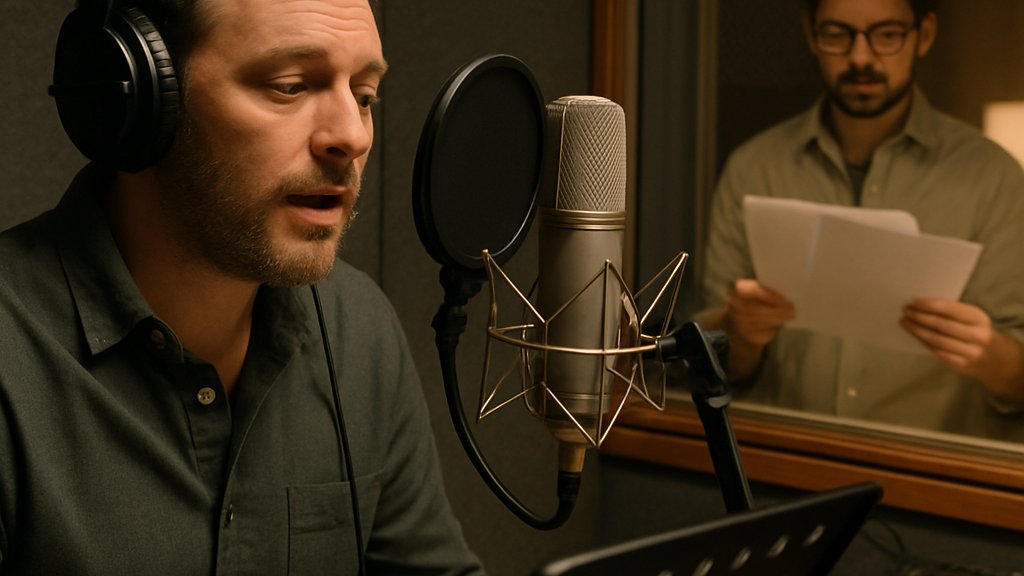
Few topics ignite stronger feelings than digital voice replicas. Chris Bourassa of Red Hook refused to resurrect Wayne June’s narration despite the actor's prior consent. He stated, "I would never erode his incredible performances by teaching a machine to sound like him". Subsequently, the quote became a rallying meme across social platforms. SAG-AFTRA negotiations in 2025 echoed similar demands for consent, compensation, and clear labeling. Moreover, the union secured tentative protections that limit use without updated contracts. In contrast, some publishers still experiment with voice cloning for minor NPC dialogue.
That practice faces mounting PR threats when labeled as another Creative AI Backlash flashpoint. Consequently, legal teams now draft clauses forbidding unapproved dataset harvesting. Such measures strive to safeguard human creativity while accepting selective AI tooling. Voice work disputes place personal identity at the center of technological progress. The next section turns to visual art, where similar integrity battles rage.
Visual Art Integrity Concerns
Concept artists feared early AI image generators could dilute signature styles. Phantom Blade Zero’s team publicly guaranteed every pixel remained hand crafted without DLSS 5 alterations. Additionally, Nvidia’s generative upscaling demo faced criticism for muting brushstroke details. Consequently, developers worried algorithmic enhancements might overwrite painterly lighting decisions. Players echoed those worries, stressing trust in traditional aesthetics for immersive entertainment. Moreover, 88.4% of surveyed staff urged mandatory disclosure of any AI-assisted visuals. Studios now list "No AI Art" badges alongside accessibility features on marketing pages.
That branding shift capitalizes on the Creative AI Backlash consumer sentiment. Nevertheless, teams still test AI concept sketches internally to accelerate iteration before human refinement. This hybrid approach preserves creators' authority while leveraging speed where originality risks remain low. Visual pipelines illustrate how strict boundaries can coexist with cautious experimentation. Therefore, the final section examines policy roadmaps and professional upskilling.
Future Policy And Certifications
Policy experts predict clearer guardrails within two production cycles. Furthermore, Valve may finalize Steam listing rules requiring AI usage disclosures by default. Regulators in Europe and California already draft bills aligning consumer rights with creative attribution. Consequently, studios plan compliance teams to avoid fresh Creative AI Backlash episodes. Professional development will matter as governance matures. Professionals can enhance their expertise with the AI Gaming Creator™ certification. Moreover, the program tackles governance, audit, and balanced game development pipelines.
Graduates learn to integrate AI without compromising human creativity or artists' royalties. In contrast, poorly trained managers risk igniting another AI backlash within fragile communities. Consequently, investors now question proposals lacking concrete plans to navigate the Creative AI Backlash landscape. Clear standards, skilled teams, and public trust will decide which studios thrive. Ultimately, the Creative AI Backlash remains both warning and opportunity for forward-thinking creators.
The industry stands at a genuine inflection point. Moreover, data, case studies, and labor actions prove the Creative AI Backlash carries tangible weight. Developers who respect human creativity and disclose AI use build stronger community trust. Conversely, silent deployments often ignite AI backlash, lawsuits, and adverse press cycles. Consequently, leadership should audit pipelines, adjust policies, and train teams before regulators mandate action.
Authentic entertainment will remain the selling point even as algorithms accelerate production. Therefore, now is the time to pursue governance education and shape responsible futures. Professionals can start by reviewing the certification resources linked above and implementing lessons immediately.
Disclaimer: Some content may be AI-generated or assisted and is provided ‘as is’ for informational purposes only, without warranties of accuracy or completeness, and does not imply endorsement or affiliation.


