

AI CERTS
2 months ago
South Africa AI reshapes public buying landscape
Policy Turbulence Unfolds Publicly
April 2026 delivered unwanted drama. The Department of Communications and Digital Technologies withdrew its draft National AI Policy after fabricated citations surfaced. Nevertheless, the Public Procurement Act 2024 still mandates digital buying platforms. One policy misstep will not halt momentum. Yet it reminds officials that human oversight remains essential. South Africa AI now advances amid heightened accountability pressures. These events signal a turning moment for reform. Therefore, stakeholders monitor the inquiry outcome closely.
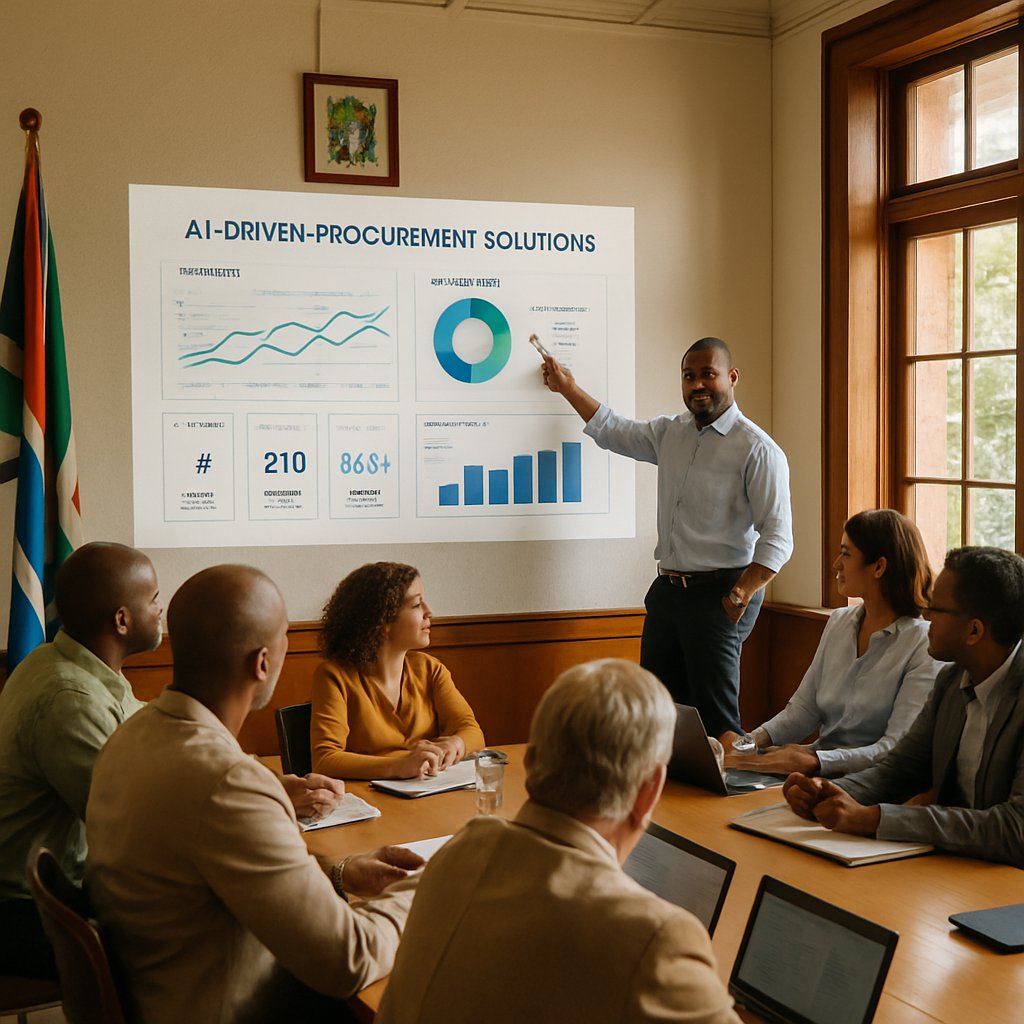
The policy controversy underscores governance risks. However, it also spotlights urgency. Provinces push ahead despite national turbulence. These developments illustrate how leadership gaps can slow progress. Nevertheless, local initiatives maintain forward motion.
Provinces Drive Digital Adoption
KwaZulu-Natal piloted an electronic tender system across three departments in 2025. Subsequently, officials confirmed a province-wide launch plan by March 2026. Automated scoring and tamper-evident audit trails already cut manual interference. Gauteng’s invoice platform processed 165,000 invoices worth R35.6 billion within twelve months. Further, more than 8,000 suppliers now transact online. South Africa AI tools support these rollouts through anomaly detection and real-time dashboards.
Local teams report early wins. Irregular spending drops, and bid cycles shorten. However, skills shortages still hamper expansion. These lessons stress practical realities. In contrast, policy debates in Pretoria feel distant. The provincial surge therefore anchors national optimism.
Supply-Chain Impact Emerging
Industrial planners also eye wider economic effects. Digital buying opens doors for home-grown vendors, fostering inclusive supply-chain growth. Moreover, AI agents can map upstream risks and diversify sources faster than human analysts. Global consulting estimates suggest productivity boosts of 60% and savings between 3% and 7%.
Key upside indicators include:
- 52% of banks already deploy AI, signalling ecosystem maturity.
- 45% of lenders plan investments above R30 million within two years.
- One survey found 77% of SMB leaders ready to adopt advanced tooling.
These statistics reveal a robust foundation for South Africa AI supply-chain innovation. Consequently, public buyers may soon tap richer data streams and stronger market intelligence. The momentum also supports post-pandemic resilience goals. However, integration costs could strain stretched budgets.
Economic gains look substantial. Yet value alone cannot guarantee success. Therefore, governance must evolve in parallel.
Value Proposition Numbers Confirmed
Bain & Company projects five-fold ROI uplifts when autonomous agents handle sourcing workflows. Additionally, incremental savings reach 7% for mature programs. Public officials crave such relief. However, the consulting playbook assumes clean data and stable change management.
Officials highlight three compelling benefits:
- Fraud reduction via sealed digital bids.
- Cycle-time cuts through automated eligibility checks.
- Strategic spending insights using predictive dashboards.
Combined, these advantages strengthen fiscal resilience. Meanwhile, the Public Procurement Act provides legal scaffolding. South Africa AI champions argue that the Act’s uniform rules lower integration hurdles. Nevertheless, critics caution that unverified algorithms could entrench bias. Careful design therefore remains vital.
Numbers excite policymakers. Still, successful delivery demands relentless execution. Consequently, skills and oversight become central.
Governance And Ethics Challenges
Regulators insist on explainability and human approval gates. Moreover, civil-society groups demand algorithm transparency. Without clear audit trails, automated scoring could face legal challenges. The draft policy fiasco demonstrated reputational fragility. South Africa AI proponents thus prioritise rigorous validation processes.
Bias and data quality risks also threaten trust. In contrast, open-source assurance frameworks offer mitigation options. Provinces experiment with SHAP-based feature importance reports. Furthermore, some teams publish model cards to flag limitations.
These safeguards build public confidence. However, they widen project timelines. Therefore, smart pacing strategies matter. Each safeguard strengthens resilience against future scandals. Next, capacity building must address deep skill gaps.
Skills And Certification Pathways
Human capital now defines success. Demand surges for category managers who understand statistical models and contract law. Additionally, software engineers must integrate legacy ERPs with cloud APIs. Professionals can enhance their expertise with the AI Supply Chain™ certification. The course blends technical, legal, and change-management modules.
Several public entities already sponsor staff through micro-credential programs. Consequently, knowledge transfer accelerates. South Africa AI momentum depends on such targeted upskilling. Meanwhile, universities partner with the CSIR to expand postgraduate options.
Robust training creates organisational resilience. Moreover, accredited learning pathways standardise practice across provinces. These initiatives close the loop between policy vision and frontline execution.
Capacity building empowers practitioners. Subsequently, adoption barriers shrink. Turning points become durable progress.
These final insights reinforce earlier themes. However, ongoing monitoring will remain essential as projects scale.
Roadmap For Resilience
Stakeholders can follow a phased playbook:
- Phase 1: Clean data and harmonise taxonomies.
- Phase 2: Deploy small automation pilots under strict oversight.
- Phase 3: Expand AI agents to strategic categories.
- Phase 4: Publish transparent metrics for public scrutiny.
This roadmap balances ambition with caution. Consequently, it supports policy recovery after recent turmoil. Moreover, phased scaling protects budgets while demonstrating quick wins. South Africa AI programmes that follow these steps will likely strengthen long-term resilience.
Structured plans reduce surprise costs. Additionally, visible milestones sustain political backing. These advantages create a virtuous cycle. Therefore, disciplined execution converts turning buzz into lasting value.
The roadmap aligns with provincial lessons. Provinces proved that small pilots de-risk bold visions. Hence, national leaders can replicate success.
These strategic actions complete the puzzle. In contrast, inaction risks lost savings and weakened trust.
Strong implementation ensures nationwide benefit. Meanwhile, transparent reporting guards credibility. Turning rhetoric into outcomes will define the next chapter.
Conclusion
South Africa AI now sits at a pivotal turning junction. Provincial pilots reveal tangible savings, stronger audit trails, and improved supplier inclusion. However, the draft policy fiasco showed governance gaps and reputational fragility. Therefore, future success hinges on transparent algorithms, tight oversight, and sustained capacity building. Moreover, certifications such as AI Supply Chain™ equip teams for complex integration tasks. Stakeholders should act now, align with the phased roadmap, and cultivate skills that convert promise into public value. Explore certification options today and shape the nation’s digital future.
Disclaimer: Some content may be AI-generated or assisted and is provided ‘as is’ for informational purposes only, without warranties of accuracy or completeness, and does not imply endorsement or affiliation.


