

AI CERTS
2 months ago
Samsung’s $1T Surge Redefines AI Hardware Market
Meanwhile, analysts framed the achievement as more than symbolic. Dave Mazza of Roundhill Investments argued that the jump “reflects a market judgment that memory’s role in the AI infrastructure stack is structural, not cyclical.” Therefore, professional audiences now examine how profit dynamics, competitive forces, and risk factors support or challenge Samsung’s trillion-dollar status. The following report dissects those mechanics.
Historic Market Cap Context
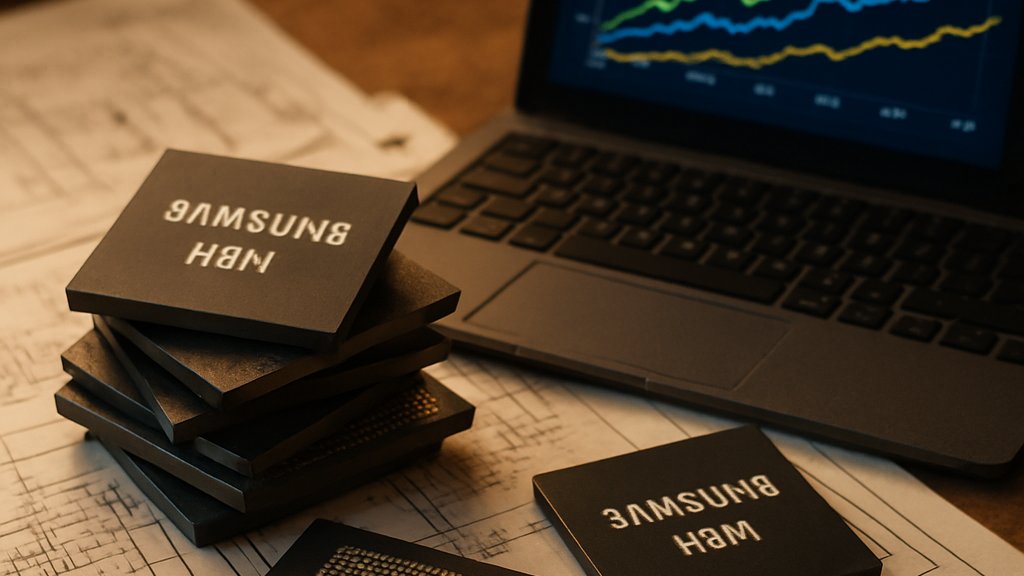
Samsung became only the second Asian company, after TSMC, to reach a trillion-dollar Market Cap. Furthermore, Bloomberg data showed its intraday value peaking at roughly 1,500 trillion won, equal to US$1.03 trillion at the prevailing exchange rate. Nevertheless, intraday peaks can recede by close as currency shifts and profit-taking alter calculations.
In contrast to earlier rallies driven by smartphones, this surge stemmed from data-center spending. Consequently, global investors rotated into Korean equities that give direct exposure to AI Hardware build-outs. JPMorgan noted that such concentration creates “a very unusual period where these companies can achieve outsized profits.”
These valuation statistics underline Samsung’s new scale. However, understanding the earning engine behind that figure requires a closer look at quarterly numbers.
Key takeaway: The record Market Cap reflects market sentiment rather than an isolated price spike. Consequently, fundamentals must justify the level.
Next, we examine the earnings surge that powered the rally.
Semiconductor Earnings Surge Drivers
The Device Solutions division generated KRW 81.7 trillion in Q1 revenue and KRW 53.7 trillion in operating profit. Moreover, the segment delivered more than 90 percent of corporate operating income, dwarfing contributions from mobile and display units.
Key Q1 Performance Statistics
- Consolidated revenue: KRW 133.9 trillion
- Operating profit: KRW 57.2 trillion
- Semiconductor share of profit: 94 percent
- Double-digit session share gain: ~13 percent on 6 May
Additionally, tight supply lifted average selling prices for Memory Chips, widening margins. Meanwhile, foreign fund inflows amplified momentum as global funds sought diversified exposure beyond U.S. megacaps.
Key takeaway: Extraordinary semiconductor profitability validated the valuation jump. Nevertheless, sustainability depends on continued premium-memory demand.
The next section unpacks how that demand relates to specialized AI Hardware memory formats.
AI Hardware Memory Boom
AI accelerators need fast, low-latency buffers. Therefore, High-Bandwidth Memory, or HBM, has become the component of choice for training clusters. Samsung shipped HBM4 volume product during Q1 and plans to sample HBM4E in Q2. Consequently, design wins with NVIDIA and hyperscalers drove orders.
Moreover, the company’s road-map positions HBM stacks alongside advanced Memory Chips for server DRAM. In contrast, traditional smartphone DRAM remains cyclical and price sensitive. Therefore, pivoting toward AI Hardware workloads improves mix and stabilizes cash flow.
Analysts estimate that every 1 point increase in HBM share lifts segment operating margin by 30 basis points. Furthermore, supply remains constrained because packaging complexity limits capacity expansion speed.
Key takeaway: Structural HBM demand underpins margin resilience. However, rivals also ramp capacity, creating competitive pressures.
The following section explores those competitive dynamics and regional stakes.
Competitive Landscape Dynamics Today
SK Hynix and Micron are scaling HBM lines aggressively. Meanwhile, TSMC commands foundry dominance, and NVIDIA continues to dictate interface specifications. Additionally, hyperscalers influence procurement cycles through multi-year memory contracts.
In contrast, Samsung retains vertical integration across wafers, testing, and advanced packaging, enabling faster transition to new nodes. Consequently, the firm can bundle Memory Chips with logic foundry services for emerging AI Hardware customers.
Nevertheless, labor demands and governance scrutiny add friction. Reports of worker calls for enhanced profit-sharing surfaced after the Q1 earnings release.
Key takeaway: Competitive advantages exist, yet external stakeholders can dilute margins. Therefore, risk management becomes essential.
We next assess specific downside scenarios that could erode the lofty Market Cap.
Risks And Caveats Ahead
Supply rebalance represents the largest threat. If competitors overbuild capacity, Memory Chips prices may retreat. Moreover, foreign-exchange swings can shrink the dollar-denominated Market Cap. Additionally, geopolitical tensions may restrict technology exports, delaying server deployments that consume HBM.
Furthermore, the rally concentrates wealth in one product class, inviting regulatory and investor scrutiny. In contrast, smartphone and display divisions face plateauing volumes, limiting diversified cushions.
Key takeaway: Multiple uncertainties could reverse gains quickly. Nevertheless, disciplined capital allocation can mitigate exposure.
The final section outlines strategic moves that professionals should monitor.
Strategic Outlook Moving Forward
Samsung plans to reinvest record cash flows into EUV capacity, HBM4E packaging, and next-gen logic nodes. Consequently, analysts foresee steady premium-memory share growth through 2028. Moreover, corporate governance reforms may enhance transparency, supporting further re-rating.
Professionals aiming to navigate this evolving AI Hardware landscape must upskill. Accordingly, they can deepen data-centric expertise through the AI Data certification. Additionally, understanding cross-border capital flows will help forecast future Market Cap swings.
Key takeaway: Strategic reinvestment and talent development will dictate Samsung’s trajectory. Consequently, continuous learning remains vital.
These insights close the analysis. However, ongoing monitoring of earnings and supply indicators is recommended.
Conclusion: Samsung’s trillion-dollar valuation rests on unmatched profitability from advanced HBM and broader AI Hardware demand. Furthermore, tight supply, product leadership, and investor enthusiasm propelled the record Market Cap. Nevertheless, competition, pricing cycles, and macro risks could clip momentum. Professionals should track quarterly data, assess strategic capital plans, and pursue targeted credentials to stay ahead. Therefore, explore the linked certification today and position yourself at the forefront of next-generation infrastructure.
Disclaimer: Some content may be AI-generated or assisted and is provided ‘as is’ for informational purposes only, without warranties of accuracy or completeness, and does not imply endorsement or affiliation.


