

AI CERTS
2 months ago
Safety Vetting in Federal AI Testing
Moreover, we examine how NIST, CISA, and sector regulators operationalize TEVV tools amid fragmented directives. We also map market signals from Google and Microsoft pilots to underline practical tooling trends.
Meanwhile, WP security teams seek harmonized benchmarks that support Compliance reviews across multiple agencies. Therefore, rigorous yet adaptable testing programs remain the safest path toward public trust and procurement success. In contrast, limited resources and uncertain authority threaten to slow timely evaluations. Nevertheless, specialized certifications can lift workforce capability and document due diligence for auditors. Professionals can enhance expertise with the AI Security Compliance™ certification.
Federal Policy Landscape Shift
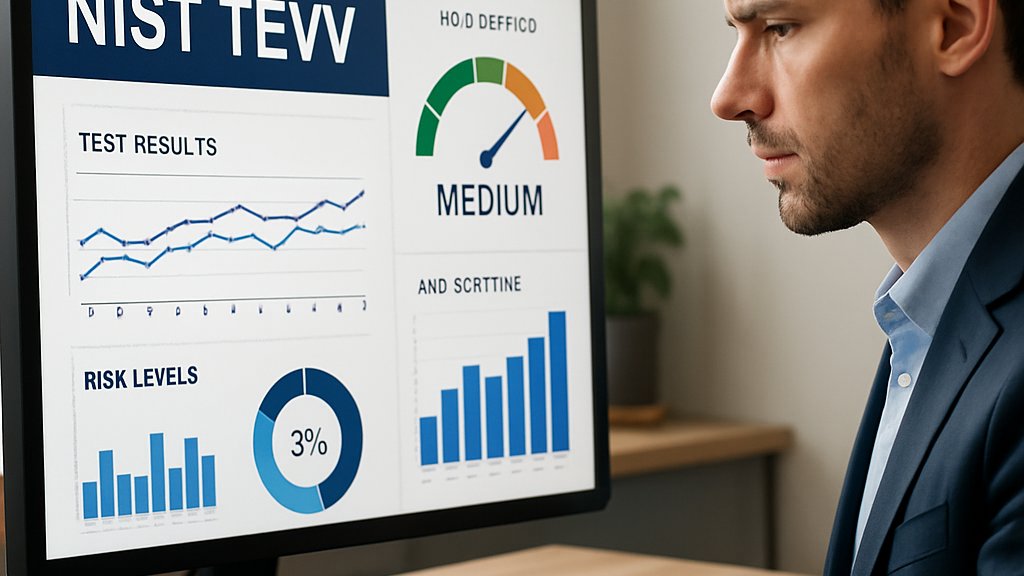
The revocation of EO 14110 removed explicit federal direction for extensive red-team exercises. However, Executive Order 14179 still encourages robust oversight, leaving NIST and sector regulators in charge. Consequently, Safety Vetting protocols now depend on agency mission, contract clauses, and existing risk frameworks. Financial supervisors lean on SR-11-7, while healthcare looks to FDA validation playbooks. Furthermore, CISA partners with NSA, FBI, and international peers to spread TEVV security guidance.
These policy shifts decentralize authority yet maintain pressure for demonstrable testing. Subsequently, technical standards become the primary anchor for consistent implementation.
NIST TEVV Framework Core
NIST’s AI Risk Management Framework positions TEVV as a continuous lifecycle discipline. Moreover, the Generative AI Profile refines actions for prompt-based systems that dominate cloud portfolios. Safety Vetting within this paradigm integrates model testing, red-teaming, and field evaluations to capture socio-technical harms. Consequently, WP administrators can map internal controls directly to TEVV tasks and satisfy Compliance auditors.
In contrast, Google engineers highlight tooling gaps when trying to repeat NIST benchmark suites at scale. Microsoft teams echo those concerns, yet they praise the Dioptra platform’s transparent metadata. Overall, NIST offers the clearest blueprint now available. Therefore, agencies treat its documents as de-facto requirements despite their voluntary label. The ARIA pilot demonstrates how that blueprint performs in operational settings.
ARIA Pilot Early Findings
Published in November 2025, ARIA 0.1 evaluated seven applications across 508 sessions. Furthermore, the pilot introduced CoRIx, a contextual robustness index mixing expert annotation and tester perception. Safety Vetting benefited from this blended metric because it surfaces both statistical failures and human harm potential. NIST reported red-team sessions uncovered jailbreak vulnerabilities in 42% of attempts. Meanwhile, field testing showed biased outputs during real-world scenario drills.
Google observers called the results a “wake-up call” during the post-mortem workshop. Microsoft representatives offered patches to improve content filters, demonstrating collaborative momentum. Nevertheless, ARIA’s limited scale raises questions about broader generalizability. The pilot proves TEVV practicality but not yet maturity. Consequently, larger multi-sector pilots are already under discussion. Sector supervisors are watching these experiments closely.
Sector Oversight Divergence
Different regulators interpret Safety Vetting requirements through their existing legal lenses. Banks rely on model-risk guidelines, while defense programs follow DOT&E test protocols. Meanwhile, healthcare AI must pass FDA validation, and WP content engines navigate intellectual property checks. Consequently, Compliance officers juggle multiple playbooks when one application spans several sectors.
GAO’s May 2025 report confirmed oversight gaps, especially for smaller watchdog agencies. Moreover, GAO urged congress to fund technical labs and shared testing sandboxes. Google and Microsoft lobbyists support the funding, hoping for unified acceptance criteria. Oversight fragmentation complicates vendor planning and auditor consistency. Nevertheless, shared metrics could bridge these divides. Operational realities expose even harder challenges for practitioners.
Operational Testing Challenges
Resource shortages hamper sustained red-team campaigns and post-deployment monitoring. Additionally, model owners often refuse deep access, citing intellectual property and security clauses. That refusal limits Safety Vetting effectiveness because testers work blind without weight or log transparency. Furthermore, reproducibility suffers when adversarial prompts produce brittle one-off failures.
WP security leads also note scarce automated tooling that aligns with open-source CMS workflows. Consequently, many teams patch manually, stretching human bandwidth. Compliance fatigue then grows as auditors request ever-expanding evidence sets. In contrast, Google and Microsoft invest in scalable evaluation pipelines that feed dashboard alerts to engineers. These obstacles highlight the urgent need for shared infrastructure and clear contractual language. Strategic recommendations can mitigate many of these hurdles.
Strategic Recommendations Forward Path
First, embed Safety Vetting milestones into acquisition documents and service level agreements. Moreover, require TEVV artifacts such as CoRIx scores, red-team transcripts, and field test summaries. Second, leverage procurement leverage to demand partial weight access under escrow, balancing IP concerns. Third, upskill teams through recognized credentials to prove competence during audits.
- Allocate budget for continuous TEVV labs within 90 days of project start.
- Join CISA knowledge-sharing forums to obtain real-time vulnerability feeds.
- Adopt WP plugins that log inference calls and support Compliance export formats.
Consequently, these actions align operational reality with policy intent. Practical steps convert abstract standards into measurable progress. Subsequently, organizations gain clearer audit trails and faster remediation loops. A concise roadmap now emerges for decision makers.
Conclusion And Action Steps
Federal guidance may fluctuate, yet disciplined Safety Vetting remains the cornerstone of trustworthy AI. NIST offers rigor, ARIA pilots prove feasibility, and multi-sector adoption is accelerating. However, gaps in resources, access, and measurement continue to threaten Safety Vetting consistency. Therefore, leaders should commit funding, negotiate transparency, and certify staff without delay. Meanwhile, the referenced certification empowers teams and embeds Safety Vetting in daily workflows. Act now, explore the certification, and position your organization for confident, compliant AI deployment.
Disclaimer: Some content may be AI-generated or assisted and is provided ‘as is’ for informational purposes only, without warranties of accuracy or completeness, and does not imply endorsement or affiliation.


