

AI CERTs
2 weeks ago
Robotic triage reshapes Health Systems pharmacy
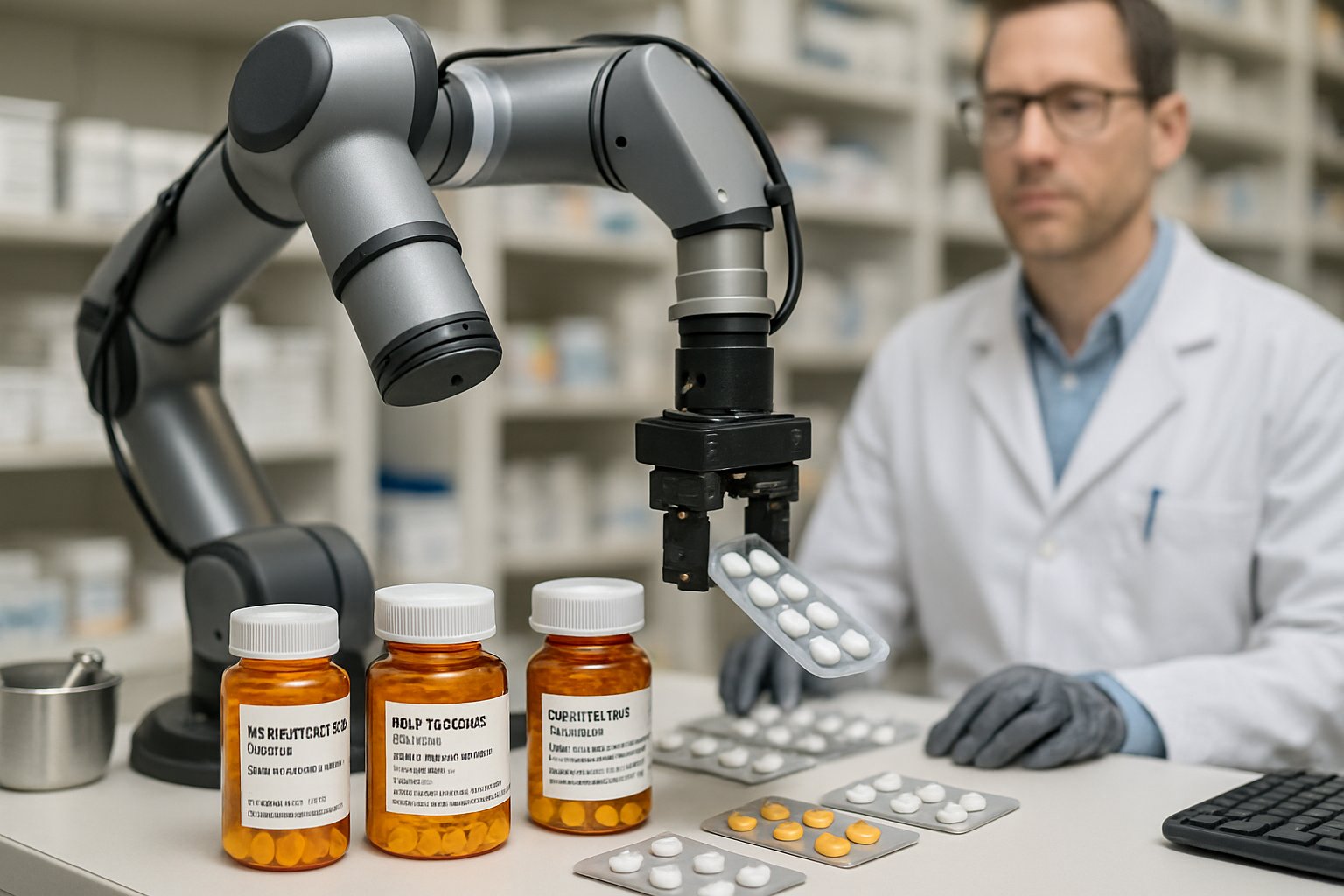
Automated pharmacies have shifted from concept to concrete infrastructure within months. Now, MedPal AI has activated a 24/7 Swaffham facility that blends AI triage with industrial robots. Consequently, analysts suggest the launch could signal a turning point for Health Systems seeking scalable dispensing models. The centre marries WhatsApp symptom intake, Vertex AI reasoning, and Robotic Dispensing hardware from Omnicell and BD. Moreover, clinician sign-off remains mandatory before any prescription leaves the warehouse. Initial numbers show 28,789 November orders and capacity for 100,000 monthly scripts, according to company filings. However, regulators have tightened Distance Selling Pharmacy rules, and patient-safety critics are watching closely. This article unpacks the technology, regulatory backdrop, commercial potential, and implications for wider Health Systems adoption. Additionally, we highlight next steps for stakeholders evaluating digital pharmacy partnerships.
AI Pharmacy Rollout Overview
MedPal AI opened its Ecotech hub on 22 October 2025, four months after acquiring a DSP licence. Subsequently, the company integrated Omnicell VBM and BD Rowa VMAX units to create an end-to-end Robotic Dispensing line. Clinical triage launched on 4 December 2025 through a Google Cloud Vertex AI pipeline embedded within WhatsApp. Therefore, patients converse with a chatbot that collects symptoms, flags red-flags, and passes structured notes to pharmacists. A licensed prescriber must approve each script before any pack drops into a courier tote.
Meanwhile, November 2025 saw 28,789 orders, representing 90% month-on-month growth according to the 4 December RNS. In contrast, the site now claims throughput exceeding 100,000 monthly prescriptions once all conveyors run at peak. Nevertheless, these figures remain company provided, and independent auditing data is pending. Consequently, investors await verifiable performance dashboards.
The staged rollout illustrates rapid execution and bold capacity ambitions. However, scale alone does not guarantee safety or profitability. These milestones demonstrate MedPal AI's aggressive timetable. Consequently, deeper scrutiny of the underlying technology is essential.
Technology Behind Fulfilment Process
At its core, the facility relies on parallel Omnicell and BD modules that load, scan, and pouch medicines. Moreover, barcoded workflows link stock levels to the cloud, reducing manual picks and miscounts. In contrast, legacy community pharmacies average 40 prescriptions per hour by hand. MedPal AI claims the upgraded 'Robopharma' robot now fills 100 scripts in under five minutes. That equates to a thirty-fold uplift, if the metric withstands audit.
Robotic Efficiency Gains Data
Vendor literature and peer studies outline quantifiable advantages:
- Omnicell trials show 50% reduction in picking errors across NHS wards.
- BD Rowa case studies cite 60% staff time savings on inventory tasks.
- Automated checks capture expired stock, improving patient safety metrics.
- Barcode logs support recall tracing within minutes, not hours.
Furthermore, these advantages align with broader Health Systems goals of safety, efficiency, and data transparency. Automation clearly accelerates dispensing while capturing granular data. However, the AI triage layer introduces separate performance questions.
Regulatory Landscape And Risks
UK regulators tightened DSP entry rules in June 2025, closing the gate to new online pharmacies. Consequently, MedPal AI's pre-existing licence provides a defensible moat but attracts heightened oversight. Moreover, the GPhC has warned about online identity checks and controlled drug diversion. In contrast, the 28 January 2026 Eli Lilly agreement permits direct purchase of Mounjaro, raising accountability stakes. Epassi gym network integration also widens access, necessitating robust counselling protocols.
Meanwhile, AI triage tools face scrutiny over diagnostic accuracy and potential over-triage. Independent reviews advise caution unless human oversight and clear audit trails exist. Therefore, MedPal AI insists every output receives pharmacist or prescriber review before release. Health Systems watchdogs will likely audit AI documentation and triage logs annually. Yet no peer-reviewed validation of the proprietary model appears publicly available. Nevertheless, the company states it follows ISO 13485 compliant processes.
Regulation presents both barriers and quality incentives. Consequently, market opportunity must be weighed against compliance costs. Meanwhile, international regulators may soon propose harmonised standards for AI pharmacy audits.
Market Opportunity And Competition
Global forecasts predict GLP-1 therapy revenues hitting billions by 2033. Subsequently, MedPal AI projects UK weight-loss prescriptions rising from £340m to £2bn within eight years. However, independent analysts vary on exact CAGR assumptions and patient uptake. Robotic Dispensing capacity positions the firm to chase that demand without expanding headcount. Epassi partnerships may funnel health-conscious consumers directly into the triage funnel.
Future GLP-1 Demand
Consequently, securing supply agreements with Eli Lilly mitigates allocation risk. In contrast, smaller pharmacies often face stock outs that erode trust. Moreover, same-day courier coverage creates differentiation in crowded online markets. Nevertheless, price sensitivity and regulatory capitation could compress margins. Therefore, diversified service lines, including private blood testing and Epassi wellness bundles, may bolster revenue.
Key competitive forces include:
- National multiples investing in warehouse automation.
- Traditional chains offering local click-and-collect.
- Direct-to-consumer telehealth brands seeking vertical integration.
Meanwhile, Health Systems commissioners continue evaluating which models best serve chronic care workloads. Market growth is undeniable yet contested. Consequently, differentiation will hinge on reliability and governance.
Impact On Health Systems
Digital dispensing hubs promise improved medication adherence through quicker delivery. Furthermore, automated images and weight checks during packing generate tamper evidence useful for clinical audits. In contrast, smaller pharmacies may struggle to finance comparable capital equipment. Health Systems leaders may reallocate in-store pharmacists toward vaccinations and advanced services.
Additionally, professionals can enhance their expertise with the AI in Healthcare™ certification. Such credentials build internal capacity to govern AI, robotics, and data pipelines. Therefore, organisational readiness becomes as critical as buying machines. Robotic Dispensing alone cannot realise value without integrated clinical governance.
Warehouse automation shifts workload patterns across the care continuum. Nevertheless, automation's energy footprint deserves attention during sustainability reviews. Consequently, stakeholders must plan workforce transformation.
Next Steps For Stakeholders
Boards should commission independent audits of dispensing speed, error rates, and patient outcomes. Moreover, AI model performance should be benchmarked against accepted triage standards. Subsequently, engaging early with the GPhC can pre-empt inspection surprises. Epassi marketing channels need consistent messaging on appropriate medicine use and refund policies. Meanwhile, strategic partnerships with courier networks will maintain promised delivery windows.
Investors may request scenario analyses based on varied GLP-1 pricing and uptake curves. Consequently, capital allocation decisions can balance growth with compliance safeguards. Health Systems planners should monitor performance data before integrating similar hubs into regional formularies. Finally, transparent reporting will build trust across the pharmacy ecosystem.
Effective governance will decide winners in digital dispensing. Therefore, the MedPal AI rollout offers valuable lessons for ambitious health innovators.
In summary, MedPal AI's blend of AI triage and Robotic Dispensing demonstrates compelling throughput for modern Health Systems. However, clinical safety validation and regulatory alignment remain unresolved priorities. Moreover, market appetite for GLP-1 therapies and wellness bundles like Epassi will test the model's resilience. Consequently, stakeholders must demand transparent metrics before scaling similar facilities. Professionals seeking to steer such programmes should pursue advanced training, including the linked AI in Healthcare certification. Ultimately, disciplined execution can turn automated pharmacies into reliable pillars of resilient Health Systems.


