

python apiuser
2 months ago
STMicro, AWS Deepen Edge Connectivity Supply Pact
Crucially, the roadmap places Edge Connectivity at the center of AWS data-center growth plans. Consequently, hyperscale capital expenditure trends intersect with European semiconductor ambitions. Analysts immediately lifted revenue forecasts and highlighted the shift away from automotive cyclicality. Meanwhile, ST issued warrants that could give AWS almost 2.7% equity if exercised. Moreover, both firms will co-engineer cloud based electronic design automation to accelerate silicon iterations. The stakes around next-generation infrastructure cannot be overstated.
Expanded AWS Partnership Details
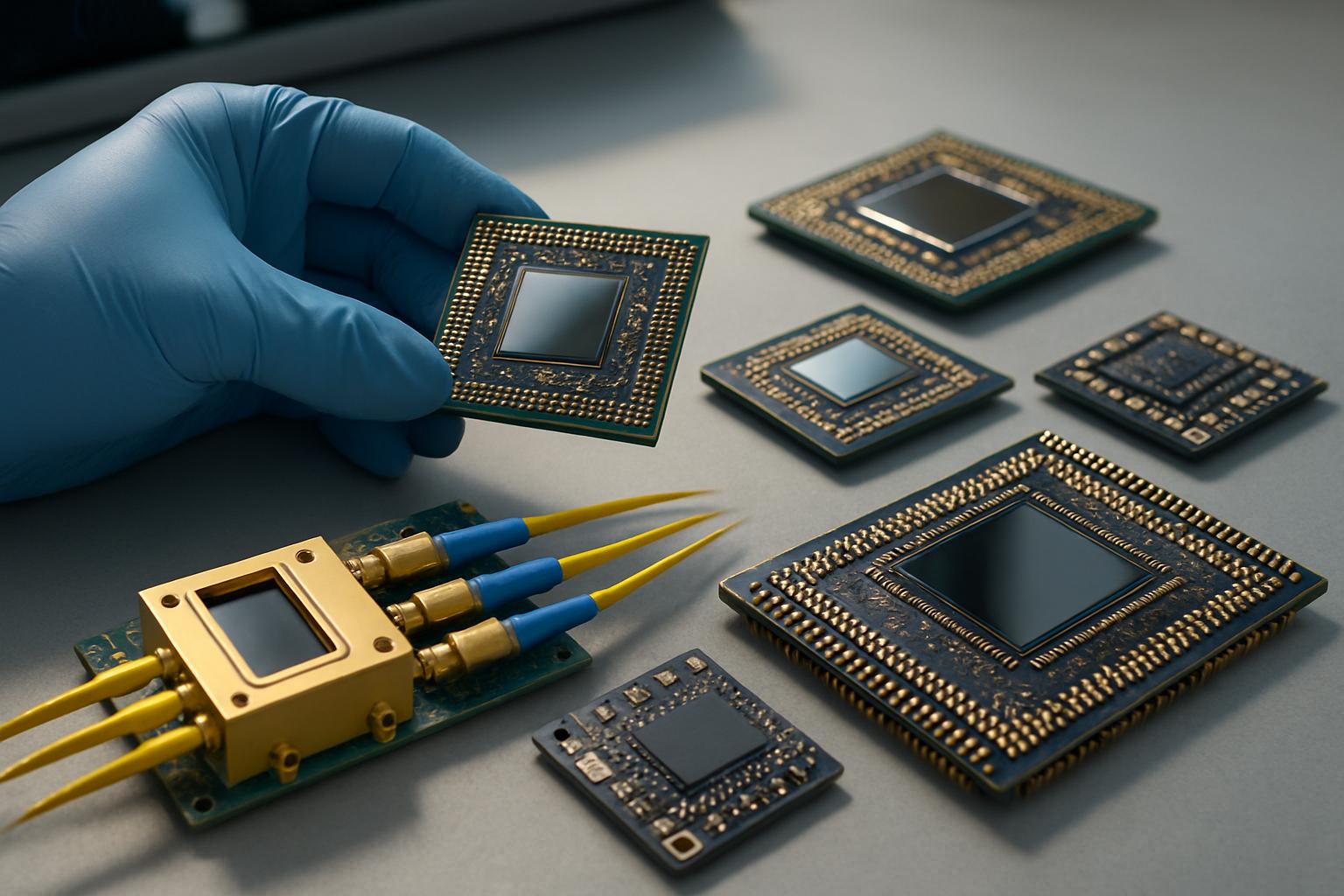
The company described the engagement as a multi-billion dollar framework without revealing a precise commitment. AWS gains guaranteed access to high-bandwidth optical transceivers, advanced microcontrollers, and energy-efficient power ICs. Edge Connectivity components form the cornerstone of the initial shipments. Meanwhile, ST secures a marquee hyperscale customer and visibility across multiple product cycles. Warrants issued to AWS cover 24.8 million shares at a $28.38 strike, vesting alongside purchase milestones.
Consequently, full exercise would translate into an approximate 2.7% stake, aligning incentives over seven years. Nevertheless, investors still lack shipment schedules or unit forecasts, keeping revenue modeling difficult. In contrast, analysts at Oddo BHF still project meaningful margin upside once volumes ramp.
The warrant structure tightens alignment while obscuring near-term revenue magnitudes. However, those unknowns set the stage for broader strategic implications discussed next.
Deal Signals Strategic Shift
Historically, ST relied heavily on automotive and industrial segments for growth. Moreover, cyclic slowdowns in those markets pressured pricing and fab utilization. The AWS accord pivots focus toward Edge Connectivity enabling data-center scale deployments. Consequently, ST gains insulation against automotive volatility and taps persistent Cloud capex.
Broker notes highlighted the shift from consumer exposure to AI infrastructure, where demand appears secular. Additionally, ST can showcase photonics and mixed-signal leadership, elevating competitive positioning against larger integrated device manufacturers. Edge Connectivity also supports distributed inference workloads moving nearer to users. Therefore, the partnership reinforces architectural trends favoring low-latency node interconnects.
ST’s portfolio realignment underscores durable hyperscale demand vectors. Furthermore, the next section explores supply drivers behind AWS’s commitment.
Hyperscaler Supply Chain Motivations
Amazon forecast nearly $200 billion in 2026 capital expenditures targeting AI and Cloud infrastructure. Subsequently, component shortages could jeopardize deployment timelines and service launches. By locking ST volumes, the cloud provider mitigates yield risk across optical and power modules. Edge Connectivity guarantees bandwidth scaling without prohibitive energy penalties.
LightCounting expects optical transceiver revenue to triple to $24 billion by 2030. Consequently, hyperscalers are courting multiple photonics suppliers, including Coherent and Broadcom. Nevertheless, ST’s European fabs provide geographic diversification against Asian supply disruptions. The provider also secures collaborative EDA optimization, reducing silicon turnaround times.
These drivers reveal why AWS pursued an equity-linked supply arrangement. In contrast, technical details explain the deal’s broad component scope.
Technical Scope And Impact
The agreement spans four primary product families:
- Silicon photonics transceiver Chips
- Mixed-signal data converters
- Resilient infrastructure microcontrollers
- High-efficiency power management Chips
Edge Connectivity underpins each category by shortening data paths and lowering latency. Moreover, cloud-based EDA workflows will tune layouts for Amazon workloads within hours, not days. Subsequently, faster iterations support aggressive build schedules across new availability zones. Chips taped-out under this flow should enter Crolles production in late 2026, subject to qualification. Additionally, integrated sensors track rack vibrations, enabling predictive maintenance. Consequently, downtime incidents can drop significantly in high-density halls.
Component diversity reflects AWS’s holistic infrastructure strategy. However, potential risks merit closer inspection next.
Risk Factors And Caveats
Revenue visibility remains opaque because ST disclosed no aggregate purchase commitment. Consequently, sell-side models carry wide error bands for 2027 deliveries. Export controls or geopolitical friction could also hamper photonics shipments. Moreover, manufacturing scale-up demands yield improvements across novel optical wafers.
Edge Connectivity solutions require tight timing margins, leaving little tolerance for variation. Nevertheless, the cloud-based EDA collaboration may accelerate debug cycles and mitigate slip risk. Another concern involves potential governance questions once Amazon holds equity. Investors will monitor voting arrangements and insider thresholds carefully. Supply chain audits will be essential for compliance with upcoming European Chips Act provisions.
Execution, regulatory, and governance issues cannot be ignored. Yet, professionals can prepare by sharpening relevant skills, as the next section describes.
Certification Upskill Opportunities Ahead
Engineers supporting Edge Connectivity need expertise in secure network design and photonics integration. Therefore, professionals can enhance expertise with the AI+ Network Security™ certification. The program covers threat modeling, zero-trust architectures, and high-performance data plane hardening. Consequently, holders can contribute to Amazon data-center rollouts and ST silicon validation.
Additionally, system architects should follow emerging photonics standards and low-power design guidelines. Edge Connectivity mastery positions teams to reduce bottlenecks across distributed inference clusters. Meanwhile, product managers can translate technical advances into differentiated cloud services. Moreover, program graduates report accelerated promotion timelines inside large cloud builders.
Upskilling ensures organizations keep pace with hyperscaler innovation. Subsequently, we return to market implications and concluding thoughts.
Final Takeaway And Outlook
STMicroelectronics and AWS have forged a partnership that extends far beyond a typical component contract. Edge Connectivity will define performance baselines for next-generation Cloud workloads and distributed inference. Moreover, warrants align corporate incentives and underscore Amazon’s appetite for differentiated silicon. Consequently, analysts expect ST revenue diversification and margin expansion as volumes mature.
Nevertheless, execution risks, export controls, and governance concerns remain salient. Organizations should monitor production milestones, photonics yields, and regulatory developments closely. Meanwhile, professionals can future-proof careers by pursuing recognized certifications and mastering low-latency network architectures. Explore the resources highlighted above and prepare to innovate at the hyperscale edge.


