

AI CERTS
2 hours ago
Rhoda AI bet highlights Vision-Language Robotics boom
This article unpacks the technology, the financing dynamics, and the implications for robotics development teams. Furthermore, it compares the startup with rival initiatives emerging from Stanford spin-outs and Big Tech giants. Readers will gain actionable insight into market momentum and remaining hurdles. Moreover, professionals exploring Vision-Language Robotics can gauge whether video-trained foundation models are deployment ready. Each claim is sourced from public filings, investor statements, or academic literature. Finally, the piece links to certifications that strengthen practical skill sets.
Funding Signals Market Confidence
The startup disclosed the massive Series A after operating quietly since late 2024. According to BusinessWire, the round alone delivered $450 million in fresh capital. Meanwhile, earlier Forbes coverage suggested stealth raises totaling about $230 million. Therefore, total funding now approaches $680 million, an unusual figure for early robotics development. Capricorn Investment Group led, with Temasek, Khosla Ventures, and John Doerr also participating. Wilson Sonsini confirmed its advisory role, underscoring the deal’s institutional weight.
Consequently, analysts cite the valuation, near $1.7 billion, as evidence of surging investor appetite. These numbers matter because hardware-rich ventures traditionally struggle to secure late-stage capital this early. However, capital intensity across Vision-Language Robotics appears to be normalizing as foundation models promise reuse. In summary, the fundraising signals confidence yet also heightens expectations for rapid milestones. However, understanding the underlying model clarifies whether those bets are justified.
FutureVision Model Architecture Details
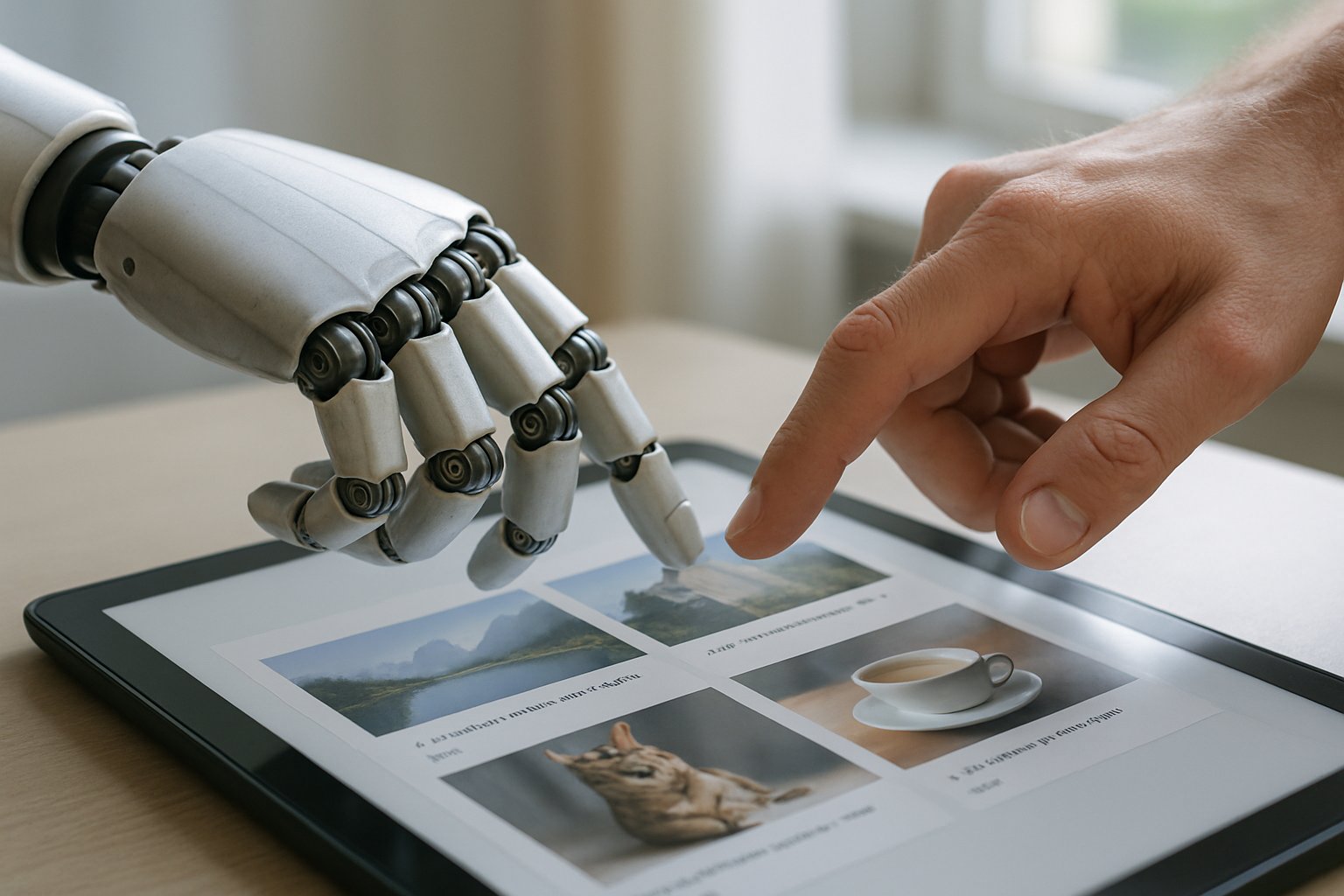
FutureVision centers on a Direct Video Action architecture that predicts future frames then issues commands. Additionally, the system pretrains on hundreds of millions of internet videos before fine-tuning on robot telemetry. The startup asserts that only ten hours of teleoperation data can adapt the model to new workflows. In contrast, legacy pipelines often demand weeks of demonstration data per task. Consequently, sample efficiency could compress deployment schedules and reduce costly onsite engineering. The company positions the technology as a Vision-Language Robotics breakthrough because video embodies temporal context absent from still images.
Moreover, the model incorporates text conditioning so operators can issue high-level instructions similar to prompting GPT-4. Gordon Wetzstein, a Stanford professor and Rhoda cofounder, claims the architecture bridges perception and control elegantly. Nevertheless, independent benchmarking remains scarce, and reproducibility questions linger. FutureVision’s promise rests on unparalleled data scale and a tight video-to-action loop. Next, investor logic reveals why such technical nuance converted into nine-figure checks.
Investor Rationale And Metrics
Investors frame their thesis around three quantitative pillars. Firstly, they expect a data flywheel where every deployment yields unique corner-case footage.
- Global industrial robot stock hit 4.28 million units in 2024, according to IFR.
- Over 540 000 new installations occurred during 2023, expanding the addressable upgrade pool.
- Rhoda’s factory demo completed cycles under two minutes, suggesting competitive throughput.
Furthermore, Sandesh Patnam from Premji Invest argues that scaled manipulation data will reinforce the company’s defensibility. Jens Wiese echoes this, stating mature perception unlocks high-variability manufacturing niches. Therefore, backers see Vision-Language Robotics as analogous to cloud computing platforms that monetize volume, not units. They anticipate recurring software licensing layered atop hardware partnerships. The numbers and narratives converge on exponential data leverage. However, competition for that leverage is fierce, as the next section details.
Competitive Landscape And Trends
Tesla, Figure, and Agility have announced humanoids powered by large multimodal models. Additionally, Nvidia unveiled a Physical AI stack, lowering integration barriers for newcomers. In contrast, Rhoda AI focuses on software, partnering with existing arm manufacturers rather than building bodies. Consequently, the firm may scale faster but remains dependent on OEM roadmaps. Meanwhile, Stanford labs continue publishing open-source policy libraries that erode proprietary advantages. Moreover, patent filings show each player racing to lock in data pipelines.
Global Market Scale Context
IFR believes annual robot installations will surpass 600 000 units by 2026. Therefore, any foundation-model vendor has a substantial hardware channel to address. Vision-Language Robotics promises cross-hardware generalization, amplifying reachable volume. Nevertheless, hardware diversity also introduces safety certification complexities region by region. Competitive dynamics suggest a land-grab for deployment data and regulatory goodwill. Yet, challenges in physical execution could slow that land-grab, as explored ahead.
Operational Challenges Remain Ahead
Robots must satisfy safety standards like ISO 10218 before factory approvals. However, adaptive policies can behave unpredictably during advanced robotics development efforts encountering novel textures or lighting. Consequently, conservative integrators demand exhaustive validation, extending sales cycles. Rhoda AI has not disclosed third-party audits or independent benchmarks.
Moreover, Series A cash must fund expensive hardware testbeds, sensor calibration, and edge compute nodes. In contrast, software startups can iterate cheaply using cloud resources. Manufacturers also worry about downtime during retrofits, limiting pilot scope. Additionally, unions may scrutinize job displacement claims, adding political risk. Therefore, execution excellence, not model size, will determine first reference wins. Challenges span safety, labor, and integration cost. Despite them, engineering teams can prepare strategically.
Implications For Robotics Teams
Engineering leads evaluating Vision-Language Robotics should audit data consent, compute budgets, and failure modes. Furthermore, early engagement with compliance bodies will streamline later certifications. Teams may pilot specific pick-and-place cells before scaling across lines. Moreover, collaboration with Stanford researchers could supply cutting-edge perception benchmarks. Professionals can deepen expertise with the AI Robotics™ certification. Consequently, certified staff can translate vendor claims into actionable acceptance tests. The company’s roadmap hints at licensing its model via APIs, so software fluency remains critical.
Additionally, procurement teams should negotiate unified support across multiple hardware SKUs. Series A valuations may appear eye-watering, yet pricing pressure will intensify as competitors ship. Vision-Language Robotics adoption will hinge on measurable ROI, not demos alone. Preparation now positions teams to demand transparent metrics and fair terms. Finally, a brief recap underscores the broader picture.
Rhoda’s $450 million debut underscores the swelling capital tide toward Vision-Language Robotics. However, technical validation, safety certification, and scalable integration still separate prototypes from profits. Consequently, robotics development leaders must demand transparent benchmarks and cross-functional training. Investors, meanwhile, will watch pilot velocity and retention before extending follow-on checks.
Nevertheless, the data flywheel thesis remains persuasive, especially when paired with vast industrial fleets. Therefore, Vision-Language Robotics could reshape manufacturing workflows within this decade if early claims materialize. Professionals should upskill now, leveraging certifications and pilot projects to stay ahead. Explore the linked learning path and be ready when robots leave the lab for the line.


