

AI CERTS
1 month ago
Prophet Tranche Tests AI Prediction Markets
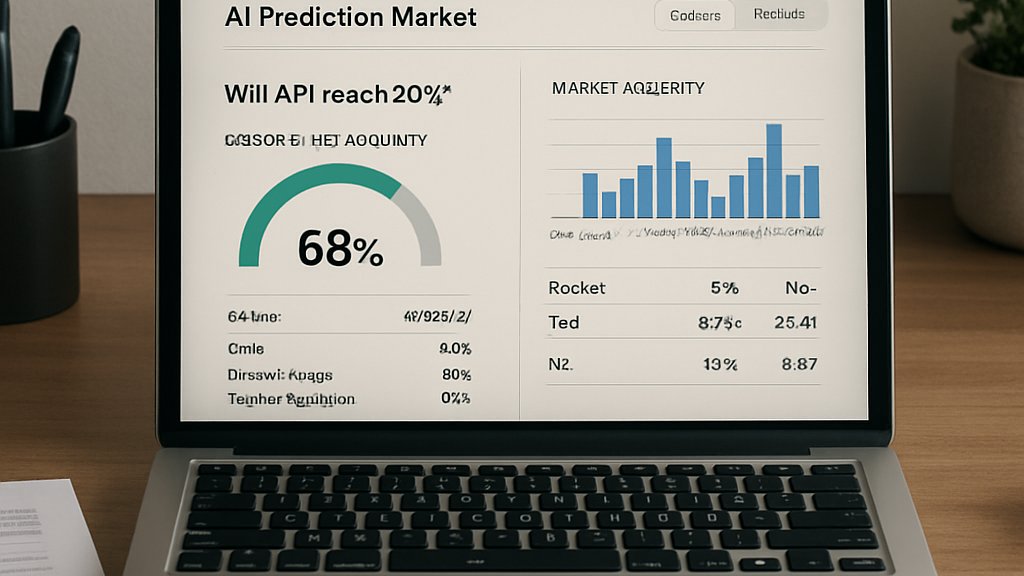
The experiment matters for AI Prediction Markets, a sector racing to combine code, capital, and crowd insight.
Furthermore, the pilot exposes pressing questions about liquidity, probability pricing, and regulatory guardrails.
Industry observers therefore watched closely to see whether an ensemble of large language models could price risk effectively.
This article unpacks mechanics, contextual data, criticisms, and next steps from Prophet’s brief yet notable test.
Meanwhile, strategic takeaways may guide builders designing the next wave of AI Prediction Markets worldwide.
AI Market Test Launch
Prophet branded the release as an engineering test, not a commercial rollout.
However, the tranche still mirrored live market conditions.
Selected traders saw fresh markets, quoted instantly by the platform’s AI counterparty.
Capital exposure remained capped at $10,000, limiting downside while preserving informative price signals.
Each contract settled automatically once real-world outcomes became verifiable through public sources.
Moreover, some markets closed within 24 hours, offering rapid feedback loops for model calibration.
Unlike traditional LMSR engines, Prophet’s system stands on a funded balance sheet.
Therefore, the AI decided whether to buy or sell, just like a human bookmaker.
Observers classify the pilot within AI Prediction Markets because pricing, matching, and settlement all run algorithmically.
Consequently, the test provides rare transparency into how such platforms may handle edge cases before scaling.
Tranche 1 showed functional plumbing under modest stress.
However, deeper technical questions linger for the ensemble pricing engine.
Those mechanics warrant closer inspection next.
Ensemble Model Mechanics Explained
Prophet aggregates probability estimates from six large language model providers.
OpenAI, Anthropic, Google, xAI, DeepSeek, and Meta each generate independent outcome likelihoods.
Additionally, the platform averages and normalizes those numbers before posting a public price.
According to the release, the ensemble reduces single-model bias and guards against hallucinated facts.
Nevertheless, dependence on external APIs introduces version drift and unpredictable outage risk.
Industry researchers debate whether ensemble aggregation improves accuracy compared with informed human speculators.
Robin Hanson, pioneer of the LMSR, argues informed traders still supply irreplaceable signal.
Therefore, the real test becomes trader profitability against the algorithm.
AI Prediction Markets will adopt whichever method delivers tight spreads and resilient resolution.
Prophet’s ensemble appears promising yet unproven at higher volumes.
Capital allocation choices illuminate that caution.
USDC Liquidity Strategy Rationale
Prophet funded the tranche with USDC rather than volatile native tokens.
Consequently, users avoided exposure to broader crypto price swings.
Stablecoin settlement also simplifies accounting and cross-border onboarding.
Moreover, regulators often treat dollar-pegged assets differently from speculative coins.
Liquidity remained thin at $10,000; yet constant quotes built trader confidence.
Many small prediction markets die because counterparties vanish during price shocks.
An AI purse, even modest, ensures someone always takes the other side.
In contrast, AMM formulas sometimes widen spreads dramatically under stress.
Future tranches will likely raise USDC allocations if early data shows controlled losses.
Meanwhile, deeper liquidity could attract institutional participants seeking scalable risk limits.
Using USDC reduced onboarding friction and hedged against volatility.
However, small bankrolls limit AI Prediction Markets research validity.
Probability generation deserves equal scrutiny.
Probability Pricing Approach Overview
This probability pricing mechanism derives directly from the ensemble’s averaged confidence scores.
Furthermore, the AI adjusts quotes after each order, updating real-time posterior odds.
That design mirrors dynamic bookmakers more than constant-function market makers.
Because positions net against the AI, liquidity does not depend on peer order flow.
Nevertheless, wide bets can exhaust the limited bankroll.
Prophet discloses no explicit loss limits beyond the bankroll itself.
Consequently, traders might exploit mispricing until capital depletes.
Probability pricing must remain auditable to maintain trust.
External regulators are watching AI Prediction Markets closely.
Regulatory Landscape Pressure Points
The U.S CFTC has flagged event contracts lacking sufficient safeguards.
Meanwhile, European gambling regulators evaluate similar offerings under national wagering rules.
Prophet currently restricts access geographically, yet enforcement details remain sparse.
Additionally, the absence of a human dispute process may alarm policymakers.
Former commissioners warn that automated systems could lock in erroneous outcomes without appeal.
Nevertheless, the company claims ensemble voting reduces resolution ambiguity.
Professionals can deepen expertise through the AI Legal Strategist™ certification for emerging compliance issues.
AI Prediction Markets will likely face classification debates over whether event contracts mimic derivatives or gambling.
Jurisdictional clarity remains elusive for automated counterparties.
Industry comparisons shed further light.
Comparative Sector Context Review
Polymarket and Kalshi process monthly volumes measured in billions.
Consequently, Prophet’s $10,000 pilot appears tiny yet methodologically interesting.
Manifold and Augur rely mainly on AMM style liquidity pools rather than funded peers.
Moreover, none of those incumbents aggregate six LLMs for price discovery.
That technical novelty positions Prophet as a laboratory for next generation AI Prediction Markets.
- Capital structure: Prophet holds USDC.
- Pricing engine: Ensemble probability pricing replaces LMSR.
- Settlement: LLM automation, no moderators.
Consequently, analysts will watch costs, spreads, and dispute rates as tranches scale.
Platform differences may accelerate horizontal learning across the sector.
Potential risks remain substantial.
Risks And Next Steps
Small bankrolls invite statistical noise, making profitability conclusions fragile.
Furthermore, ensemble models can fail synchronously if upstream providers share flawed training data.
Security researchers also flag prompt injection attacks that could tilt outcome extraction.
Nevertheless, Prophet logs every resolution decision for post-mortem review.
The company states that future tranches will introduce higher USDC ceilings and optional community audits.
Consequently, AI Prediction Markets may gain credibility through transparent loss reporting and open source code.
Risk mitigation will determine investor confidence.
However, early data from Tranche 1 offers actionable insights.
A concise wrap-up follows.
In seven concise sections, we traced Prophet’s motives, mechanics, and challenges.
The broader AI Prediction Markets ecosystem evolves daily.
Overall, the controlled tranche demonstrated that algorithmic counterparties can seed depth effectively.
Furthermore, ensemble probability pricing delivered instant, explainable numbers that traders understood.
Nevertheless, unresolved regulatory paths and absence of human disputes still cloud large scale adoption.
Stakeholders should monitor Prophet’s next funding phase and audit results.
Readers seeking compliance mastery can explore the linked AI Legal Strategist™ certification for immediate professional benefit.
Act now to stay ahead as predictive finance converges with autonomous intelligence.
Disclaimer: Some content may be AI-generated or assisted and is provided ‘as is’ for informational purposes only, without warranties of accuracy or completeness, and does not imply endorsement or affiliation.


