

AI CERTS
1 hour ago
Pakistan’s AI Push Reinvents Border Security
Industry analysts see the pilot as part of a global pivot toward data-driven Immigration control. However, civil-liberties advocates caution that algorithmic errors could disrupt journeys. This article unpacks the technology, timeline and governance questions now shaping Pakistan’s ambitious Deployment.
AI Pilot Project Overview
On 22 August 2025 the FIA demonstrated its new App to the interior minister. Subsequently, the ministry approved a pilot at Islamabad International Airport. The program aims to flag forged passports, detect traffickers and reduce queues. Furthermore, the mobile interface lets officers pre-screen travellers before departure, lowering last-minute Offloading rates. Officials say the January 2026 Deployment will cover both arrivals and departures. Meanwhile, the Pakistan Airports Authority is installing e-gates at three major hubs, complementing the App. Combined, these systems form a layered approach to Border Security and National Security.
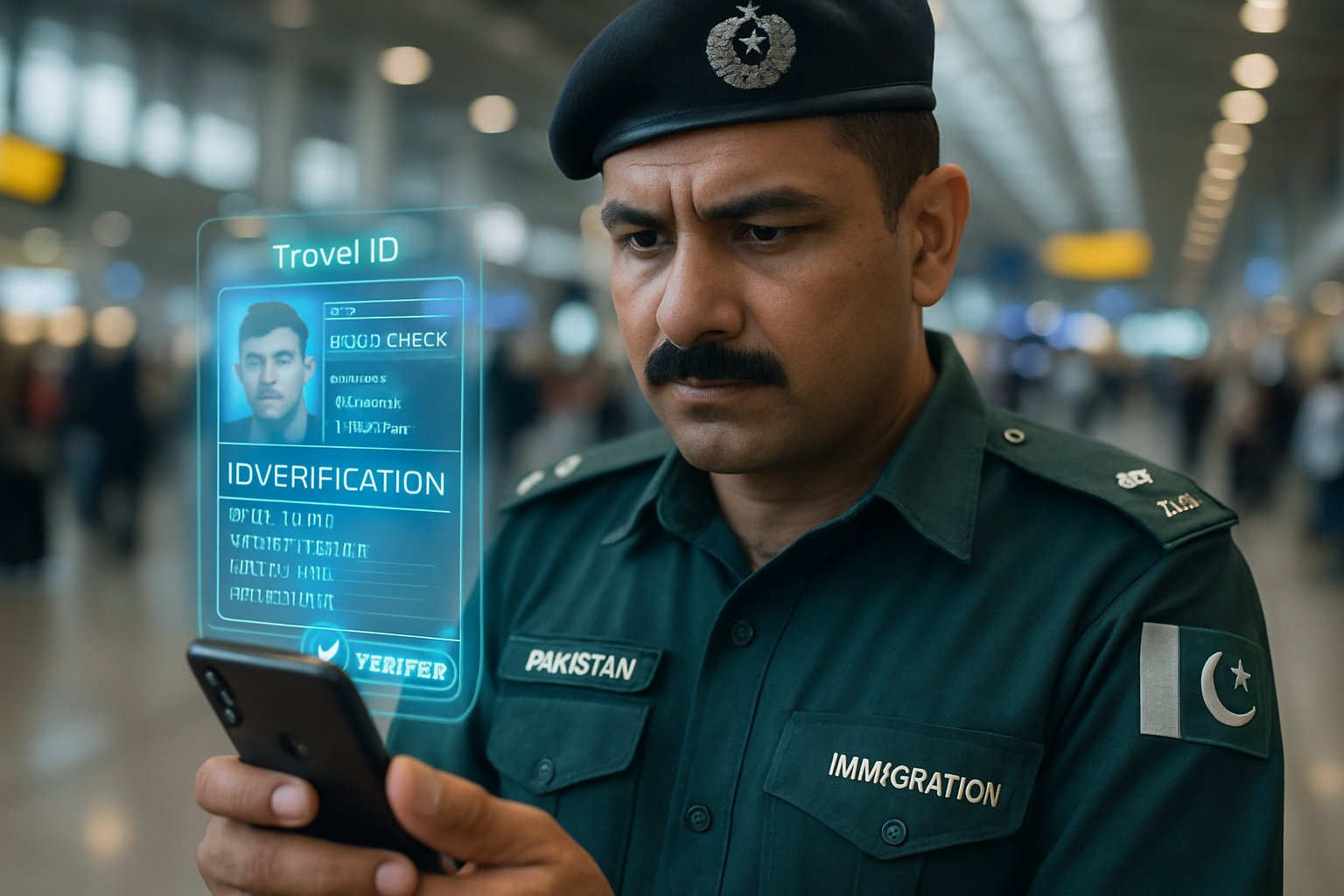
The pilot targets a country confronting 143 wanted traffickers on the FIA’s Red Book. Additionally, Pakistan processed nearly 27 million air passengers last year, creating pressure for automation. Nevertheless, past biometric trials in Karachi stalled because of training gaps. Authorities pledge new resources to avoid repeat failures.
The section outlined objectives and context. These details show why modernization feels urgent. However, understanding technical design remains essential for assessing effectiveness.
Technology Under The Hood
Public briefs reveal limited technical specifics. Nevertheless, officials describe optical character recognition for document images, face matching against passport chips and watchlists, and risk scoring algorithms. Consequently, high-risk travellers can be marked for secondary inspection or immediate Offloading. Moreover, integration with NADRA databases should enhance accuracy by cross-checking national ID records. Experts expect server-side analytics with mobile front-ends, yet vendor names remain undisclosed.
International ABC vendors, including IDEMIA and Vision-Box, supply similar solutions elsewhere. In contrast, the FIA claims in-house development to protect sensitive data. Regardless, real-time latency, network resilience and liveness detection will determine user experience. Additionally, bias mitigation steps are vital because mismatched facial recognition disproportionately affects certain demographics.
This section examined likely system components. Key uncertainties still surround data retention and algorithm testing. Consequently, governance mechanisms demand closer scrutiny in later sections.
Operational Benefits And Risks
Authorities list several expected advantages:
- Shorter queues through automated clearance
- Faster detection of forged visas
- Proactive Offloading before boarding
- Enhanced National Security intelligence sharing
- Improved international perception of Pakistani airports
Moreover, global biometric market revenue reached US$1.26 billion in 2024, underscoring commercial momentum. However, critics highlight substantial risks. False positives could delay genuine travellers. Data breaches may expose sensitive biometrics. Additionally, over-reliance on automation might erode investigative capacity.
Dawn’s editorial urged gradual rollouts paired with officer training. Similarly, international civil-rights groups demand transparency on algorithm accuracy. Therefore, clear oversight will decide whether perceived benefits outweigh downsides.
The advantages appear compelling, yet potential harms remain significant. Balanced evaluation frameworks are therefore indispensable. Next, we explore how global trends influence Pakistan’s choices.
Global Border Tech Context
Many states now deploy biometrics at airports. Dubai’s face-only e-gates promise sub-ten-second exits. Meanwhile, the United States expands face capture while publishing annual bias audits. Consequently, Border Security innovation increasingly hinges on accountable AI governance. Market researchers forecast biometric equipment sales rising to US$2.34 billion by 2032, a compound annual growth rate near 8.1%. Furthermore, Asia-Pacific hubs compete fiercely for passenger loyalty, making speedy Immigration clearance a commercial necessity.
Pakistan’s plan aligns with these movements, yet resource limits differ from wealthier peers. Nevertheless, collaborative procurement and international standards can bridge gaps. Additionally, success stories abroad provide blueprints for robust oversight.
This section positioned Pakistan within global dynamics. Similar patterns reveal both opportunities and cautions. We now turn to legal frameworks needed to safeguard rights.
Governance And Legal Gap
Pakistan lacks a dedicated data-protection statute covering biometric usage. Therefore, questions arise about consent, appeal processes and external audits. Moreover, reporting does not clarify retention periods for facial templates or passport images. Consequently, privacy advocates urge parliamentary review before full Deployment. Internationally, best practice includes impact assessments, redress mechanisms and independent accuracy tests. Meanwhile, the Interior Ministry promises “zero tolerance” for human smuggling, yet provides sparse methodological detail.
Legal clarity will affect stakeholder trust and foreign airline cooperation. Additionally, transparent metrics—false-match rates, processing times, Offloading frequency—should be published quarterly. Such disclosure could deter mission creep and reinforce National Security without compromising liberties.
Governance gaps weaken otherwise promising systems. Robust legislation will therefore anchor sustainable progress. The next section outlines timelines and expansion milestones.
Future Rollout Roadmap Plans
The January 2026 pilot will last six months at Islamabad. Subsequently, evaluations will drive scale-up to Lahore and Karachi by late 2027, aligning with PAA e-gate installations. Furthermore, the FIA intends to integrate airline passenger name records, enhancing pre-departure risk scoring and potential Offloading. Budget allocations cover staff training, infrastructure upgrades and ongoing algorithm tuning. Additionally, tender documents for maintenance contracts are expected on the PPRA portal within months.
Officials set performance goals: 30% faster clearance and 50% reduction in document fraud incidents. Moreover, the ministry will convene quarterly review boards featuring civil-society observers. However, milestones could slip if procurement faces delays or security audits reveal vulnerabilities.
This roadmap clarifies immediate steps and future ambitions. Achieving targets will require skilled personnel, a topic explored next.
Skills For Key Stakeholders
Border officers now need data literacy, facial analytics understanding and incident-response skills. Consequently, continuous learning programs are planned. Professionals can enhance their expertise with the AI Learning & Development™ certification. Moreover, airport IT teams must master secure API design and model-drift monitoring. Airlines will also train staff on compliance workflows, especially regarding pre-flight Offloading.
The private sector can supply expertise in algorithm testing, ethical reviews and cyber-security. Additionally, academia could partner on bias audits, offering impartial assessments. Therefore, multi-disciplinary collaboration will underpin resilient Border Security operations.
Skills development bridges policy and practice. Equipping staff ensures technology delivers promised gains. We conclude by reflecting on strategic priorities.
Pakistan’s AI initiative illustrates a regional push toward smarter frontiers. Furthermore, the program merges convenience with National Security aims. Nevertheless, rigorous governance, transparent metrics and skilled personnel will decide long-term success. Consequently, stakeholders should monitor pilot outcomes, engage in policy dialogues and pursue relevant certifications.


