

AI CERTS
2 days ago
Orbital AI Propels MHI’s In-Orbit Ship Surveillance
Onboard Detection Milestone Achieved
The May 11, 2026 press release confirmed AIRIS identified vessels from 540 km above Earth. Meanwhile, the SOISOC4 microprocessor handled neural inference under harsh radiation. MHI reported seamless ground retraining followed by remote model updates. Furthermore, Rocket Lab’s Electron placed the Satellite safely into sun-synchronous Orbit on December 14, 2025. These dates mark a clear engineering triumph for MHI.
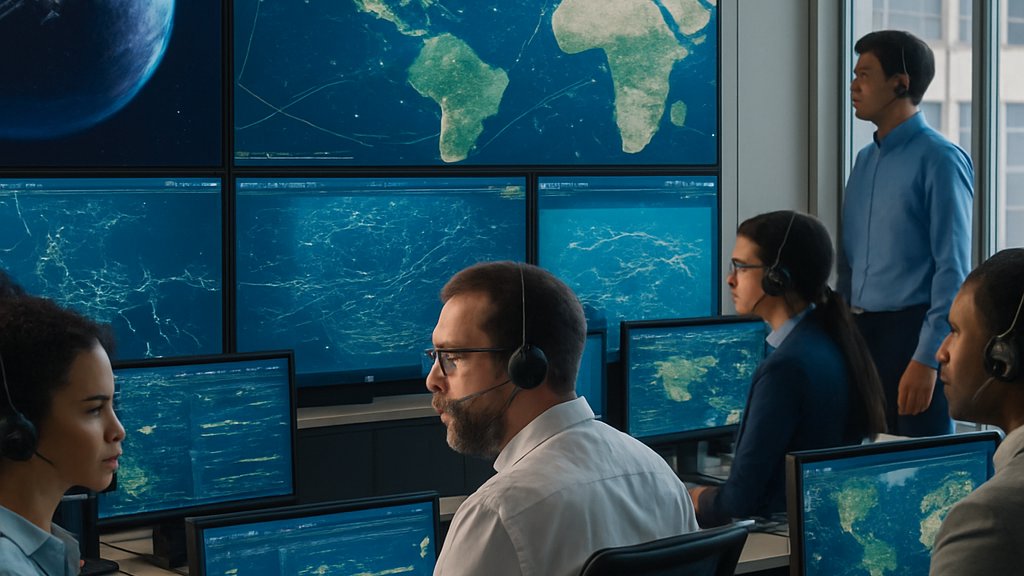
The demonstration validates running Orbital AI directly beside the sensor. Consequently, analysts see reduced latency between image capture and actionable intelligence. Nevertheless, quantitative performance metrics remain undisclosed.
These achievements set a benchmark. However, understanding the underlying technology reveals broader implications.
How AIRIS Technology Works
AIRIS merges an optical camera from Tokyo University of Science with a radiation-tolerant processor. The unit executes convolutional networks, performing real-time Detection aboard the Satellite. Consequently, only cropped images containing ships travel to ground stations. That strategy minimizes downlink costs and eases analyst workload.
MHI designed a continuous improvement loop. Models retrain with fresh labeled data on Earth. Subsequently, updated weights upload to the Satellite, sustaining accuracy as vessel behavior evolves. Such agility counters model drift and supports enduring Orbital AI performance.
Furthermore, SOISOC4’s silicon-on-insulator design delivers power efficiency under radiation. Therefore, the processor represents a domestic alternative to foreign space-grade chips, advancing Japan’s supply security.
This architecture delivers three immediate benefits. Yet, market forces shape its ultimate impact.
Key Maritime Market Statistics
- Satellite ocean surveillance value reached USD 505.7 million in 2025.
- Illegal fishing costs range between USD 10–23.5 billion annually.
- Global dark fleet monitoring relies on multiple sensor modalities.
Numbers reveal commercial urgency. In contrast, policy frameworks still evolve.
Market Policy Context Overview
Governments demand persistent maritime awareness. However, single sensors rarely cover clouds, night, and vast oceans. Orbital AI therefore joins SAR imagery, RF geolocation, and AIS analytics inside fusion platforms. NGOs like Global Fishing Watch blend these streams to expose hidden fleets. Moreover, Atlantic Council analysts link improved Detection to sanctions enforcement against shadow tankers.
Commercial interest rises accordingly. Grand View Research projects steady growth through the early 2030s. Nevertheless, data governance debates persist around surveillance scope and sovereignty. Stakeholders must balance security and privacy while deploying new constellations.
These dynamics create opportunity for agile suppliers. Consequently, MHI’s early demonstration positions the firm for strategic collaboration.
Opportunities And Current Limits
Onboard Detection cuts data volumes by transmitting only ship crops. Moreover, faster alerts help maritime patrols interdict illegal activity. The retraining cycle further improves resilience against evolving evasion tactics. Additionally, the same framework can target aircraft, vehicles, or wildfire smoke, broadening revenue channels.
Nevertheless, optical sensors struggle under clouds or at night. Therefore, AIRIS must integrate with SAR or RF systems for global reliability. Performance numbers, coverage cadence, and long-term hardware endurance also remain unpublished. Without transparency, customers may hesitate.
These constraints underline integration needs. However, comparing sensor landscapes clarifies complementary roles.
Satellite Sensor Landscape Compared
Synthetic Aperture Radar excels in any weather, day or night. Consequently, firms like ICEYE and Capella supply persistent datasets. RF satellites from Unseenlabs locate emitters even when AIS is silent. Meanwhile, optical platforms such as Planet deliver sub-meter imagery for visual confirmation.
Orbital AI running on AIRIS adds near-real-time analytics to optical sensors. In contrast, most legacy constellations process data only after downlink. Therefore, MHI’s solution reduces bandwidth costs and speeds detection loops. However, fusion of SAR, RF, and optical outputs still offers the strongest coverage.
Understanding these trade-offs guides procurement. Subsequently, organizations evaluate readiness for operational adoption.
Next Steps For Adoption
MHI now seeks partners for extended trials and potential commercial rollout. Consequently, technical stakeholders request disclosure of precision, recall, latency, and power budgets. Publishing those figures would build confidence.
Professionals can enhance their expertise with the AI + Robotics™ certification. The program deepens knowledge of edge inference, space systems, and ethical deployment, directly aligning with Orbital AI initiatives.
Furthermore, collaboration with JAXA could scale future constellations carrying evolved AIRIS payloads. Meanwhile, regulatory clarity around surveillance data sharing will shape market access.
These actions determine speed to revenue. Consequently, clear planning becomes essential.
The preceding sections chart technology, market context, and adoption pathways. Nevertheless, stakeholders still need an actionable summary.
Conclusion
MHI’s AIRIS proves that Orbital AI can detect ships in space, reduce bandwidth, and support iterative retraining. Moreover, complementary SAR and RF sensors will enhance coverage. However, transparent metrics and governance frameworks remain crucial for broad trust. Consequently, early movers should study integration strategies now.
Ready to lead the charge? Explore the linked certification and position your team at the forefront of Orbital AI transformation.
Disclaimer: Some content may be AI-generated or assisted and is provided ‘as is’ for informational purposes only, without warranties of accuracy or completeness, and does not imply endorsement or affiliation.


