

AI CERTs
4 months ago
NTT DATA leads AI-ready datacenter services boom
Generative AI workloads are reshaping global infrastructure strategies. Consequently, enterprises face unprecedented pressure to secure dense, power-hungry compute capacity. Against this backdrop, AI-ready datacenter services have become a board-level priority.
However, supply remains tight, and operators are racing to expand footprints. NTT DATA’s recent moves illustrate both the opportunity and the capital intensity of the race. Moreover, its recognition in the IDC MarketScape report underlines independent validation.
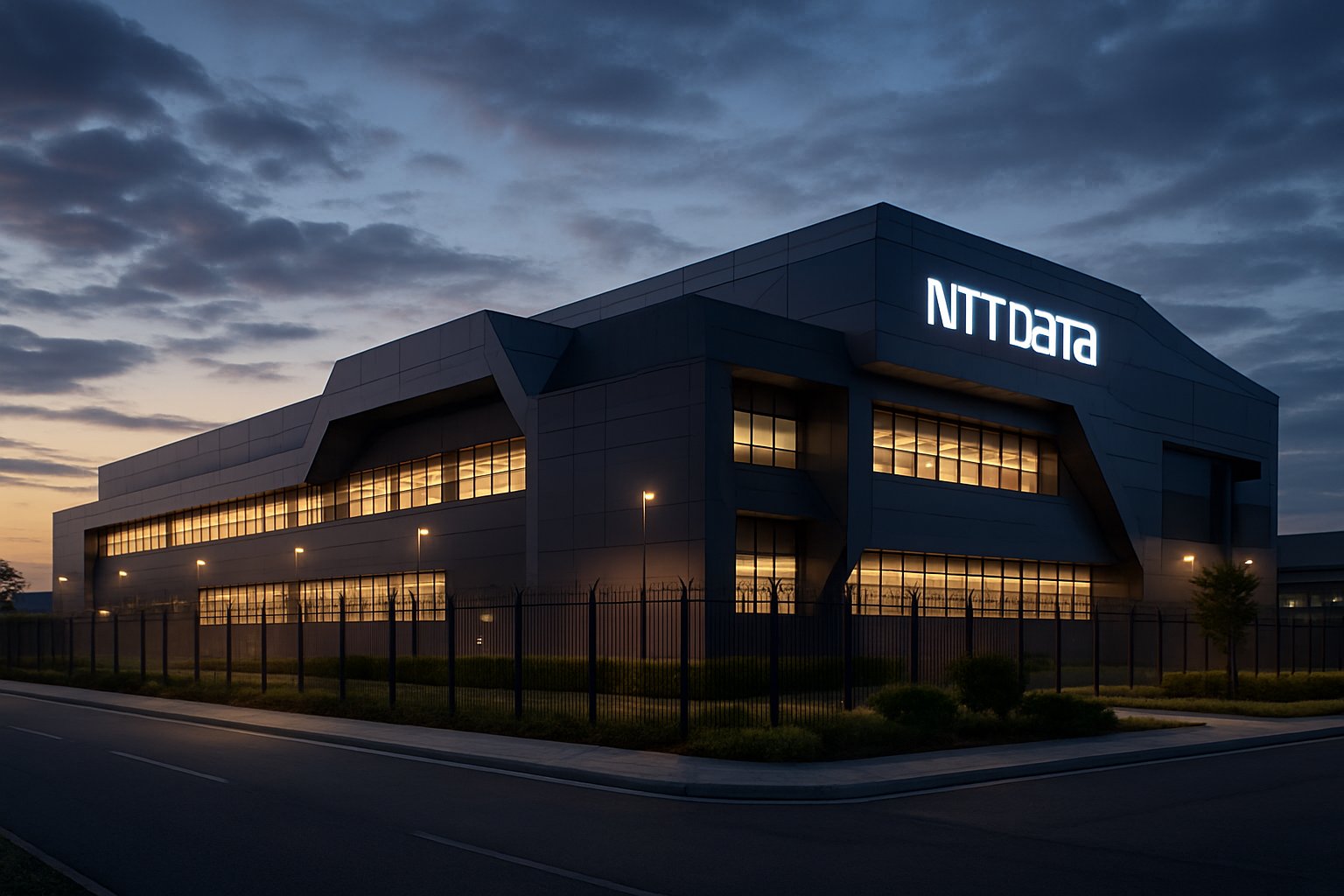
This article unpacks the demand drivers, competitive landscape, technical differentiators, and associated risks. It provides actionable insights for technology leaders planning enterprise AI hosting rollouts. Finally, we highlight certification paths that can boost practitioner credibility in this dynamic domain. Readers will leave equipped to evaluate providers and anticipate market shifts.
Surging AI Infrastructure Demand
Global server revenue hit $112.4 billion in Q3 2025, rising 61 percent year over year, says IDC. Furthermore, Bank of America recorded a 30 percent jump in United States data-center construction spending. The surge links directly to high-density GPU racks required for training and inference workloads. Therefore, demand for AI-ready datacenter services continues to outpace traditional colocation growth.
Two forces drive the spike. First, hyperscalers scale cloud platforms to meet subscription growth. Second, enterprises repatriate sensitive datasets into hybrid environments for compliant, low-latency processing. Consequently, providers must deliver power densities above 60 kW per rack and advanced cooling.
Key market metrics underline the urgency:
- IDC projects accelerated server categories dominating 2026 revenue share.
- Gartner reports public IaaS at $171.8 billion, up 22.5 percent in 2024.
- NTT DATA added 370 MW IT capacity within twelve months.
- Hyperscale contracts exceed 130 MW across four U.S. campuses.
These statistics confirm a structural shift toward AI-centric facilities. Meanwhile, enterprises must select partners that scale with predictable economics. Against that backdrop, NTT DATA’s strategic positioning merits close examination. Enterprises competing for AI-ready datacenter services capacity now negotiate multi-year, multi-megawatt deals.
NTT DATA Market Leadership
NTT DATA claims a $30 billion revenue base and service to 75 percent of Fortune Global 100. Moreover, the January 2026 IDC MarketScape named the firm a Leader in worldwide colocation. Research VP Courtney Munroe highlighted cooling innovations and a vast global footprint. Thus, many analysts view NTT as a credible supplier of AI-ready datacenter services at scale.
Capital expenditure plans reinforce that perception. The company will invest more than $10 billion through 2027 to expand AI-ready campuses. Additionally, December 2025 announcements revealed 130 MW hyperscale agreements across Chicago, Dallas, Phoenix, and Virginia. Subsequently, capacity additions exceeded 370 MW over the previous year.
NTT DATA’s leadership rests on three pillars:
- Integrated consulting, migration, and managed services accelerate enterprise AI hosting adoption.
- Global data centers provide proximity for latency-sensitive workloads.
- Partner ecosystems with Microsoft, Google, Cisco, and NVIDIA deliver turnkey stacks.
Collectively, these pillars position NTT for outsized AI infrastructure share. Nevertheless, rivals pursue similar strategies, creating an intensely competitive landscape. Understanding that rivalry helps buyers benchmark offerings. The company's bundled AI-ready datacenter services portfolio resonates with global system integrators.
Competitive Provider Landscape Overview
Equinix, Digital Realty, and Iron Mountain also chase the same GPU-hungry clientele. In contrast, hyperscalers like AWS and Google build proprietary megacampuses yet still lease colocation space. Consequently, selection criteria center on location, network fabric, and sustainability commitments. IDC MarketScape evaluations compare these attributes across leading vendors.
Equinix recently claimed Leader status in the same assessment, signaling market parity in many regions. However, Equinix lacks NTT’s managed service depth, according to several analysts. Digital Realty counters with interconnection density and its Fabric platform. Therefore, enterprises must align provider strengths with specific workload and compliance needs.
Comparison highlights include:
- NTT: cooling innovation, integrated services.
- Equinix: network reach, software port fabric.
- Digital Realty: carrier diversity, renewable energy procurement.
The market remains fluid as operators pour billions into new capacity. Meanwhile, technical differentiators help filter marketing claims from operational realities. Those differentiators warrant deeper exploration. Rivals are rapidly marketing AI-ready datacenter services but still trail NTT in integrated scope.
Technical Differentiators In Depth
High rack power densities define modern AI-ready datacenter services architectures. Moreover, liquid cooling adoption rises because air cooling alone cannot handle 70 kW racks. NTT pioneered rear-door heat exchangers and chilled-water distribution for such loads. Consequently, enterprises achieve better power usage effectiveness and lower carbon footprints.
Connectivity also matters. Therefore, NTT integrates software-defined networking to provision terabit links within minutes. Cisco’s AI-powered SDI services, launched June 2025, underpin that capability. Furthermore, the Microsoft Cloud business unit offers secure Azure landing zones for enterprise AI hosting workloads.
Core technical features include:
- GPU cluster pods with NVIDIA and HPE reference designs.
- Latency-optimized fiber routes among campus regions.
- Automated provisioning APIs compatible with Terraform and Ansible.
Such features convert capital assets into agile, developer-friendly platforms. Nevertheless, they introduce operational and sustainability risks requiring mitigation. Those innovations underline why AI-ready datacenter services must integrate facilities and software orchestration. Risk assessment therefore becomes essential.
Risks And Mitigation Strategies
Power availability tops the list of concerns. Bank of America economists warn that grid strain is mounting in key markets. Consequently, operators negotiate long-term renewable contracts and onsite generation. NTT promotes modular substations and microgrid pilots to safeguard uptime.
Supply chain volatility presents another hurdle. In contrast, NTT’s scale grants preferential access to GPUs and switch silicon. However, lead times can still exceed nine months during demand spikes. Therefore, enterprises should secure capacity reservations early within contract cycles.
Skills gaps also impede project success. Organizations often lack staff trained on multi-vendor AI fabrics. Professionals can boost expertise through the AI Project Manager™ certification. Moreover, NTT offers managed operations that offload day-to-day monitoring.
Addressing power, supply, and talent risks de-risks large capital commitments. Subsequently, enterprises gain predictable performance and cost trajectories. Key strategic takeaways synthesize these insights.
Strategic Insights For Enterprises
Selecting AI-ready datacenter services demands holistic evaluation beyond basic space and power. Therefore, leaders should align internal AI roadmaps with provider capacity roadmaps. Moreover, comparing IDC MarketScape positions offers an independent quality check. Consequently, contracting strategies can include tiered deployment phases tied to milestone achievements.
Recommended evaluation steps:
- Create a GPU demand forecast for training and inference.
- Map forecast to campus locations and latency requirements.
- Assess sustainability metrics, including PUE and renewable sourcing.
- Integrate managed services for enterprise AI hosting if skills gaps persist.
- Negotiate escalation clauses for future AI-ready datacenter services expansions.
These actions create a structured path toward sustainable AI operations. Meanwhile, market vigilance keeps options open as new capacities emerge.
Enterprises now stand at a pivotal infrastructure crossroads. AI-ready datacenter services offer the horsepower required for transformative analytics and generative models. However, careful provider selection is vital to balance cost, risk, and sustainability objectives. NTT DATA’s leadership, capital plan, and ecosystem depth position it as a compelling candidate. Nevertheless, ongoing monitoring of IDC MarketScape updates and competitor roadmaps remains prudent. Professionals should strengthen internal capabilities and pursue certifications to steer complex deployments confidently. Consequently, adding the linked AI Project Manager credential can accelerate governance and delivery success. Take the next step today and evaluate your roadmap against fast-evolving enterprise AI hosting realities.
Disclaimer: Some content may be AI-generated or assisted and is provided ‘as is’ for informational purposes only, without warranties of accuracy or completeness, and does not imply endorsement or affiliation.


