

AI CERTS
51 minutes ago
Fast16: A New Chapter in Industrial Cyberwar
In contrast to data-stealing malware, fast16 alters math itself, corrupting results while remaining silent. Meanwhile, researchers compare its subtlety to a phantom predecessor of Stuxnet. Nevertheless, origin clues place its creation in 2005, years before that better-known worm shook Iran’s enrichment halls. Therefore, understanding fast16 matters for any organization running complex models that shape physical designs. Today’s article dissects the tool’s architecture, possible operators, and the lessons it offers defenders.
Origins Of Fast16
Fast16 surfaced publicly only in 2026, yet its binaries betray a far older lineage. Furthermore, compile timestamps show July and August 2005, aligning with Windows XP deployment cycles. Such dating suggests development before the term Industrial Cyberwar filled conference agendas.
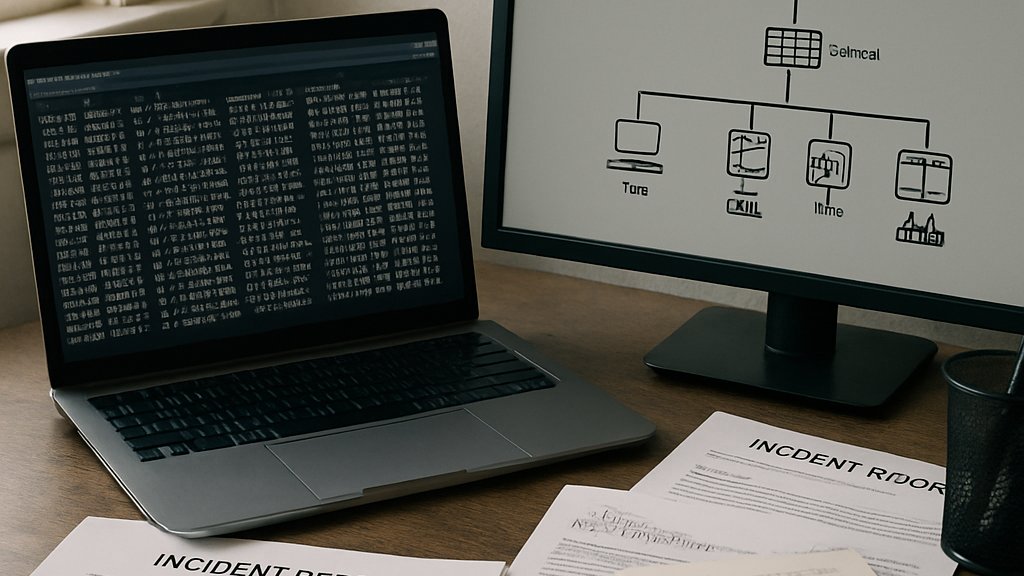
Additional breadcrumbs appear in the Shadow Brokers “Territorial Dispute” dump. Consequently, investigators spotted the string “fast16” alongside other alleged NSA driver names. Nevertheless, attribution remains circumstantial because leaked lists lack verifiable operational context.
Vitaly Kamluk and Juan Andrés Guerrero-Saade call fast16 “the first operation of its kind.” Moreover, Thomas Rid argues it rewrites the history of offensive cyber-sabotage. He says the timeline moves at least five years earlier than Stuxnet. The malware therefore shows modular craftsmanship.
Fast16’s 2005 fingerprints anchor it within early offensive tooling. However, many questions about authorship persist, leading us to examine its chosen victims.
Targeted Simulation Software
The driver fast16.sys inspects every executable loaded by Windows. Subsequently, it matches code against 101 byte-level patterns. When a match appears, the driver silently patches floating-point routines, introducing errors beyond the sixth decimal place.
SentinelOne linked three applications to those patterns: LS-DYNA 970, PKPM, and MOHID. Consequently, experts note their roles in explosion dynamics, structural design, and hydrodynamic analysis respectively. Each suite influences critical nuclear engineering choices.
Open reports connect LS-DYNA with Iran’s past weaponization studies. In contrast, PKPM supports large Chinese construction firms, while MOHID drives coastal energy planning in Europe. Therefore, the rule set seems curated for diverse geopolitical theaters.
Fast16 hunts niche but influential modeling tools. Moreover, its focus underlines how simulation integrity shapes Industrial Cyberwar realities and energy resilience. Next, we dissect the sabotage mechanics themselves.
Sabotage Mechanisms Unveiled
Unlike typical malware that steals data, fast16 tampers with computation. Additionally, the kernel driver intercepts disk reads, then overwrites opcode sequences in memory. Consequently, engineers receive plausible yet flawed outputs.
The sabotage centers on the floating-point unit. Small offsets accumulate over thousands of iterations. Therefore, blast wave pressures or stress tolerances drift until designs fail prematurely.
Meanwhile, the Lua-based carrier svcmgmt.exe embeds wormlets that propagate through outdated service control paths. Consequently, every connected workstation produces the identical corrupted model, masking deviations during peer review.
Costin Raiu describes this method as “long-term, very subtle.” Nevertheless, the precision shows an Industrial Cyberwar mindset prioritizing stealth over spectacle. Stuxnet later used similar philosophy but targeted centrifuge controllers instead of equations.
Fast16 weaponizes math, not machines. Consequently, its elegance exemplifies next-generation Industrial Cyberwar sabotage strategies. Attribution debates now enter center stage.
Attribution Still Debated
Research headlines quickly pointed at Western intelligence because of the Shadow Brokers overlap. However, SentinelOne carefully states the evidence is suggestive, not conclusive. Meanwhile, Antiy Labs warns of possible information operations shaping perception.
Links to Iran emerge through LS-DYNA’s previous enrichment modeling use. Nevertheless, no forensic record proves deployment inside Iranian facilities. Similarly, nothing ties the code definitively to any single government.
Thomas Rid reminds analysts that Industrial Cyberwar attribution demands technical, political, and temporal correlation. Therefore, open-source breadcrumbs alone cannot settle the argument.
Attribution remains an informed guessing game today. However, risk calculus cannot wait for certainty. Attention shifts toward sectors most exposed.
Risk To Critical Energy
Energy planners depend on hydrodynamic, structural, and blast simulations to site reactors and pipelines. Consequently, numerical drift could translate into catastrophic overpressure or fatigue failures. Nuclear safety margins, already razor thin, would narrow further.
Moreover, many energy labs still run legacy Windows images, easing driver installation. In contrast, modern EDR tools rarely monitor floating-point behavior, leaving blind spots.
The scenario embodies Industrial Cyberwar objectives: undermine confidence in strategic infrastructure without triggering immediate alarms. Stuxnet famously destroyed centrifuges; fast16 might instead seed design flaws that emerge years later.
The economic stakes are stark. A delayed collapse of a containment wall could outstrip any ransomware payout, while accountability remains murky.
Energy systems carry hidden algorithmic dependencies within Industrial Cyberwar theaters. Therefore, defenders must validate computational integrity, not just endpoint hygiene. The next section outlines concrete defenses.
Defensive Steps Forward
Organizations should baseline simulation outputs across diverse hardware to detect divergence. Additionally, binary integrity checksums before execution can expose in-memory patching.
Furthermore, kernel auditing tools should flag unsigned drivers like fast16.sys. Meanwhile, sandbox replay of engineering workloads may reveal gradual numerical skew.
Professionals can enhance their expertise with the AI Writer™ certification, which covers secure software supply chains. Consequently, trained staff recognize subtle sabotage patterns sooner.
Below is a concise action checklist drawn from SentinelOne guidance and industry standards:
- Capture malware hashes and driver names weekly.
- Audit legacy Windows machines for unknown boot drivers.
- Compare historical simulation datasets for unexplained drift.
- Engage incident response partners for kernel forensics.
- Adopt code signing enforcement across research clusters.
These measures fortify institutions against current threats and future Industrial Cyberwar campaigns aiming at mathematical trust. Moreover, they build culture around reproducible research.
Proactive validation and education create layered resilience. Nevertheless, constant vigilance remains necessary. We now conclude with key reflections.
Conclusion And Future Outlook
Fast16’s rediscovery expands the documented timeline of Industrial Cyberwar activity. Moreover, it exposes how silent computational drift can undermine nuclear and energy safety. Consequently, defenders must merge traditional malware analysis with quantitative verification. Nevertheless, attribution debates should not delay tactical mitigation. Therefore, applying the outlined controls, pursuing certifications, and fostering cross-disciplinary reviews will protect critical models before adversaries rewrite their equations.
Disclaimer: Some content may be AI-generated or assisted and is provided ‘as is’ for informational purposes only, without warranties of accuracy or completeness, and does not imply endorsement or affiliation.


