

AI CERTS
2 months ago
Ncontracts Nquiry Debuts AI Compliance Answer Engine
Market Context Accelerates Adoption
Financial institutions increasingly seek AI to decode sprawling rulebooks. However, regulators heighten expectations for transparency, validation, and vendor oversight. MarketsandMarkets projects double-digit growth for AI in finance through 2030. Meanwhile, RegTech segments focused on compliance automation outpace broader fintech averages. OCC Bulletin 2026-13 underscores model governance duties when institutions deploy generative models. GAO similarly warns about workforce expertise gaps and third-party risk management.
Therefore, banks crave tools marrying speed with defensible audit trails. Vendor domain depth also matters because generic chatbots lack specialized regulatory intelligence. Ncontracts leverages seventeen years of proprietary data, positioning its suite as sector-specific. Consequently, analysts view the installed base of 5,000 customers as fertile ground for rapid upgrades. Ncontracts Nquiry enters this climate offering cited answers plus optional human verification. These market signals explain strong early interest. Consequently, the next section examines specific product capabilities.
Key Features Differentiate Nquiry
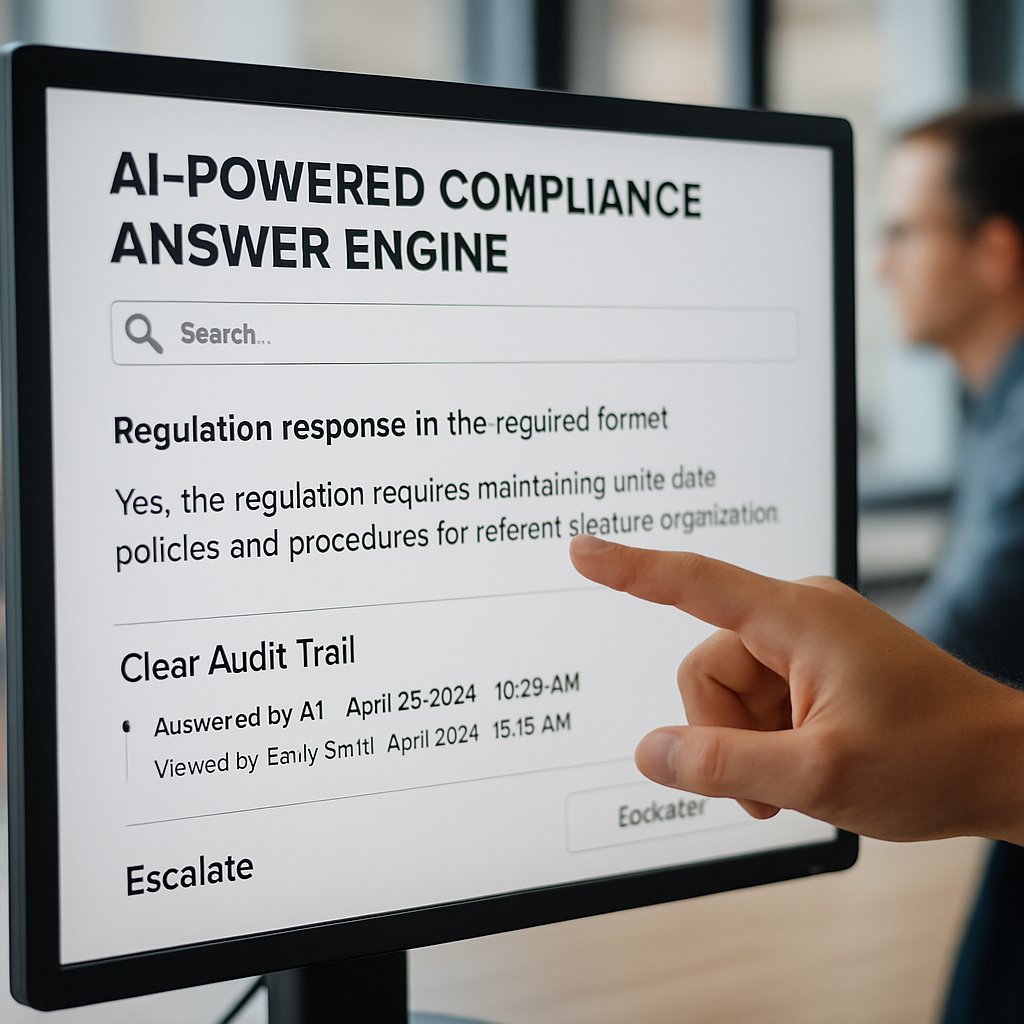
Ncontracts positions the tool within its broader Ntelligence family. However, several attributes set the release apart from prior offerings. Natural-language processing converts plain questions into structured regulatory searches. Subsequently, the engine returns summarized obligations with pinpoint citations to statutes, guidance, or agency letters. Each answer links back to source materials, supporting auditor reviews and board reporting. Moreover, every interaction is stored, generating an immutable evidence trail aligned with examiner expectations. Compliance teams can escalate uncertain results through the "Compliance Concierge" pathway.
Credentialed attorneys or former regulators then confirm accuracy within defined service-level agreements. Therefore, users gain balanced speed and assurance. The platform also integrates with existing Ncontracts dashboards, enabling cross-module intelligence analytics. Ncontracts Nquiry automatically updates content as new regulations publish, reducing manual monitoring labor. These capabilities illustrate why reviewers call the product "auditable AI for banking". Citations, traceability, and expert backup underpin the differentiators. Next, we address associated governance and model risk.
Governance And Model Risk
Model oversight remains paramount for supervisors assessing AI deployments. OCC guidance demands independent validation, ongoing monitoring, and transparent vendor documentation. Therefore, adopters must evaluate how Ncontracts Nquiry meets these checkpoints. In contrast, generic language models often obscure training data provenance and testing protocols. Ncontracts releases whitepapers describing datasets, alignment tuning, and hallucination guardrails. However, banks still bear accountability for end-to-end governance. Institutions should map workflow outputs into existing model inventories.
Subsequently, validation staff must sample responses, verify citations, and document findings. Vendor audit rights outlined in contracts support examiner access to logs. Moreover, many firms now require third-party penetration testing and bias assessments before production use. Community banking executives also stress proportional approaches, balancing resource constraints and compliance rigor. Strong governance ultimately converts innovation risk into competitive strength. Effective controls ensure supervisors view adoption as responsible. Consequently, real customer experiences shed additional light.
Early Customer Experiences Shared
Since launch, pilot customers span credit unions, community banks, and regional lenders. One Midwest community bank reduced weekly regulation research hours by 40 percent. Meanwhile, a mortgage servicer used the platform to draft examiner responses within minutes. Compliance officers highlight the intuitive chat interface and clear citations. However, some users still escalate complex scenarios to human experts. Ncontracts reports that ten percent of sessions currently trigger the Concierge workflow. Therefore, organizations enjoy automation while retaining professional judgment for edge cases.
Interviewed customers also praise integration with existing vendor-risk tracking dashboards. In contrast, competitors often require separate portals, fragmenting evidence collection. Customers still request broader state-level coverage and clearer answer confidence scores. Ncontracts Nquiry roadmap reportedly includes those enhancements for later this year. These field insights inform procurement checklists discussed next. Real usage proves productivity gains yet reveals wish-list items. Subsequently, we explore competitive context shaping buyer choices.
Competitive Landscape And Outlook
RegTech competitors position diverse capabilities across the intelligence spectrum. Ascent offers obligation mapping powered by proprietary algorithms. Compliance.ai and Thomson Reuters emphasize expansive document libraries and alerting feeds. However, many rivals lack real-time answer generation with cited sources. In contrast, Ncontracts Nquiry markets itself as an end-to-end question engine. IBM OpenPages integrates workflow but depends on users to craft policies manually. Market analysts predict vendors with domain data advantages will secure greater share.
Consequently, partnerships between core processors and RegTechs will likely expand distribution channels. Investors follow revenue expansion opportunities tied to banking fear of regulatory penalties. Still, sustained success hinges on maintaining accuracy as rule volumes grow. Vendors providing auditable trails and expert escalation stand better prepared for upcoming supervisory audits. These dynamics inform practical implementation guidance for institutions. Competitive analysis underscores critical differentiators centered on transparency. Therefore, the following section outlines actionable deployment steps.
Practical Steps For Banks
Successful pilots follow structured evaluation roadmaps. Firstly, stakeholders should classify regulatory processes suitable for automated research. Secondly, governance teams must update model inventories to reference the new service. Then, officers should run parallel tests against existing manual processes. Subsequently, validation staff compare answer accuracy, citation completeness, and response times.
IT administrators integrate audit logs into enterprise repositories for examiner access. Moreover, contracts must define data ownership, deletion, and external audit rights. During workshops, training teams emphasize prompt engineering best practices. After rollout, managers track usage metrics and escalation ratios to monitor performance.
- Define evaluation objectives and success metrics.
- Run side-by-side answer comparisons for 30 days.
- Document validation findings and board approvals.
- Embed audit logs within governance dashboards.
These steps foster disciplined adoption and regulatory confidence. Consequently, organisations can focus on upskilling staff to maximise platform value. Structured rollouts safeguard innovation benefits. Next, we review certification options supporting that transformation.
Upskilling With AI Certification
Technology investments deliver returns only when staff fully understand capabilities. Moreover, regulators increasingly probe workforce competence around AI oversight. Professionals can enhance expertise with the AI Security Compliance™ credential. The syllabus covers governance, secure deployment, and assessment techniques. Therefore, graduates can better articulate control frameworks during banking examinations. Ncontracts Nquiry customers may pair platform training with certification study to reinforce internal knowledge.
In contrast, untrained teams may misinterpret automated insights, eroding audit readiness. Consequently, upskilling programs complement tooling investments, creating sustainable regulatory resilience. These educational pathways lock in value from advanced intelligence solutions. The concluding section synthesizes main insights and offers next steps.
Ncontracts Nquiry arrives as AI adoption accelerates within tightly regulated finance. The platform couples rapid answer generation with citations and human validation. Moreover, early customers report measurable efficiency gains and smoother examiner dialogues. Robust governance processes convert potential pitfalls into strategic advantages.
Consequently, Ncontracts Nquiry gives institutions a credible path toward auditable automation at scale. Successful rollouts still demand disciplined validation, contractual safeguards, and continuous staff education. Professionals pursuing certifications strengthen oversight capabilities and amplify solution value. Therefore, explore Ncontracts Nquiry and allied learning paths today to future-proof regulatory operations.
Disclaimer: Some content may be AI-generated or assisted and is provided ‘as is’ for informational purposes only, without warranties of accuracy or completeness, and does not imply endorsement or affiliation.


