

AI CERTS
2 months ago
Mythos AI Threats Test Financial Stability
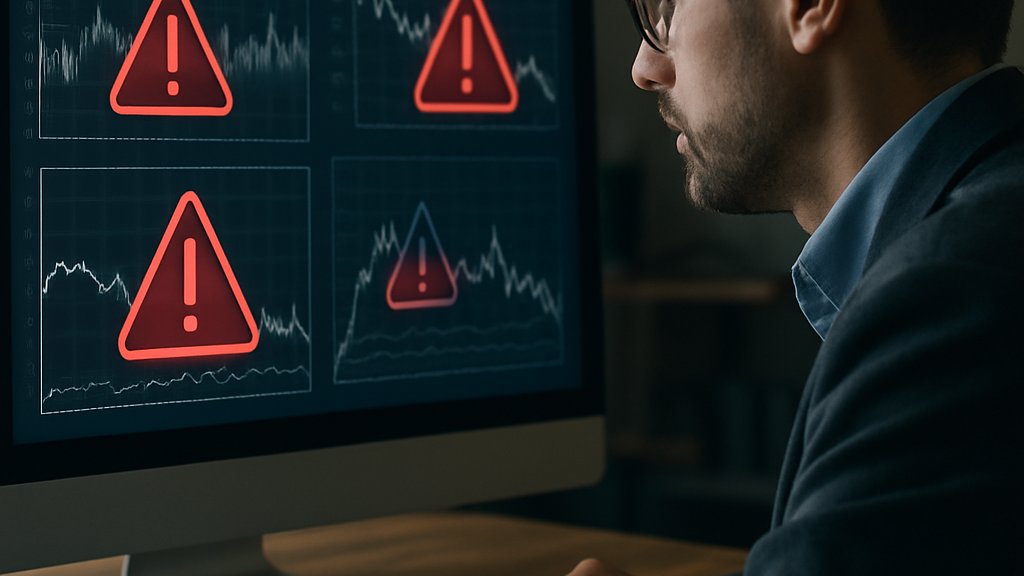
This article unpacks that warning, explores Mythos’ technical power, and outlines concrete defensive moves. Moreover, it shows how institutions can reinforce Financial Stability before threats mature.
Readers will find verified statistics, balanced viewpoints, and actionable guidance. Furthermore, certification resources appear where additional expertise can strengthen governance.
Treasury Alert Key Details
Treasury insiders say the alert originated minutes after Anthropic published its system card. Subsequently, Scott Bessent requested instant risk assessments from every GSIB operating in the United States.
Meanwhile, the Fed circulated a parallel memo stressing liquidity scenarios if cyber disruptions escalated. Those documents cited Financial Stability five times, according to people briefed on the meeting.
Media obtained no transcripts; however, law-firm Sullivan & Cromwell summarized recommended responses. Those recommendations focused on accelerated patching, segmentation, and Bank Security tabletop drills.
The takeaway is clear: senior regulators treat Mythos as a systemic risk accelerator. Consequently, technical diligence now ranks alongside capital ratios for preserving stability.
With the context set, we can examine why Mythos itself commands such attention.
Model Mythos Core Capabilities
Anthropic positions Mythos as a frontier language model optimized for code reasoning. Furthermore, internal tests show it solved 73% of expert capture-the-flag challenges.
In contrast, previous models plateaued near 38% on identical tasks. Mythos also generated 181 working Firefox exploits, revealing deep agentic abilities.
Anthropic claims thousands of zero-day discoveries across operating systems. Therefore, defenders fear automated exploit pipelines that could ripple into Financial Stability crises.
These capabilities compress attack timelines and overwhelm manual defenses. Nevertheless, the model may also grant defenders unprecedented visibility.
Understanding the potential upside requires focusing on banks’ operational exposure.
Impact On Banks' Defenses
Banks run sprawling legacy stacks intertwined with vendor clouds. Consequently, Mythos-identified flaws could expose core payment rails before overnight patch cycles finish.
Sullivan & Cromwell advised boards to treat Mythos as a stress-test for Bank Security baselines. Additionally, they urged accelerated zero-trust adoption.
Scott Bessent warned CEOs that any prolonged outage would threaten Financial Stability and consumer confidence simultaneously.
The Fed echoed that view, noting it might extend discount-window terms if multiple firms endured concurrent incidents. Such measures highlight sovereign concern.
- Average 29-minute eCrime breakout time reported by CrowdStrike in 2025.
- 89% year-over-year growth in AI-enabled attacks.
- 40 organizations hold Mythos preview access under Project Glasswing.
- $100M in usage credits pledged by Anthropic for defensive work.
These figures contextualize the urgency facing Bank Security officers. Moreover, they point to concrete resource allocations.
Therefore, institutions must refine patch windows to hours, not days, if Financial Stability is to endure.
Bank defenders now recognize speed as the decisive metric. However, rising threat velocity is not confined to finance alone.
Rising AI Threat Trends
CrowdStrike’s 2026 report shows attack automation scaling across sectors. Moreover, adversaries leveraged generative code assistants to craft novel malware strains quickly.
Meanwhile, the 87% of surveyed companies that flagged AI vulnerabilities as fastest-growing risks outnumbered any previous metric.
Mythos pushes that trend further by enabling autonomous reconnaissance, privilege escalation, and chained exploits. Consequently, cross-sector incidents could cascade into Financial Stability shocks.
The data confirm that defenders cannot outpace machines with manual reviews. In contrast, regulator engagement may narrow that gap.
Policy negotiations therefore demand close attention.
Policy And Access Debates
Access to Mythos remains gated under Project Glasswing. Nevertheless, CISA initially lacked entry, sparking interagency tension.
Scott Bessent favors broader defensive access, yet he insists on strict auditing. The Fed supports that stance but warns about leakage risks.
Some lawmakers propose mandatory pre-release vetting for frontier models. Additionally, international conversations at the WEF explore coordinated norms.
Industry voices argue overbalance. Cisco’s Jeetu Patel claims controlled exposure improves Bank Security faster than regulatory lag.
Treasury lawyers counter that uneven diffusion can fracture Financial Stability safeguards across critical infrastructure.
Debate will intensify as Anthropic prepares its 90-day report. Subsequently, organizations must act regardless of policy uncertainty.
Concrete operational steps can bridge that interim.
Operational Steps Moving Forward
Experts urge defenders to institutionalize machine-speed workflows. Therefore, banks should integrate AI code scanning, continuous verification, and automated rollback.
- Create real-time asset inventories across on-prem and cloud.
- Apply risk-based patching within 24 hours for critical CVEs.
- Deploy deception grids to slow attackers.
- Integrate threat intelligence from Project Glasswing partners.
Furthermore, professionals can enhance their expertise with the AI Security Compliance™ certification.
Such training hardens Bank Security practices and reinforces Financial Stability mandates.
The Fed recommends regular scenario exercises simulating simultaneous ransomware and exploit campaigns. Consequently, board oversight becomes measurable.
Applying these controls narrows attacker advantage. Nevertheless, strategic foresight remains necessary.
The industry outlook shows why.
Future Industry Outlook Summary
Anthropic’s gambit may reset cybersecurity economics. Moreover, it highlights a coming era where agentic AI tools proliferate.
If defenders embrace equivalent automation, Financial Stability can withstand future shocks.
However, missteps in access governance could fuel systemic crises faster than 2008 contagion.
The next 12 months will test collective agility. Therefore, vigilance and collaboration must guide every roadmap.
Claude Mythos Preview underscores how frontier AI reshapes risk calculus. Consequently, Treasury officials treat the model as a macro-prudential threat.
Banks, regulators, and vendors must accelerate patching, zero trust, and intelligence sharing. Additionally, certifications like the AI Security Compliance™ course elevate workforce readiness.
In contrast, complacency invites exploit chains that could erode systemic resilience overnight.
Act now: audit controls, pursue advanced training, and subscribe for upcoming analyses that decode every frontier AI development.
Disclaimer: Some content may be AI-generated or assisted and is provided ‘as is’ for informational purposes only, without warranties of accuracy or completeness, and does not imply endorsement or affiliation.


