

AI CERTS
2 hours ago
Model Reliability Debate: Why LLMs Still Mimic Patterns
Recent benchmark surprises highlight brittle behavior hidden behind fluent Style. Furthermore, small changes in problem statements can slash accuracy by more than half. Meanwhile, vendors promote upgraded architectures promising ironclad Coherence across tasks. Stakeholders need evidence, not slogans, to judge real Shortcoming severity and mitigation plans. Therefore, measuring Model Reliability under novel inputs is now critical.
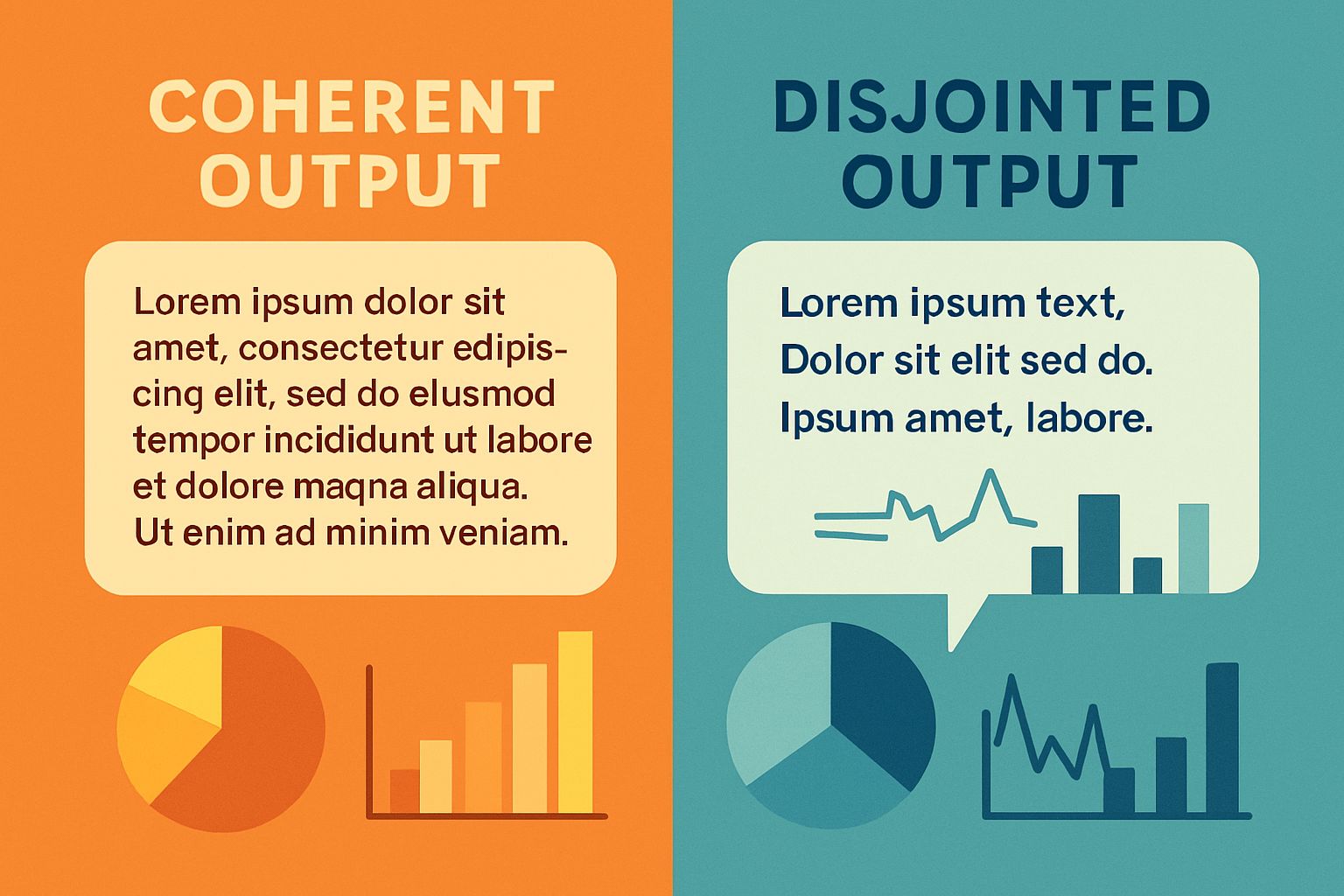
This article reviews fresh empirical data, expert commentary, and practical steps for buyers and builders. Moreover, professionals can boost oversight skill via the AI Developer™ certification. By the end, readers will grasp where research stands and which questions to press next.
Patterns Over Logic Claims
Many critics describe LLM output as sophisticated autocomplete rather than structured thought. Nevertheless, models often mimic analytical chains because Training data contains countless solved examples.
In contrast, the GSM-Symbolic study removed familiar cues and watched success rates collapse by 65%. Therefore, analysts call this drop a glaring Shortcoming in real Model Reliability.
Gary Marcus summarizes the worry succinctly. However, he claims current systems lack a causal world model, so genuine Reasoning cannot emerge.
Pattern linkage explains impressive text fluency yet reveals severe fragility. Consequently, the next section examines quantitative evidence supporting that critique.
Evidence From New Benchmarks
Researchers designed harder tests to isolate algorithmic skill from memorized templates. Moreover, the Three SAT Hardness Trends paper tracked accuracy across rising constraint density.
Results showed most models flatline near the phase transition, reflecting limited internal analysis. DeepSeek R1 stood out, yet even that model displayed volatile Model Reliability under perturbation.
In GSM-Symbolic, inserting an irrelevant sentence slashed scores across flagship releases. Additionally, numeric tweaks alone triggered steep failures, underscoring a persistent Shortcoming.
Three SAT Hardness Trends
- Accuracy fell below 30% when clause ratio approached 4.26.
- One model kept 55% yet lost structure on extended proofs.
- GSM-Symbolic saw 65% degradation after inserting single distractor sentences.
- Nature study observed unstable Model Reliability despite larger parameter counts.
These figures confirm that present architectures still overfit linguistic surface cues. Therefore, quantitative signals align with earlier theoretical criticism.
However, commercial groups are not standing still, as the following section reveals.
Industry Responses And Tactics
Vendors counter critics with chain-of-thought prompting, retrieval pipelines, and tool integration. Furthermore, OpenAI promoted its o1 model, citing 83% on an IMO qualifier.
Independent labs have yet to validate those numbers, raising another Model Reliability question. Meanwhile, Microsoft and Anthropic test longer context windows to bolster Coherence across documents.
Companies also restrict raw chain-of-thought logs to curb malicious exploit attempts. Nevertheless, opacity complicates external audits and fuels debate over Style versus substance.
Corporate tweaks deliver incremental gains but leave foundational doubts unresolved. Consequently, expert commentary remains divided, as explored next.
Critical Expert Perspectives
Judea Pearl places models on the associative rung of his causal ladder. He argues that intervention and counterfactual questions exceed current Training paradigms.
Melanie Mitchell warns that benchmark wins rarely generalize, labelling them brittle Style over strategy. Additionally, Emily Bender reiterates the stochastic parrots metaphor, spotlighting semantic Shortcoming risks.
Nevertheless, some engineers insist practical Reasoning emerges from massive scale plus clever prompting. Gary Marcus counters, saying apparent Coherence masks fragile pattern assembly.
Experts therefore split between pragmatic optimism and philosophical caution. In contrast, hybrid research seeks a middle path.
Hybrid Paths Moving Forward
Academic teams now combine symbolic solvers, calculators, and retrieval to enhance Model Reliability. Moreover, verifiers reject inconsistent steps, improving answer Coherence without human oversight.
Researchers also explore causal modules that learn intervention effects during Training. Subsequently, preliminary results show fewer hallucinations, though Reasoning depth remains contested.
Practitioners considering deployment can pursue several pragmatic measures:
- Run leakage-resistant benchmarks before launch.
- Enable automated verification for critical outputs.
- Track failure modes under distribution shift.
Hybrid engineering narrows gaps yet does not settle theoretical debates. Therefore, practitioners must remain vigilant, as the next section outlines.
Implications For Practitioners
Enterprises should monitor Model Reliability continuously, not just during pilot evaluations. Additionally, teams must document dataset provenance and versioned Training pipelines.
Auditors can integrate fragility probes into regression suites, quickly surfacing hidden Shortcoming patterns. Moreover, investing in staff education increases oversight quality.
Professionals can demonstrate advanced competency through the AI Developer™ pathway. Consequently, certified engineers speak confidently about benchmark design, Coherence metrics, and causal validation.
Robust process governance, skilled personnel, and transparent metrics together improve outcome trust. Nevertheless, vigilance must continue as research evolves.
LLMs supply remarkable text generation yet still stumble when tasks demand resilient logic. Empirical studies underscore that pattern matching alone cannot guarantee dependable Model Reliability across domains. However, industry engineering is closing practical gaps through retrieval, verification, and hybrid causal modules. Experts disagree on whether such advances equal genuine Reasoning, but they agree strong evaluation must continue. Stable Model Reliability will remain the decisive differentiator in competitive markets. Consequently, organizations should pair automated probes with skilled humans to detect residual flaws. Furthermore, adopting certification pathways such as AI Developer™ helps maintain rigorous oversight. Act now to audit, verify, and refine your deployments before tomorrow's customers demand proof.


