

AI CERTS
2 days ago
MIGP Elevates Personalized Meal Optimization
Moreover, solve times stay below one-tenth of a second on commodity hardware. These advances may reshape digital diet management and clinical food-as-medicine workflows. The following report examines market drivers, technical details, benchmarks, and integration pathways. Meanwhile, investors project multi-billion dollar growth for Personalized Meal Optimization platforms this decade.
Therefore, understanding MIGP’s strengths helps product leaders evaluate roadmap priorities and competitive positioning. Industry professionals will also find guidance on certifications and future research opportunities.
Expanding Nutrition Platform Demand
Global personalized nutrition revenue hit roughly USD 930 million last year, according to Grand View. Furthermore, analysts forecast mid-teens growth for Personalized Meal Optimization platforms as payers reimburse medically tailored meals. Alissa Wassung notes that tailored meals improve outcomes and trim costs for chronic populations. Consequently, platform vendors scramble to scale recipe generation, supply chains, and engagement analytics.
These commercial pressures create fertile ground for Personalized Meal Optimization engines offering speed and realism. Demand curves display clear momentum toward data-driven nutrition services. Nevertheless, delivering precise yet usable menus remains a central challenge. The MIGP framework directly addresses that operational pain point.
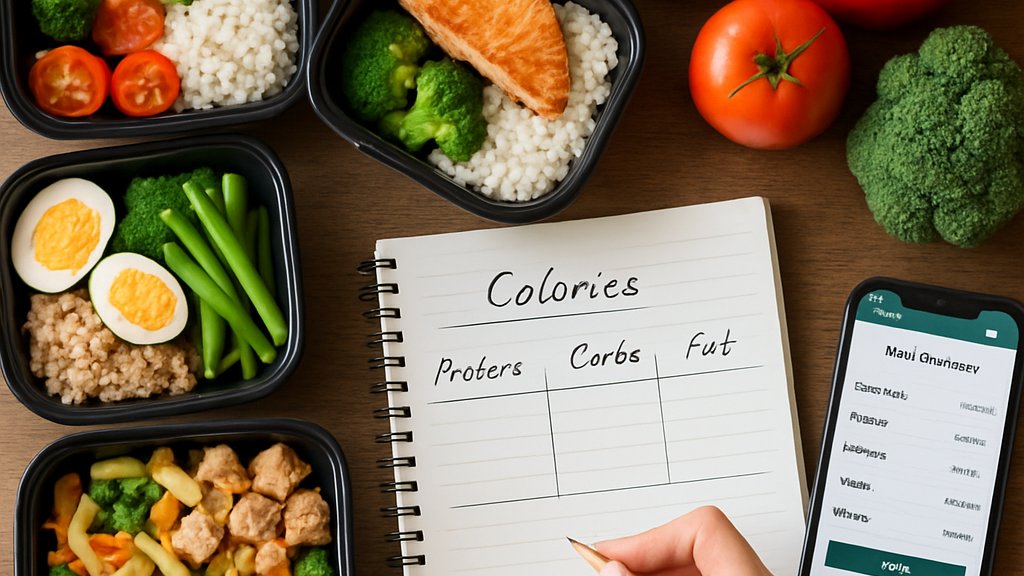
MIGP Framework Core Fundamentals
MIGP couples integer programming with goal programming in one coherent formulation. Instead of forcing hard nutrient limits, deviation variables softly penalize under or over targets. Moreover, decision variables remain integers, guaranteeing whole servings for each food item. Therefore, the model avoids unrealistic 0.33 bananas that users refuse to measure. Inverse-target normalization ensures nutrients with tight ranges receive appropriate weighting inside the objective.
Meanwhile, deviation absorption reduces the integrality gap, accelerating mixed integer solver convergence. Authors implemented the Personalized Meal Optimization prototype in Python and released open-source code for transparency. The design unites mathematical rigor with everyday kitchen practicality. Subsequently, technology teams can embed the approach within existing pipelines.
Integer Servings Advantage Explained
Traditional linear models often yield 1.7 grape servings or 0.4 chicken thighs. In contrast, MIGP’s integer programming constraint eliminates such fractional artifacts automatically. Users receive tidy shopping lists, while inventory managers streamline procurement. Consequently, post-hoc rounding becomes unnecessary and quality loss disappears. Benchmark data show MIGP outperformed continuous models with rounding in 66 percent of trials.
Key practical benefits include:
- 100% nutrient feasibility across 810 benchmark cases
- Sub-100 ms average solve time with HiGHS
- Zero occurrences of worse solutions versus rounded outputs
These numbers confirm a tangible advantage for Personalized Meal Optimization over legacy toolchains. Whole servings raise user trust and cut operational waste. However, flexible nutrient handling is equally important, as the next section explains.
Goal Programming Enhancements Detailed
Clinical diet therapy demands nuanced control over macro and micronutrients. Goal programming satisfies that need by treating each nutrient as a weighted objective. Moreover, MIGP normalizes deviations by target magnitude, promoting balanced trade-offs. Hard constraints sometimes render menus infeasible when food catalogs are limited. Therefore, Personalized Meal Optimization with soft targets retains feasibility while still discouraging excessive variance.
Benchmark comparisons show conventional hard-constraint integer programming achieved feasibility in only 48 percent of cases. Meanwhile, MIGP maintained full feasibility without extending solve time. The soft-constraint design merges nutritional safety with operational reliability. Consequently, stakeholders gain confidence before deploying at scale.
Benchmark Performance Insights Revealed
Authors evaluated nine configurations across 810 synthetic meals using 30 USDA foods. HiGHS solved each Personalized Meal Optimization instance in under 100 milliseconds on a laptop. Additionally, MIGP reported superior deviation scores in two-thirds of scenarios. Integrality gaps remained small, confirming theoretical predictions about deviation absorption.
Diet research teams can replicate experiments thanks to the public repository. Nevertheless, real kitchens contain hundreds of ingredients and cultural constraints absent from the benchmark. Future testing should expand databases and include taste preference features.
Researchers should prioritize the following extensions:
- Larger, culturally diverse ingredient libraries
- Dynamic pricing and seasonal availability constraints
- User preference and allergy modeling
- Prospective clinical outcome trials
Addressing these items will validate scalability claims and attract enterprise buyers. Benchmark speed and quality are promising early signals. However, broader validation remains essential before widespread adoption.
Integration With Meal Apps
Startups like DayTwo and Viome already offer biomarker-informed recommendations. Consequently, they require robust optimization backends that respect genomic or microbiome targets. MIGP slots into Python stacks via the HiGHS API, easing engineering overhead. Additionally, pairing a generative LLM menu writer with MIGP can blend creativity and feasibility for Personalized Meal Optimization. Product managers should monitor solver latency to maintain real-time user experience.
Professionals can deepen their analytics skills with the AI Data Robotics™ certification. Meanwhile, regulatory teams must document nutrient calculations for healthcare reimbursement audits. Therefore, cross-functional collaboration becomes vital for sustained rollout success. Seamless integration demands technical alignment and regulatory diligence. Subsequently, research insights will influence commercial design roadmaps.
Future Research Directions Ahead
Diet research increasingly explores hybrid generative-optimization architectures. MIGP could supply feasibility checks while LLMs craft culturally resonant menus. Moreover, pragmatic clinical trials should evaluate adherence, Healthcare Expenditure Index, and biomarker shifts. Researchers may also study cost savings for payers delivering food-as-medicine benefits. In contrast, traditional counseling lacks scalable personalization and objective compliance tracking. Therefore, data scientists and clinicians must jointly define relevant outcome metrics.
Personalized Meal Optimization will feature prominently in grant proposals and venture decks alike. Consequently, early adopters gain a strategic head start in an expanding market. Rigorous evaluation will determine long-term clinical and economic value. Nevertheless, current evidence already signals strong potential for widespread benefit.
MIGP brings mathematical discipline and usability to Personalized Meal Optimization, outperforming legacy linear models. Furthermore, integer programming and goal programming cooperate to deliver feasible, appetizing menus at lightning speed. Benchmarks demonstrate 100% feasibility and sub-second latency, while market tailwinds strengthen commercialization prospects.
Nevertheless, expanded food databases, preference modeling, and longitudinal diet research remain open tasks. Professionals who integrate MIGP early can capture user trust, payer contracts, and competitive advantage. Explore the linked certification to sharpen the analytics acumen needed for this evolving domain. Act today and position your team at the forefront of data-driven nutrition innovation.
Disclaimer: Some content may be AI-generated or assisted and is provided ‘as is’ for informational purposes only, without warranties of accuracy or completeness, and does not imply endorsement or affiliation.


