

AI CERTS
1 hour ago
Microsoft MDASH Signals Agentic Security Revolution
Industry observers immediately framed the disclosure as a landmark for Agentic Security capabilities. However, analysts also warned that faster discovery intensifies pressure on already stretched patch pipelines. This article dissects the announcement, the technical milestones, and the operational implications for enterprise defenders. Moreover, we outline governance challenges and practical steps for teams preparing for AI-accelerated vulnerability management. Every section keeps sentences short, precise, and packed with actionable insight. Let us begin by examining the broader market context driving this rapid shift.
Rapid Market Context Shift
Previously, automated vulnerability discovery relied mainly on single-model fuzzers and symbolic engines. Meanwhile, attackers increasingly weaponised generative models to blueprint exploits at scale. Consequently, defenders lagged in both speed and breadth. Microsoft’s move therefore sparks an AI-versus-AI race that forces enterprises to modernise quickly.
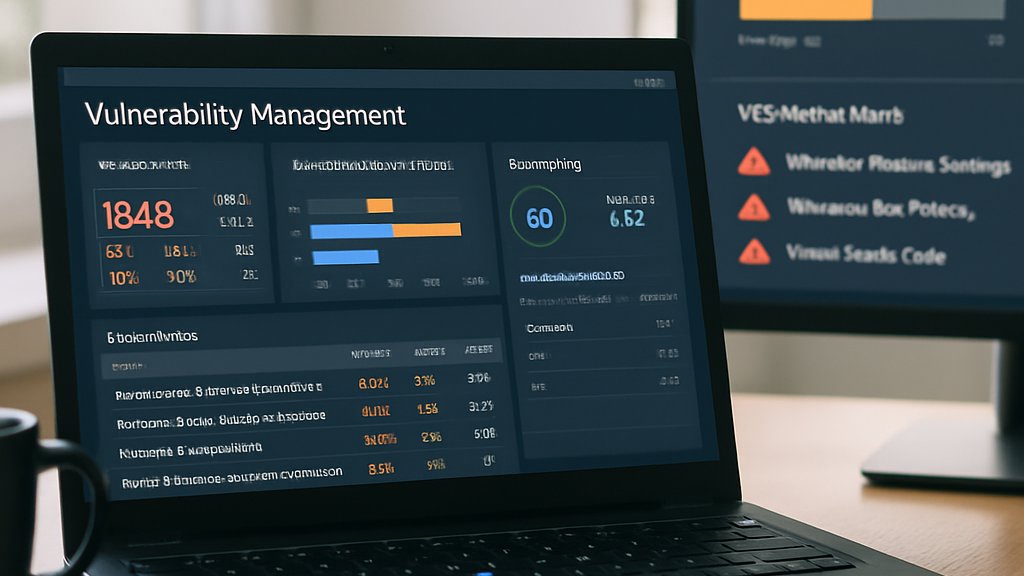
Lyrie Research estimates that multi-agent platforms could reduce vulnerability dwell time by 60 percent within two years. In contrast, verification and patch capacity have grown only marginally. Furthermore, regulatory bodies plan stricter breach reporting windows, shrinking operational cushions even further. These converging pressures explain why Agentic Security has become a board-level discussion point.
The market context therefore demands machine-speed defenses. Next, we unpack how the system actually works beneath the marketing gloss.
Inside MDASH Technical Anatomy
MDASH stands for Multi-model Agentic Scanning Harness. It orchestrates over one hundred specialised AI workers across four pipeline stages. First, static code readers tag risky primitives across Windows kernel and user components. Subsequently, reasoning agents generate proof-of-concept triggers, while differential fuzzers search adjacent state space.
Validation agents then replay crashes, capturing telemetry to exclude false positives. Finally, an explainability module summarises root cause graphs for human engineers. Taesoo Kim emphasised, “The model is one input. The system is the product.” Moreover, the orchestration layer remains model-agnostic, allowing rapid swaps as language, vision, or binary models improve.
CyberGym benchmark results reinforce the architecture’s strength, scoring 88.45 percent and topping the public board. This technical anatomy forms the backbone of Microsoft’s emerging Agentic Security strategy.
Critical RCE Findings Explained
MDASH surfaced sixteen Common Vulnerabilities and Exposures within the May Patch Tuesday bundle. Four carried Critical CVSS ratings due to unauthenticated network reach and remote code execution impact. Examples include CVE-2026-33827, a tcpip.sys use-after-free that enables SSRR IPv4 packet takeover. Another case, CVE-2026-41096, uses a crafted DNS response to trigger heap out-of-bounds writes.
Kernel defects dominated, with ten issues spreading across tcpip.sys, clfs.sys, and netlogon.dll. User-mode components like ikeext.dll accounted for the rest. Microsoft claimed zero false positives during internal driver seeding, successfully catching 21 of 21 planted bugs. Nevertheless, independent reproduction remains pending, leaving some researchers cautiously optimistic. Agentic Security principles guided the multi-agent collaboration that exposed these complex paths.
- 16 CVEs; 4 Critical network bugs
- 10 kernel flaws; 6 user flaws
- CyberGym score: 88.45 percent
These findings underscore the system’s scanning depth. However, they also foreshadow mounting operational challenges, explored next.
Operational Pressure Point Risks
Speedy discovery amplifies workload for triage, exploitation analysis, and patch engineering teams. Therefore, Microsoft’s remediation crew had to fold MDASH data into existing Secure Development Lifecycle checkpoints. SANS warns that overwhelmed pipelines often delay patch publication, ironically extending exposure despite faster detection. In contrast, attackers can weaponise leaks within hours once technical advisories appear.
Furthermore, rapid disclosure triggers governance headaches around coordinated reporting with downstream vendors and cloud images. Enterprises lacking hotpatch tooling may schedule emergency maintenance windows, disrupting operations. Nevertheless, improved automation can mitigate some stress. Professionals can enhance readiness through the AI Security Level 3 certification.
Agentic Security tooling cannot succeed unless skilled humans remain in the operational loop. These operational risks demand proactive planning; the next section tackles governance responses.
Governance And Policy Concerns
Policy experts fear AI discovery tools may erode coordinated vulnerability disclosure norms. Consequently, Microsoft must balance transparency with exploitation risk when sharing MDASH output. Cloud Security Alliance highlights dual-use danger because offensive actors could repurpose orchestration blueprints. Moreover, concentration of capability inside platform giants raises antitrust and dependency debates.
FIRST is updating CVSS guidance to reflect machine-speed discovery cycles and probabilistic exploit prediction scores. Meanwhile, regulators explore mandated patch performance metrics for critical infrastructure operators. In contrast, open standard orchestration could democratise access and reduce vendor lock-in. Agentic Security advocates argue that transparency, certification, and community benchmarks will foster trust.
Governance debates remain fluid yet unavoidable. Organizations should therefore embed compliance experts within technical rollout teams, as our next section shows.
Preparing Enterprise Response Playbook
Enterprises can start by inventorying exposure to the newly published MDASH vulnerabilities. Patch Tuesday updates close the immediate Windows risks; prompt installation remains mandatory. Secondly, teams should integrate agentic analysis feeds into existing vulnerability management consoles. Subsequently, automation can route critical RCE tickets directly to patch engineers with risk context attachments.
Security leaders also need a surge-capacity plan, mapping contractors or MSSPs who can verify findings fast. Moreover, tabletop exercises must now include AI-generated exploit timelines to rehearse accelerated incident response. A concise playbook might follow these steps:
- Review MDASH advisories within 24 hours.
- Prioritize Critical RCE issues via Agentic Security, CVSS and EPSS.
- Deploy patches, then audit for regression bugs.
Following this structured cadence keeps Agentic Security outcomes actionable rather than overwhelming. These playbook elements frame a practical path. We now consolidate the article’s main conclusions.
Key Takeaways And Actions
MDASH demonstrates how multi-agent orchestration can surface deep Windows flaws quickly. Four Critical RCE bugs proved the approach’s real-world value while highlighting urgent patch duties. However, the discovery surge magnifies triage, governance, and talent gaps. Agentic Security thus emerges as both technological boon and operational challenge.
Organizations should accelerate automation, pursue cross-functional policy alignment, and invest in advanced practitioner training. Moreover, credentials like the AI Security Level 3 certification can anchor evolving skills frameworks. Consequently, prepared defenders will contain the exploit window despite faster attacker tooling. Act now, share this guidance, and embed Agentic Security principles across your organization.
Disclaimer: Some content may be AI-generated or assisted and is provided ‘as is’ for informational purposes only, without warranties of accuracy or completeness, and does not imply endorsement or affiliation.


